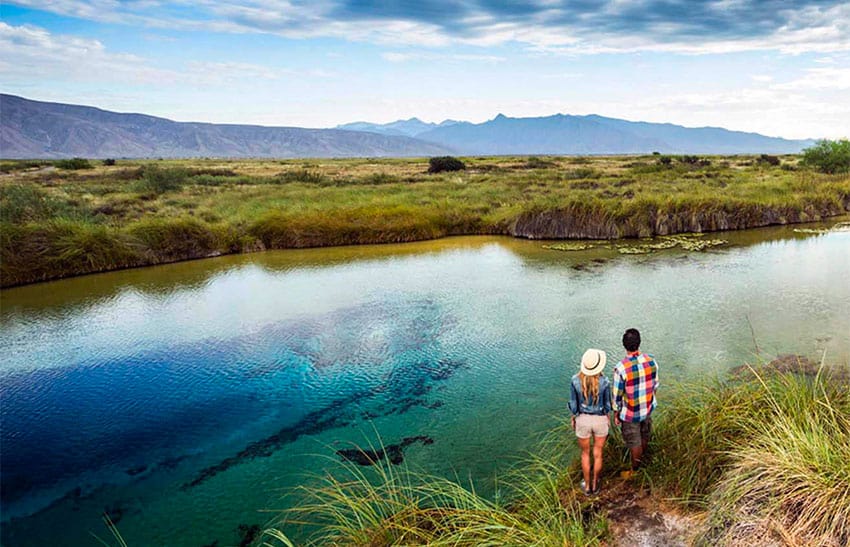
Over-exploitation of water has dried up more than 90% of the Cuatro Ciénagas marshland in Coahuila’s Chihuahua Desert.
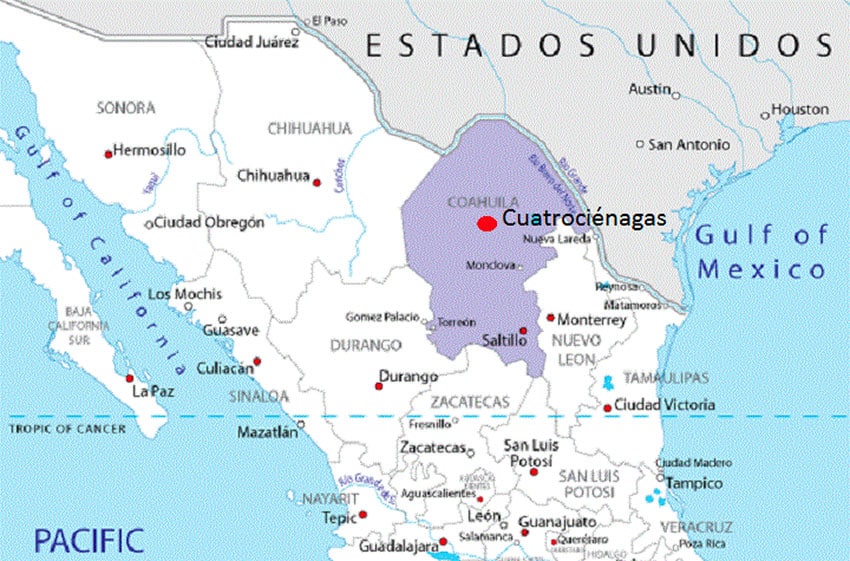
One hundred years ago, natural springs and waterways covered 2,500 hectares of land in the Cuatro Ciénagas reserve, a unique biosphere located about 80 kilometers east of Monclova.
Today, water extends over an area of less than 250 hectares, mainly due to the diversion of the natural resource for use in alfalfa farming during the past 20 years.
To begin to remedy the situation, federal authorities and the Coahuila government intend to lobby President López Obrador to support a restoration plan for the wetlands.
They also plan to hold a series of public meetings so that local residents, alfalfa farmers, researchers and government representatives have the opportunity to analyze and discuss how to restore Cuatro Ciénagas to its former glory.
“The Cuatro Ciénagas valley is in a situation of extreme stress because its [water] area has been reduced by more than 90%,” said National Water Commission (Conagua) chief Blanca Jiménez Cisneros.
“It’s an issue of concern because it’s on the verge of disappearing, the problem is very complex. It’s not just [a matter of] Conagua holding back the water . . . biological recovery has to be achieved in a comprehensive way [with the participation of several] government departments, we can’t do it on our own,” she said.

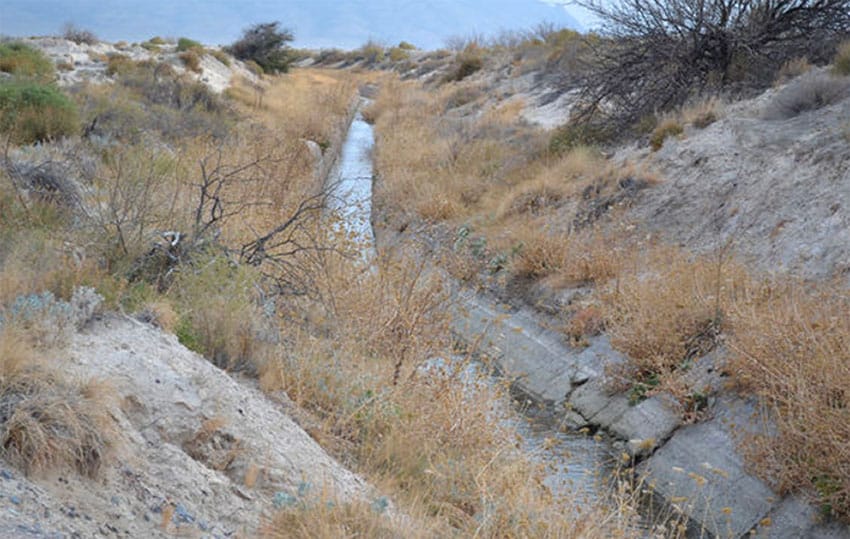
Valeria Souza, a researcher at the Institute of Ecology at the National Autonomous University who has studied the drying of Cuatro Ciénagas for the past 20 years, told the newspaper Milenio that canals that carry water away from the natural pools and waterways for agricultural purposes are to blame. She called for the immediate closure of all irrigation canals that deplete the area of its water.
One canal, known as Saca Salada, which was built in 1900 and diverts up to 2,000 liters of water per second, is one of the main culprits.
Souza said that due to the poor planning of the uncovered canal and evaporation, only 10% of the water it carries reaches its final destination: agricultural lands 80 kilometers away in the municipality of Frontera.
“It’s pure stupidity, [the canal] was thought up a hundred years ago when they started to establish agricultural lands and the wetlands were in a good state . . . This is the bleeding of Cuatro Ciénegas,” she said.
Since the 1960s, increasingly greater quantities of water have been diverted for agricultural purposes and in the 1980s, the Cañón river, which for years was the main source of drinking water in the area, ran dry.
In 2000, a project that diverted water to the south of the municipality of Valle del Hundido began placing even greater pressure on Cuatro Ciénegas’ water resources and eventually caused both the Nuevo Atayala spring and the Churince lagoon to dry up, the latter in 2016.
Patricia Olmedo, head of the genetic engineering department at the Center for Research and Advanced Studies in Irapuato, Guanajuato, said that the damage to the lagoon is “irreversible,” explaining that fish and endemic turtles were victims of the project.
“If we close the sluices, it will take us five years to restore the site. It’s possible to recover it but we have to do everything very quickly. What we can’t allow is for the spring to dry out because then there would be nothing we could do,” she said.
Over time, environmental authorities hope to convince local farmers to transition away from the cultivation of alfalfa to crops that don’t require such large amounts of water, such as the nopal, or prickly pear cactus.
To begin to restore the area in the short term, Conagua and the Natural Protected Areas Commission have designed a project that diverts water from one irrigation canal back to dried-up marshland.
However, Coahuila Environment Secretary Eglantina Canales acknowledged that it will only restore a very small area of the bacteria-rich Cuatro Ciénegas reserve and that a lot more needs to be done.
“Of course, it’s not enough . . . We hope . . . to do a longer-term project that allow us to flood a much larger area and which avoids unnecessary losses [of water] . . .” she said.
Source: Milenio (sp)