Thousands of pelicans migrate from Canada to an island in Michoacán each year, attracted by the warmer weather and the generosity of the locals.
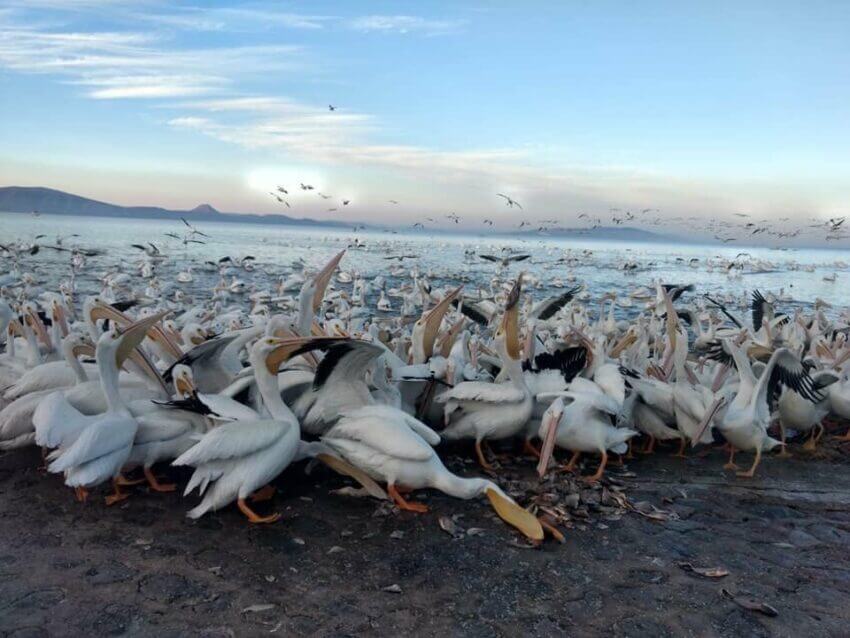
Petatán Island on Lake Chapala, 250 kilometers west of Morelia, plays host to as many as 20,000 American white pelicans for six months every year from October to April.
The town’s citizens have made their winged visitors feel welcome: they offer food to the birds and consider them a good omen, hoping that they’ll attract tourism to the area.
Locals say the migration phenomenon is almost identical to that of the monarch butterflies in eastern Michoacán. The huge birds can measure up to 1.75 meters in length and have a wingspan up to three meters wide.
The mayor of nearby Cojumatlán de Régules, Ana Manso, said she wanted the pelicans to enjoy the same fame as the monarch butterflies.
“We want the pelican phenomenon to be known at the state level, at the national level and at the world level because wherever you go, everyone knows the phenomenon of the monarch butterfly, but the pelicans are a bit forgotten,” she said.
However, Manso added that the birds were already a pull for visitors from nearby towns, helping to fill restaurants and boat tours over Lake Chapala to see them up close.
That economic benefit goes some way to explaining the generosity of local people. Petatán is a fishing community so the fish offal is served to the pelicans during the season, Manso said.
A local man who fillets fish, Enrique Martínez, estimated that one to two tonnes of fish offal were fed to the feathered visitors on a daily basis.
Martínez confirmed that the pelicans were welcome and that tourists would be given the same warm reception. “It doesn’t affect us at all, we like to have them [the pelicans] here … we want people to come and see them …” he said.
American white pelicans have the second largest average wingspan of any North American bird, after the California condor, which allows them to easily migrate. Their name in Spanish, pelícano borregón, takes the augmentative form of the word for sheep — borrego —due to their thick white plumage.
News report from earlier this month showing the pelicans in Petatán.
With reports from Excélsior and El Universal