Neither state nor municipal police are functioning properly in the fight against violence and crime in Mexico was the blunt assessment offered today by president-elect Andrés Manuel López Obrador.
“In my travels around the country, there is an almost generalized opinion that the state and municipal police forces are not working, to say it diplomatically, they’re not fulfilling their responsibility. There are honorable exceptions but that’s the bitter truth,” he told a press conference.
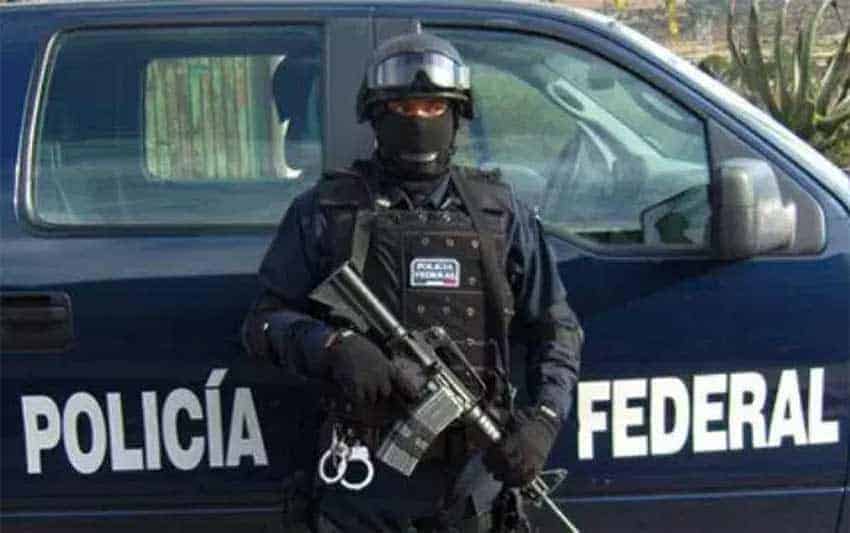
López Obrador also said that military forces will continue to carry out public security duties on the nation’s streets for the foreseeable future because the Federal Police are not ready to replace them.
“In the current circumstances, we couldn’t stop using the army and the navy to respond to the problem of insecurity and violence. The Federal Police are not prepared to replace what soldiers and marines currently do. Being realistic, it hasn’t been possible to strengthen the Federal Police, no progress was made,” he said.
The president-elect’s remarks follow meetings he attended with National Defense Secretary Salvador Cienfuegos Wednesday and Navy Secretary Vidal Soberón today.
“The situation of the Federal Police is regrettable, they don’t even have barracks. They send them to the states without support. They have to camp, live in hotels . . . really regrettable situations. The [right] conditions were not created . . . In the face of organized crime, you can’t work with a disorganized government,” López Obrador said.
Alfonso Durazo, López Obrador’s nominee for secretary of public security, said last month that the incoming government would gradually withdraw the military from public security duties, suggesting that “training police [and] improving their socio-economic conditions” is a better path towards peace.

Statistics show that the federal government deployed 52,807 soldiers to fight Mexico’s notorious drug cartels last year, the highest number in the 12-year war on drugs.
Yet, with more than 31,000 homicides, 2017 was the most the most violent year in at least two decades.
López Obrador has pledged to “attend to the root causes of violence” and his government could adopt a security strategy that includes an amnesty law for low-level criminals and the legalization of some drugs.
Today, the president-elect said there will be 248 territorial coordination groups that will act jointly with the federal government “to guarantee peace and tranquility” and stressed that he would personally analyze the security situation on a daily basis.
López Obrador also said that he will nominate the next chiefs of the army and navy “well before” he is sworn in on December 1, explaining that the new military leaders would be chosen from among the generals and admirals already in active service.
Source: El Financiero (sp)