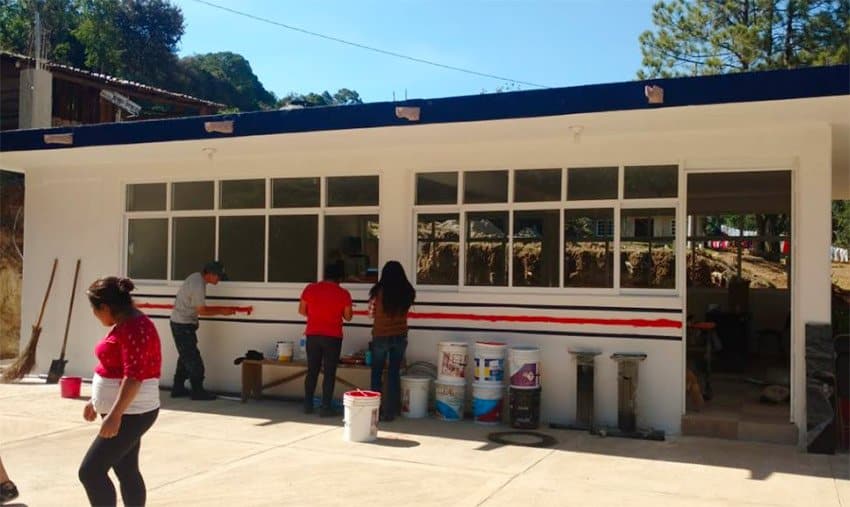
Seeking to build trust, the Federal Police have constructed and opened a new primary school in the Otomí town of San Francisco de las Tablas in México state.
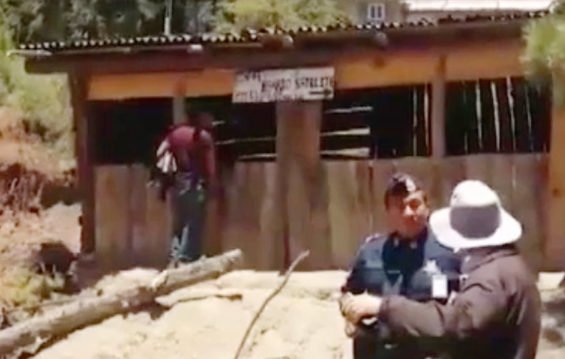
Education facilities described as “precarious” triggered the move to build the school with the help of parents in the municipality of Chapa de Mota.
Eleven months later, the school is now catering to 11 students although the facilities are intended to benefit at least 70 families living nearby.
The 96-square-meter school has a 120-square-meter multiple-use area and a 160-square-meter soccer field.
Five computers will be available to start, along with a library containing 1,000 books. All these resources were donated by local residents, businesses and the Federal Police. One report observed that the school has electricity and running water.
The plan for the school in future is to bolster social inclusion for the Otomí community, and promote the human rights of the indigenous peoples of Mexico, said Federal Police Commissioner Manelich Castilla Craviotto.
The force’s social proximity department has the task of strengthening citizens’ trust in police by improving social conditions and promoting active citizen participation in their own social development, the commissioner said.

The Otomí people live in the states of México, Puebla, Veracruz, Hidalgo, Guanajuato, Querétaro, Tlaxcala and Michoacán, and speak three distinct dialects of their language.
Some have proposed to use the name Hñähñu as a more formal or correct way to call themselves, but little traction has been gained. Hñähñú refers to the dialect of the language spoken in the Mezquital Valley region in central Mexico.
Source: Milenio (sp)