Mexico City has been gearing up this week for the annual march to commemorate the 1968 Tlatelolco massacre amid worries that violence seen at recent demonstrations will be repeated on Wednesday.
During his morning press conference today, President López Obrador sent a message to people planning to attend the marches scheduled for later on Wednesday, urging them to refrain from covering their faces and committing violent acts or vandalism.
“I’m telling you that’s not the way — no masks. People who fight for justice don’t have to cover their faces, they should identify themselves, and they shouldn’t carry weapons, whether that means rocks, fireworks, metal bars, anything like that,” he said.
The president also suggested that protesters’ families would not be supportive if they knew. “I’m sure that grandparents, parents, mothers and fathers [of these people] do not agree with their acts, or my name is not Andrés Manuel.”
The president’s statement comes after two recent Mexico City protest marches were marked by vandalism. On September 26, during a march to commemorate the anniversary of the disappearance of 43 students in Iguala, Guerrero, masked protesters smashed windows at businesses on Avenida Juárez, causing an estimated 100 million pesos (US $5 million) in damage. On September 28, protesters demanding the legalization of abortion set fire to the door of a chamber of commerce on Avenida Reforma.
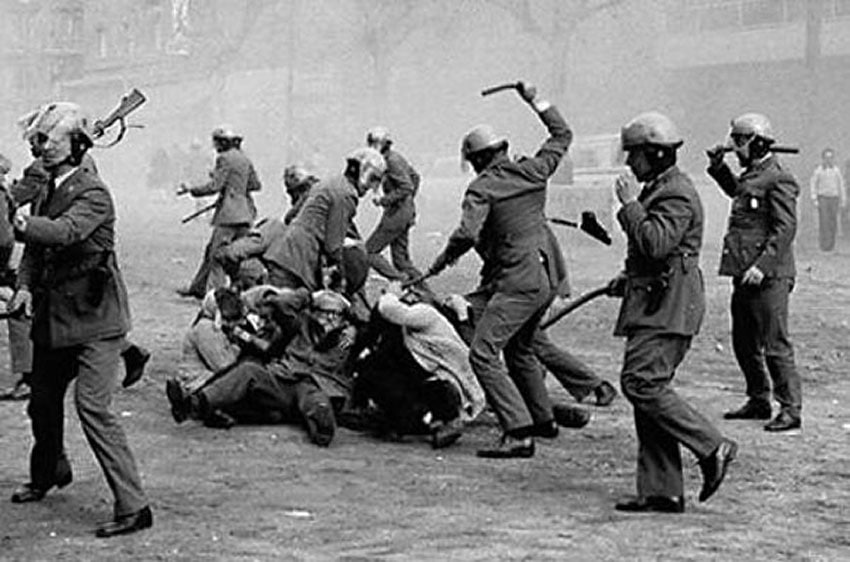
The October 2nd march, which commemorates the 51st anniversary of a massacre of at least 300 students in 1968, will start at the Three Cultures Plaza in Tlatelolco at 4:00pm and end at Mexico City’s zócalo.
Mayor Claudia Sheinbaum said the city made an agreement with march organizers that police presence at the march will be minimal in order to avoid provocations. In lieu of sending a contingent of riot police to prevent vandalism, the city government set up barriers in front of buildings on the march route and will deploy a 12,000-person “peace barrier” of civilian government employees to maintain order.

“There will be no repression, but we can’t allow any kind of aggressive acts,” she said.
Sheinbaum disbanded Mexico City’s riot police as a distinct agency in one of her first acts as mayor, fulfilling a central demand of the 1968 student movement.
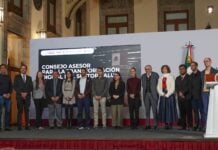
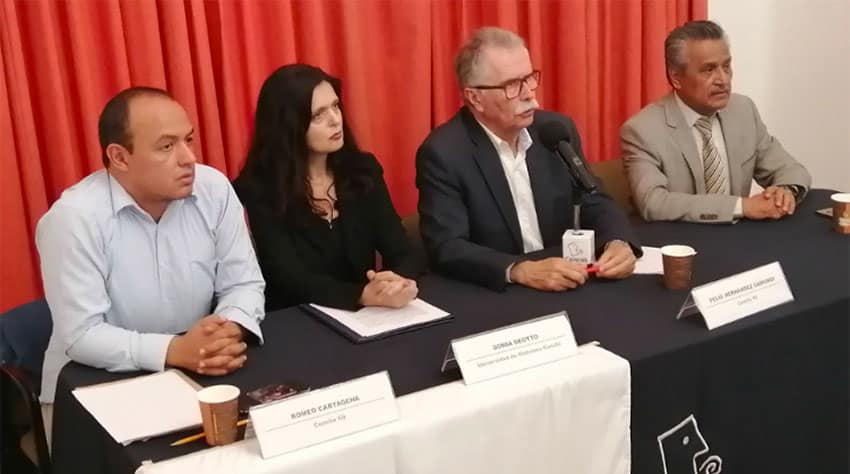
In a press conference on Tuesday, march organizers echoed the calls by the president and the mayor to eschew face coverings and acts of vandalism.
“We will be marching with our faces uncovered, and we ask anyone who wants to join us to do so without hoods, with their faces visible,” said Félix Hernandez Gamundi, a leader in the 1968 student movement and a survivor of the Tlatelolco massacre.
“This is a peaceful protest, like all of our actions have been for the last five decades.”
Source: El Financiero (sp), Proceso (sp), 24-Horas (sp)