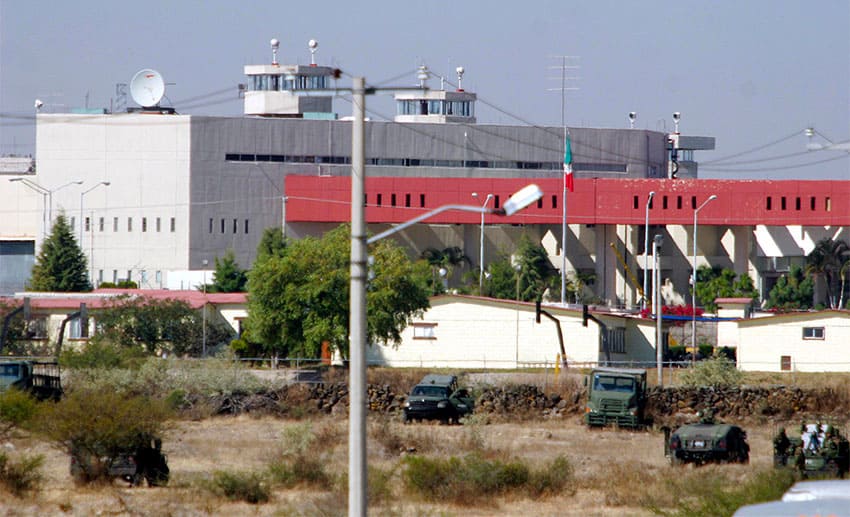
A notorious maximum-security prison in Jalisco whose closure was announced this week has been under the control of inmates belonging to the Jalisco New Generation Cartel (CJNG), Security Minister Alfonso Durazo said on Thursday.
“For inmates who belonged to the CJNG, being at the Puente Grande prison meant having all the conditions to continue ruling themselves, and part of the goal is to disperse these criminals among other prisons to eliminate the possibility of them repeating their self-rule,” Durazo said during a videoconference.
He offered Puente Grande as an example of how not to run a prison. “It has been irresponsible for the Mexican state to have criminals of such a high degree in a prison where some cells do not even have locks on the doors,” Durazo said, noting that there was a very high risk of escape from the facility, which Joaquín “El Chapo” Guzmán famously did in 2001.
The decision was made to close the prison and disperse the its 400 inmates to other medium and high-security prisons across Mexico to limit their influence and “take them out of their comfort zone,” Durazo said, as well as preserve their human rights and dignity. Closing the prison will also save Mexico 800 million pesos, nearly US $37 million.
Durazo said the federal government has up to 12,000 places available in prisons built during Felipe Calderón’s administration.
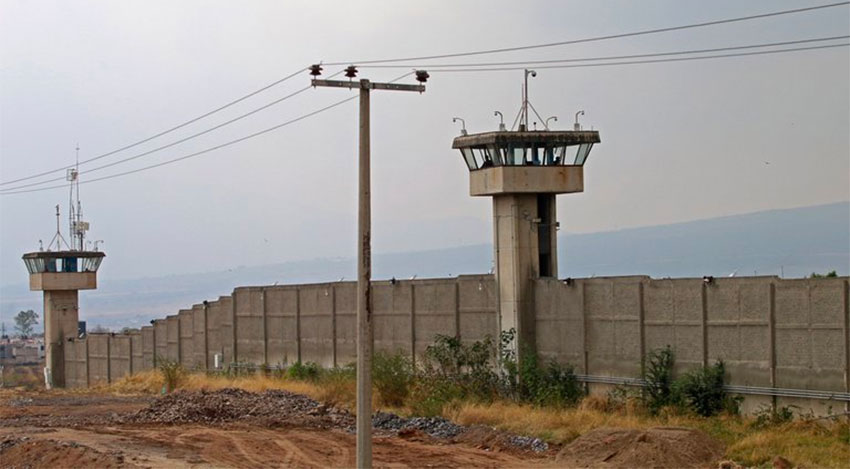
President López Obrador claims Calderón’s contracting out of prisons to private businesses is the reason for Puente Grande’s closure, not undue cartel influence.
“We are paying for federal prisons that we do not occupy. We have 9,000 spaces in federal prisons, and we have to pay as if they were full because those are the contracts that we inherited,” López Obrador said, indicating that he is in discussions with the governor of Jalisco to put the prison property to a different use.

Puente Grande, located near Guadalajara, was made famous by El Chapo’s escape in a laundry truck, but is also known for its riots involving highly dangerous inmates. In May a riot left seven inmates dead (three were gunned down and four were beaten to death) and nine injured. Authorities offered no explanation for how guns got inside the prison
Corruption at the facility was hardly a secret. Milenio reported in September 2015 that inmates controlled the majority of prison stores, managed the flow of prohibited substances, controlled the area reserved for conjugal visits and allocated prison cells.
The CJNG’s influence has also been well documented. In 2017 a video surfaced of a lavish party complete with a well-known musical group surfaced. The party was hosted by CJNG member José Luis “Don Chelo” Gutiérrez Valencia and the footage showed prisoners, women and children dancing and drinking.
“I’m the one who rules here,” he told his guests. “Ask for what you want, I’ll make you sure you have it.”
Other notorious inmates over the years included Guadalajara Cartel kingpin Miguel Ángel Félix Gallardo, Rafael Caro Quintero and Alfredo “El Mochomo” Beltrán Leyva.
The prison has been in operation for 27 years.