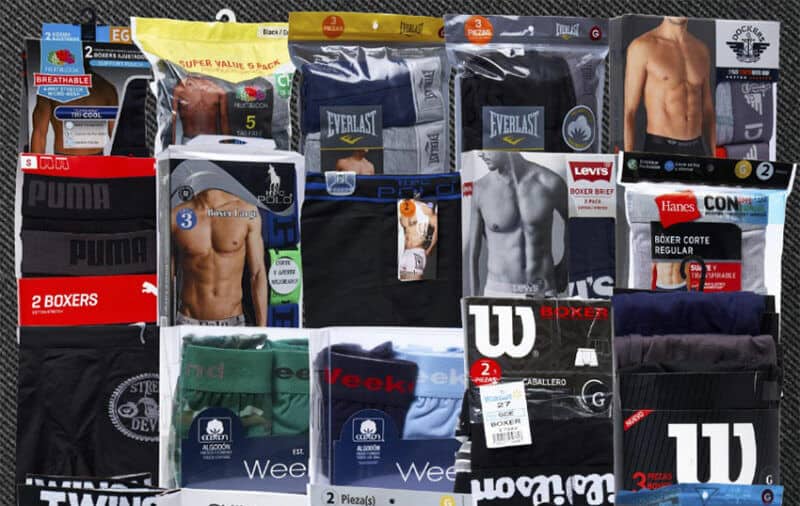
Consumer protection is taken seriously in Mexico. So seriously that the national consumer protection agency decided to inspect the characteristics of men’s underwear. And some were found wanting.
In a new report, the agency analyzed 20 products made by 14 brands for accurate labeling, sizing, tendency to shrink in the wash, durability, tear-resistance and other measures, running a total of 180 tests on the boxers.
Most received a grade of excellent or very good. Models from the brands Dockers, Fruit of the Loom, George and Polo got dinged for minor sewing defects. The George Seamless model as well as the Zaga Bóxer and Skiny Bóxer Basic lost points for having fiber types (synthetic, artificial or cotton) that differed by more than 3% from what the labels indicated.
Profeco recommended that when buying boxers, consumers check the item, consider price and quality and make sure to choose the correct size, preferably going with a 100% cotton option. At home, boxers should be washed before being worn and not left for long periods of time in the sun, the consumer agency said.
Full statistics and analysis of the boxers can be found in Spanish in Profeco’s monthly publication, Revista del Consumidor, or Consumer’s Magazine.
Mexico News Daily