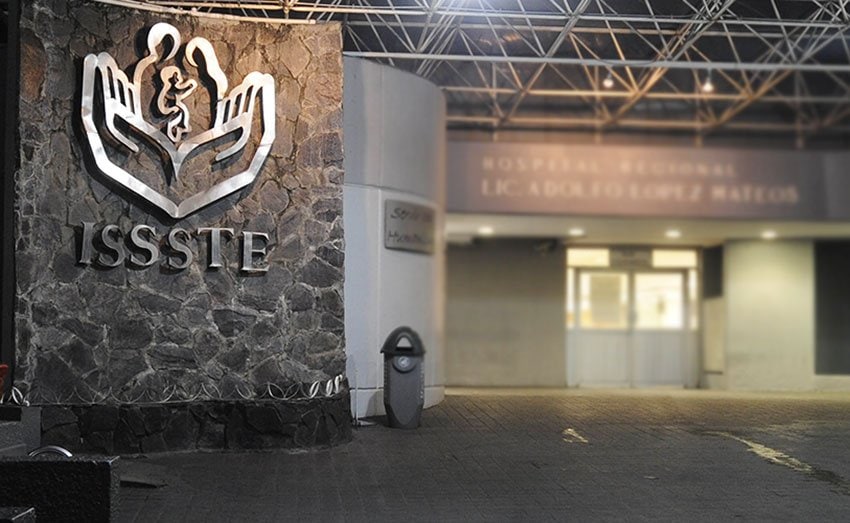
The state health plan for public servants is bankrupt and will run out of cash this summer if it doesn’t get a bail-out, its administration and finance director said yesterday.
Mario Zenteno Santaella of the ISSSTE warned that the agency would need a cash injection by July to continue functioning.
He told the Senate Health Commission there was a 128% increase in ISSSTE’s liabilities last year to 18.9 billion pesos (US $1 billion), compared with 8.3 billion pesos (US $439 million) in 2017.
Zenteno blamed the problem on previous “neoliberal” governments, accusing them of abandoning and dismantling the health service. He said liabilities totaled an average of 6 billion pesos each year from 2012 until 2017, before skyrocketing last year to nearly 19 billion pesos.
He hinted that the huge increase was related to the fact that 2018 was a presidential election year.
“There are parties responsible [for this situation], and we will reveal them in due time.”
The director went on to paint a general picture of widespread corruption, which he admitted might not yet be entirely stamped out. He revealed that under previous governments, the directors’ positions at the institute were used as a pay-off to losing gubernatorial and mayoral candidates.

Zenteno said another enormous drain on the institute’s finances was a 13.4-billion-peso annual contract signed with the medical distribution provider SILODISA, which provides expensive services that the ISSTE could be capable of carrying out internally.
He also mentioned irregularities in the prices the institute pays for supplies because of widespread collusion in the privatization and decentralization of services. For example, an anti-fungal antibiotic costs 640 pesos in the 20 de Noviembre hospital, but it can actually be purchased for 208 pesos.
Zenteno also said the ISSTE owes money to employees.
“I hope that when we see each other again in October we can very clearly show you how we’ve advanced, but I reiterate that the institute is bankrupt — and we’re not magicians.”
Asked about the situation at this morning’s presidential press conference, President López Obrador said the problems were not insurmountable.
“There is no crisis that cannot be dealt with.”
He said “we’re going to make progress because [now] there is discipline in the management of the budget, there is no corruption, there are no superfluous expenditures, there are no luxuries in the government. We are taking in more than last year.”
The president also managed a dig at one of his successors, blaming former president Vicente Fox for tax amnesties that cost “billions of pesos.”
Source: El Financiero (sp), Animal Político (sp), Milenio (sp)