The year was 1821 and Mexican military leader Agustín de Iturbide had just signed the document that gave Mexico its independence from Spain.
As de Iturbide and his army passed through Puebla, the nuns of the convent of Santa Mónica decided to serve him a special meal to celebrate their new country, and chile en nogada was born. Now, 200 years later, Puebla is celebrating the dish with a variety of festivities from now until September 15.
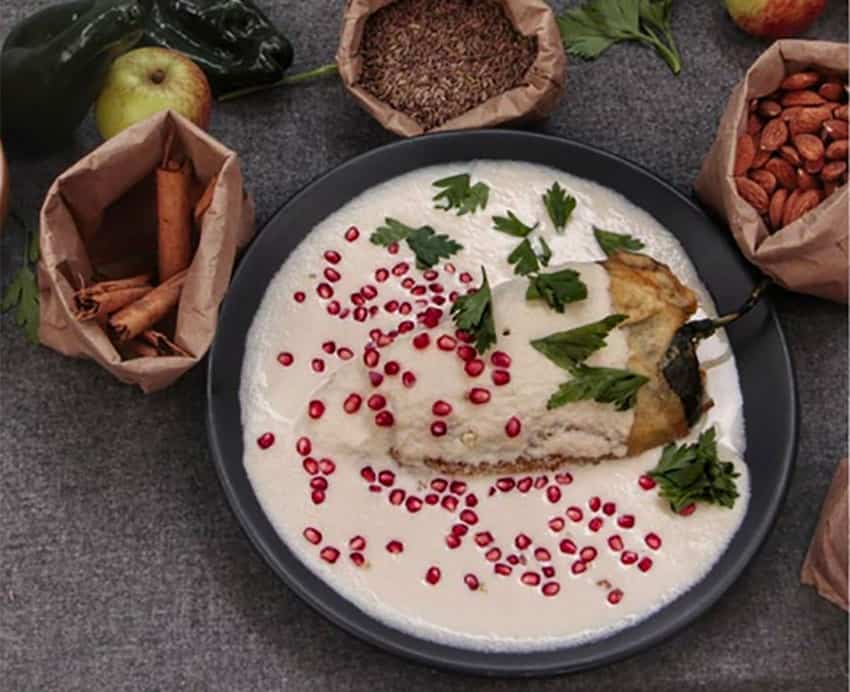
The traditional Puebla dish features the colors of the Mexican flag: green chiles stuffed with meat and fruit in a white nut-based sauce, garnished with red pomegranate seeds. To celebrate the tricolor dish, Puebla has organized master classes with international chefs, food festivals in Calpan and Tehuacán, and the unveiling of a commemorative plaque, among other activities.
There will be a screening of a documentary about chile en nogada and the dish will participate in New York’s international chile festival. The period of festivities will also include the publication of a book on the subject, a traveling exhibition on the origin of the ingredients and to wrap it all up, a concert by the state symphonic orchestra.
And chile en nogada is not just a delicious local specialty. It also bring economic benefits to the region, according to Puebla restaurant association president Olga Mendéz. She said that more than 15,000 restaurants in Puebla serve the dish and that in 2021, the sale of chile en nogada will bring in 800 million pesos (US $40.5 million).
Other states including Querétaro, Oaxaca and México state have expressed interest in promoting the dish among their residents, leading the restaurant association to offer presentations on the Puebla method for preparing chile en nogada, so that more people can enjoy a tasty part of Mexican history.
With reports from Milenio