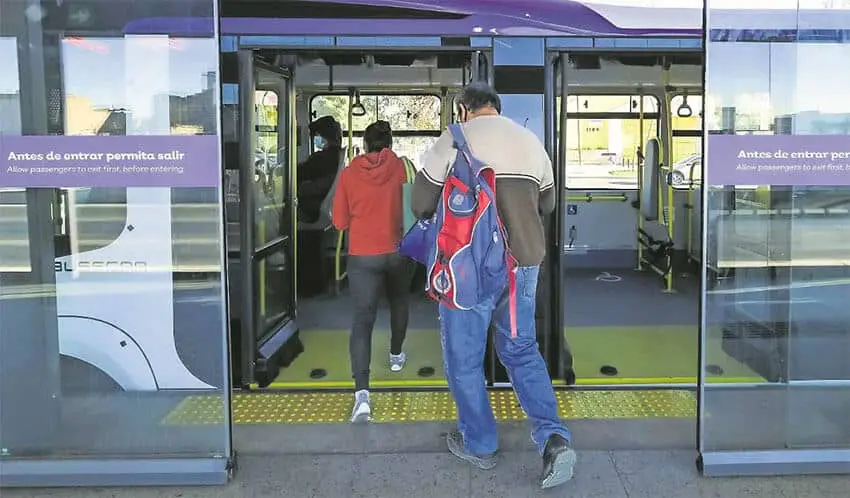
The biggest rapid transit bus system in Mexico opened for service on Saturday.
Mi Macro Periférico (My Ring-road Bus) in Guadalajara can transport as many as 300,000 passengers a day around three-quarters of the city’s ring road.
It runs westward from Belisario Domínguez Avenue in the north to the Chapala highway in the south.
The 41.5 kilometer route cost almost 9 billion pesos (US $440 million) to build. It consists of 42 stations and 38 pedestrian overpasses, which have ramps and elevators. Thirty-four of the stations have bicycle racks, bathrooms and breast feeding units and free internet is available to users.
The new rapid transit system will connect with another bus system called Mi Macro Calzada, metro Lines 1 and 3, and electric buses to the airport and to a university in Tonalá. It also provides access to transfers to Guadalajara center, Zapopan, Tlaquepaque, Tlajomulco and Tonalá.
Governor Enrique Alfaro said the new system, which eliminated a car lane, was necessary after years of negligence. “Today those who complain that we are taking a lane away from cars are still arguing the same absurdity … traffic is not generated by public transport works, traffic is not generated by bicycle paths. Traffic is generated by [public] works that were done in this city for decades, which prioritized cars over people,” he said.
More than 180,000 people used the new system in the first two days of operation when the service was free, the newspaper El Universal reported.

Alfaro said the service’s popularity far outstripped what was previously available. “It is evident … that on the first day of operations … the demand of users increased by 50%,” compared to the previous route, he said.
Alfaro’s Mi Movilidad (My Mobility) program has concentrated on expanding transport options with investment in the metro, a city train line, city bicycles and other rapid transit bus systems.
With reports from El Universal and Excélsior