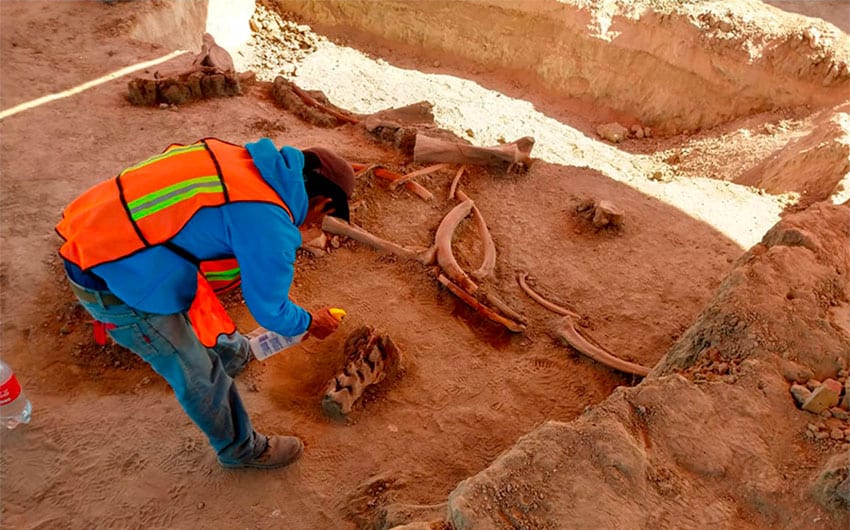
Archaeologists have found the remains of more than 60 mammoths at the site of the new Mexico City airport, located about 40 kilometers northeast of the capital in México state.
Scientists with the National Institute of Anthropology and History (INAH) discovered the bones during recent months but didn’t report the findings until Thursday.
They were found in the area where the control tower and runways of the new airport – currently under construction at the Santa Lucía Air Force Base site – will be located.
INAH experts will treat the bones to conserve them and they will eventually be put on display at a museum planned for the airport site, said chief archaeologist Pedro Francisco Sánchez Nava.
The remains are of Columbian mammoths and correspond to adult males and females as well as their young. Columbian mammoths were abundant in the Pleistocene era, which concluded about 12,000 years ago.
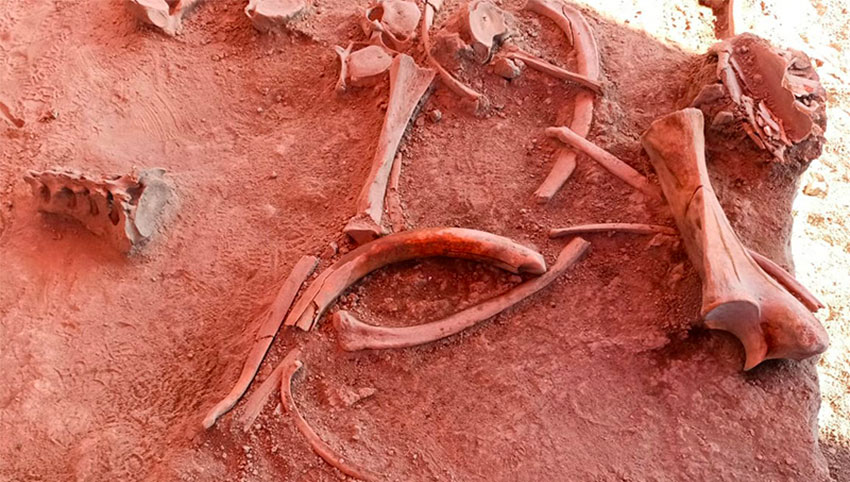
Sánchez said the mammoths probably died naturally after getting stuck in the mud of an ancient lake that subsequently disappeared.
However, he said that it is possible that the giant herbivores were steered into the mud by hunters who might have killed them and stripped off their flesh after they became stuck. INAH archaeologists found two mammoth traps late last year in Tultepec, a México state municipality just 10 kilometers from the new airport site, demonstrating that hunters in the late Pleistocene era used more sophisticated hunting methods than previously thought.

Sánchez said that the recently-discovered bones will be subjected to tests to try to find out more about how the extinct mammals lived and died.
He said that it is possible that more mammoth remains will be found at the airport site as exploration continues. Some 30 archaeologists are working there as construction of the the Felipe Ángeles International Airport – scheduled to open in 2022 – takes place.
“We’re in the exploration stage but there are also curators and restorers who are helping us with the cleaning of the remains,” Sánchez said.
He stressed that the discovery of the mammoth bones and the ongoing exploration will not cause any delays to the construction of the new airport, one of the federal government’s signature infrastructure projects.
Archaeologists have also found remains of other Pleistocene era animals in the area, including those of now-extinct bison and camel species, as well as 15 burial pits where it is believed pre-Hispanic farmers were laid to rest.
The erstwhile agriculturalists were buried with ceramic pots and bowls as well as mud figurines. Sánchez said that the human remains probably dated from around 500 to 1,000 years ago, several millennia after the mammoths became extinct.
Source: Reforma (sp)