Oenophiles in Mexico — and even people who just like a big ol’ glass of hearty red with their mole poblano — are already hip to wine regions in Baja California and Querétaro.
But now there’s a new up-and-coming wine destination in Mexico: La Ribera de Chapala, a cluster of small wineries on the southern shore of Lake Chapala in the state of Jalisco. In this case, La Ribera means “the lakeside.”
According to the newspaper Reforma, a 2014 study by Mexico’s National Institute of Forestry, Agricultural and Livestock Research (Inifap) determined that this area of Jalisco would be ideal for wine production — and that’s just when a lot of grapevines in the new region began taking root between cornfields and greenhouses growing berries.
Reforma reported that the pioneer of the burgeoning area is Don Serapio, a 60-year-old who spent four decades in the Napa Valley before returning to his home of San Luis Soyatlán on the southern shore of Lake Chapala. (San Luis Soyatlán prides itself as the home of the vampirito, a mix of tequila, sangrita, orange and lime juices and the soda Squirt, and served here in a plastic bag, but that’s for another story.)
Serapio’s project — Viñedos El Tejón, or “Badger Vineyards” — inspired others to start producing wine in the region “sheltered” by Lake Chapala.
“I don’t have academic degrees. My teacher is nature,” Serapio said in Reforma. “I went to the United States to work. There I had to plant, graft, prune and even pick grapes. I saw that they grew vines everywhere, and I wondered why in Jalisco nobody did. I started to do tests, first with cabernet sauvignon.”
While that particular “cab” experiment didn’t turn out well, the winery currently has 6,000 plants spread out over three hectares, with grapes such as sauvignon blanc, shiraz, malbec, garnacha blanca, tempranillo and malvasía.

El Tejón has scheduled a harvest festival from 11 a.m. to 5 p.m. Saturday, August 6, with Serapio himself welcoming visitors and giving tours. There will also be a four-course meal orchestrated by catering chef Gabriel Gómez of El Grill de Catamarca. The cost of 1,500 pesos (US $72) will include food, wine pairings and a tour. Reservations are required at (331) 845-6649, or visit @eltejonvinedos on Instagram.
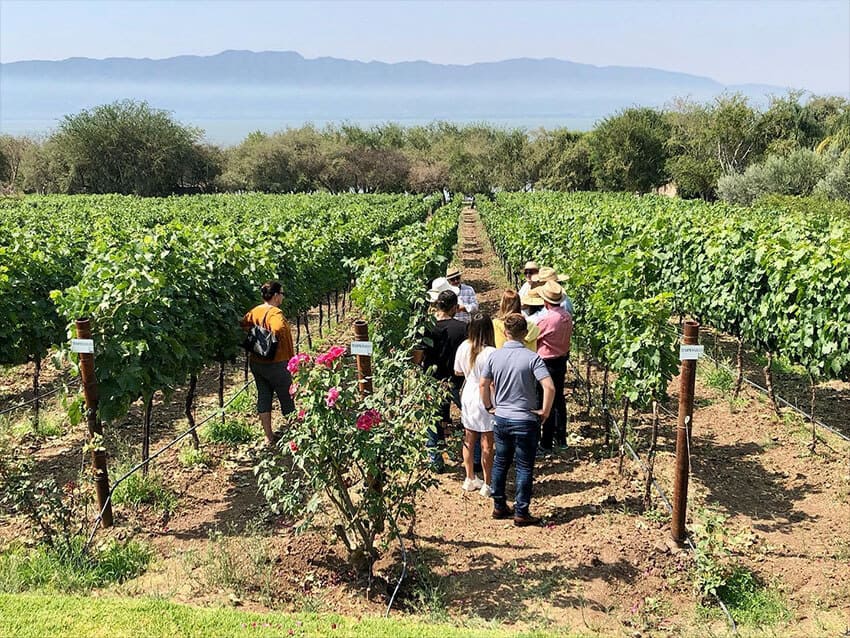
Other wineries in the region include Crotalus, Chava Calupo, Finca La Estramancia and Ritualista (all in San Luis Soyatlán) and Post Data (in El Tepehuaje). All are in the municipality of Tuxcueca. La Estramancia is open for private or group visits, and Post Data is not accepting visitors at the moment. Public access to the other wineries was not made apparent.
Crotalus, which refers to a rattlesnake native to the area, specializes in merlot, petit verdot and viognier. Other grapes in the region not already mentioned include macabeo, syrah and nebbiolo.
“The soil [in this region] has an organic layer with a lot of stone, and everything is almost of volcanic origin, which gives the wines a mineral flavor,” said Rafael Vargas, founder of Cava Chalupo. “The results have had good acidity and color, but they are young plants. Each year, the plant evolves and improves its quality.”
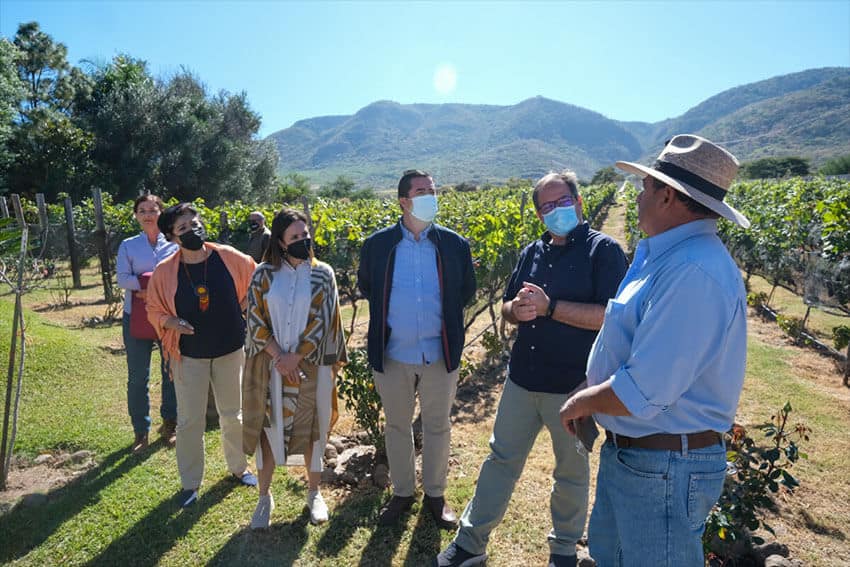
In a promotional tour last year, which reached the vineyards by crossing Lake Chapala in a boat, Xavier Orendáin de Obeso touted the emerging area and suggested that one day there could be public boat tours there from Chapala and Ajijic on the other side of the lake.
“We will promote the development of wine tourism in an orderly and sustainable manner,” emphasized Orendáin de Obeso, who coordinates economic growth and development for Jalisco, according to the newspaper Laguna. “We can have a united industry, we can have protected areas, and we come to ask for a vote of confidence. Opening these new opportunities for development is what moves us.”
With reports from Reforma