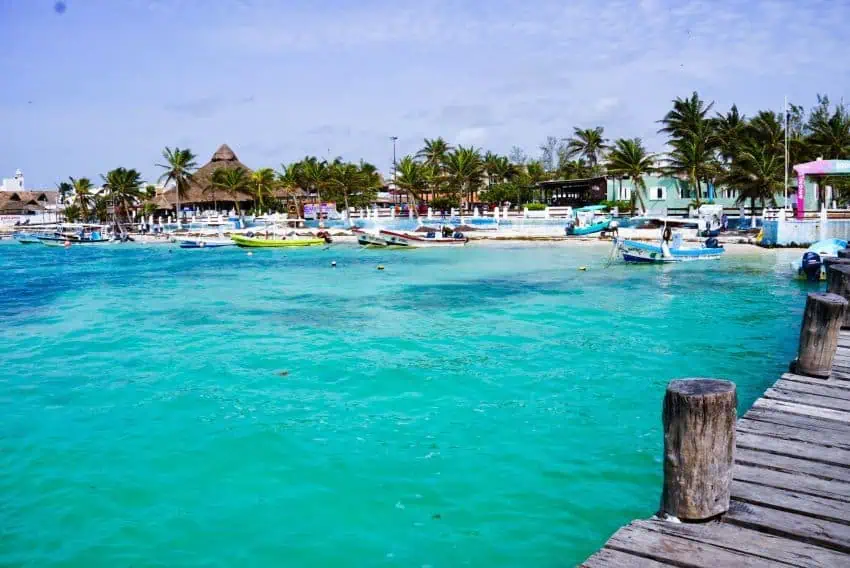
Quintana Roo’s sargassum monitoring agency forecasts that the remainder of the year will be sargassum-free, boosting the state’s economic outlook and pleasing the tourists who flock to the state’s beaches.
Esteban Jesús Amaro, a hydrobiologist and director of the agency, said favorable marine currents suggest a course that will exempt Mexican Caribbean beaches from the unsightly seaweed infestations that have troubled the tourism industry for more than a decade.

Amaro said Hurricane Beryl was responsible for dumping the most recent sargassum landfall but that was likely the last of it. His team’s forecast is based on studies of satellite images of the Caribbean and its prevailing currents.
“The masses of sargassum that were on a path toward [Mexico] have been dispersed to the north and are headed into the Greater and Lesser Antilles and in the direction of the Dominican Republic,” he said. Trade winds have also shifted, further redirecting the biomass away from Mexico’s southeast coast.
“We might go six or seven months without sargassum [landing on Quintana Roo’s beaches], perhaps not until February,” Amaro said.
Climate change is also a contributing factor affecting the sargassum forecast, Amaro told the newspaper La Jornada Maya. Ocean temperatures have significantly altered marine dynamics such that unexpected patterns can develop quickly.
Should sargassum be seen as an economic opportunity for Quintana Roo?
In late July, the vessel named Jorge Carranza Fraser — Mexico’s world-class research/survey ship — arrived in Cancún after tracking clumps of the seaweed from its origin near Africa to Mexico’s shores.

And there was plenty to track. The Quintana Roo monitoring agency reported 190,865 tonnes of sargassum in the Atlantic, 70,000 tonnes in the eastern Caribbean and 1,318 tonnes in the Mexican Caribbean. Even so, this amount was considerably less than last summer, according to Amaro.
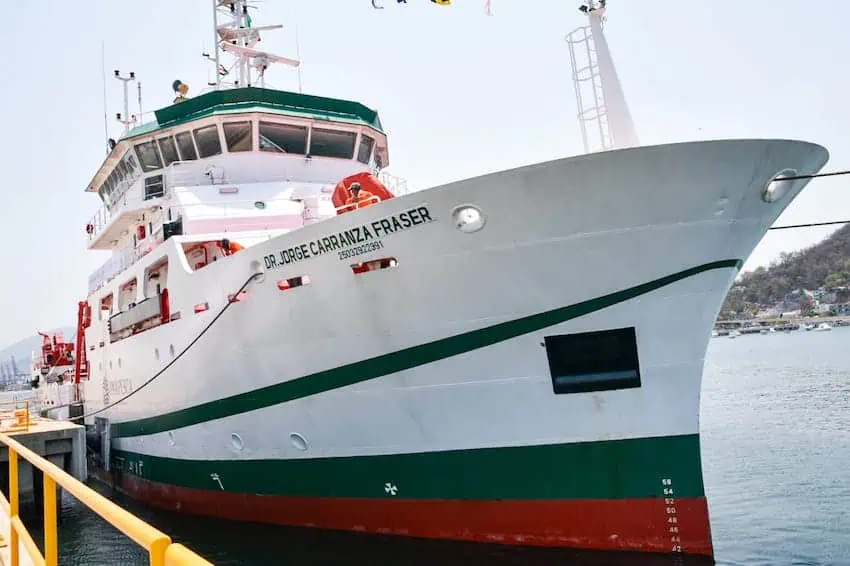
The state-of-the-art ship is hoping to transform sargassum from an eyesore that must be removed into an economic opportunity. Research suggests sargassum can be used to produce biogas that can generate electricity and biofertilizers; other studies indicate the algae might have industrial applications.
Beginning in 2011, huge quantities of sargassum began to pile up on Caribbean coastlines, including the Yucatan Peninsula. The brown slimy mess is an economic and ecological problem, affecting tourists who prefer a clean coastline while also disrupting marine and coastal ecosystems.
Researchers propose collecting the sargassum out in the middle of the sea while it is still alive to better study its qualities. Scientists admit that early findings are positive but effective application of the strategy could take years, especially since the impact of large-scale sargassum collection on local ecosystems remains unknown.
With reports from Por Esto!, La Jornada Maya and El Economista