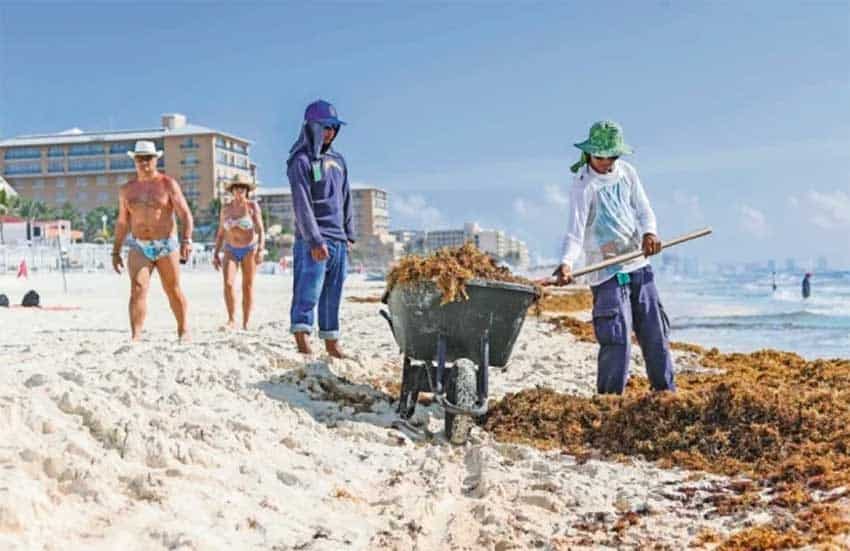
Quintana Roo will need 800 million pesos (US $41.3 million) to combat the expected invasion of sargassum on the state’s coastline this year, the governor said yesterday.
Carlos Joaquín González said that 400 million pesos will be required to collect the seaweed after it washes up on Caribbean coast beaches and the same amount will be needed to pick it up at sea, install containment barriers and monitor its approach.
The governor said that officials are lobbying the federal government to obtain additional resources because it has only allocated 62 million pesos to combat sargassum, which has the potential to cost Quintana Roo huge amounts of tourism revenue.
Joaquín explained that a massive quantity of the seaweed is expected to arrive on the coastline this year, adding that the state government has asked the Secretariat of Finance (SHCP) to consider the invasion as a natural disaster so that resources from the federal Natural Disaster Fund (Fonden) can be accessed.
He said that money is usually allocated by Fonden when human lives are threatened but added, “in this case, it’s an issue that goes against economic development.”
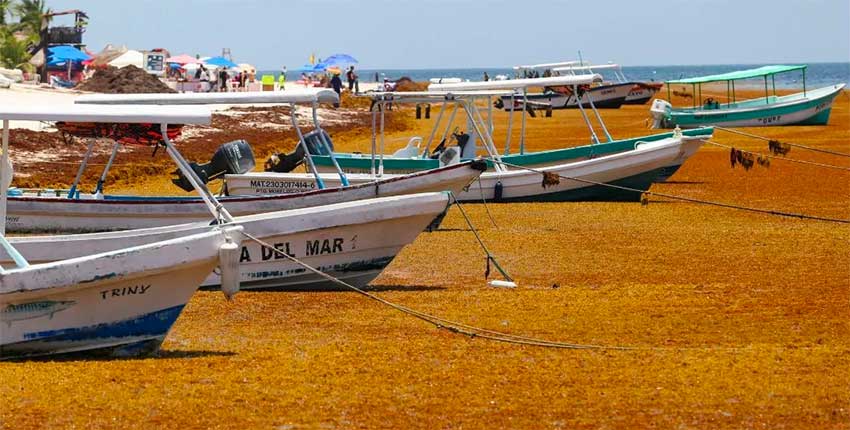
During last year’s sargassum season, up to 48 tonnes of the seaweed was collected on a daily basis from the state’s 480 kilometers of coastline, the governor said.
While Quintana Roo authorities are aiming to secure funding to combat sargassum this year, the National Tourism Promotion Fund (Fonatur) is seeking US $50 million to finance a comprehensive anti-sargassum plan into the future.

One aspect of the plan is the establishment of a coastal management center in Quintana Roo from which sargassum studies and monitoring, among other activities to combat the seaweed’s arrival, would take place.
Pablo Careaga, a high-ranking official at Fonatur, said the seaweed represents a threat not just to marine ecosystems but also the health of Quintana Roo’s economy, which is heavily dependent on tourism.
The tourism sector took a hit last year due to the sullying of otherwise pristine Caribbean beaches by large amounts of unsightly and smelly sargassum and Careaga believes that if the same happens this year, already high levels of crime in Quintana Roo could go up even further.
“In the face of a reduction of tourists, the logical increase of unemployment will open up even more space to the scourge of insecurity that since last year has been extremely worrying in all the important tourist destinations in the state,” he said.
The US $50-million sargassum management plan will be formally presented to the federal government on April 4, Careaga explained.
Source: Por Esto (sp), El Universal (sp)