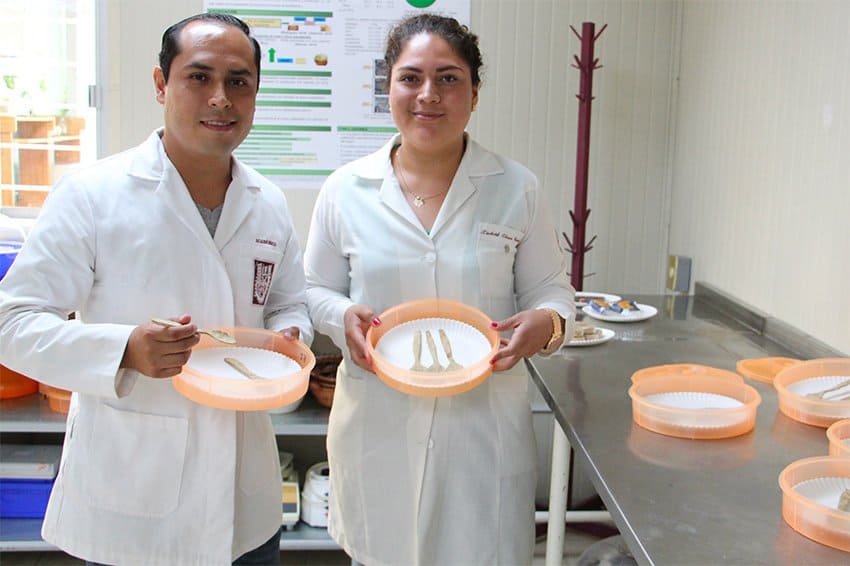
What to do with disposable cutlery? The thrifty may reuse the utensils while the crafty may use them as children’s art supplies. But a team of scientists from the National Polytechnic Institute (IPN) is eating theirs.
Made out of rice hulls, the edible utensils developed by a research team at the IPN Center for Development of Biotic Products (Ceprobi) are not only a source of nourishment, but contribute to a cleaner environment.
Rice hulls are traditionally used in Mexico as livestock feed due to their short shelf life. Working with this raw material, the researchers first controlled its quick oxidation process in order to be able to experiment longer with it. This led to the development of highly nutritious marzipan and a tortilla chip-like product.
The stabilized rice hull has high levels of essential amino acids, several vitamins, sodium, potassium, calcium, magnesium, zinc, iron, selenium and mono and polyunsaturated fats.
The development of the edible cutlery was the result of a trial and error process through which the researchers found the ideal texture for the end product. Apart from the rice hulls the utensils contain just water and a few other natural ingredients.
Spoons manufactured with the material have adequate resistance, the researchers found, and perform as expected when in contact with hot meals. Still, they are not yet satisfied and are experimenting with adding natural gum to harden the product.
Source: Milenio (sp)