
Mexican fencer Paola Pliego announced this week that she had become a citizen of Uzbekistan and would no longer represent her country of birth in upcoming competitions.
But she is by no means the first high-level athlete to have turned her back on Mexico – at least five others have recently done the same.
Pliego cited corruption at the National Sports Commission (Conade) for her decision to switch allegiances to the central Asian nation of Uzbekistan.
The fencer missed out on the opportunity to compete in the 2016 Olympic Games in Rio de Janeiro, Brazil, because she tested positive to the banned substance modafinil in the lead-up to the event.
But it was later revealed that the test carried out by a Conade laboratory had mistakenly shown that Pliego had taken the banned drug when in fact she had not.
In a statement, the fencer slammed Conade chief Ana Gabriela Guevara and the president of the Mexican Olympic Committee, Carlos Padilla, for not having supported her through the ordeal she faced.
“Why did they do that to me? How did I go from being someone who filled them with pride to someone who inconvenienced them so much?” she asked.

Pliego will represent Uzbekistan at the World Fencing Championships in Budapest, Hungary, later this month and if all goes to plan she will compete under the country’s flag at the 2020 Olympics in Tokyo, Japan.
Other athletes have abandoned Mexico in recent times for a variety of different reasons.
Taekwondo practitioner Damián Villa, a native of Zamora, Michoacán, announced last year that he would compete for the United States, a country of which he is also a citizen.
He said that he made the move north because only two athletes per country can compete in grand prix events and “there are already two excellent athletes with very established positions” in Mexico’s taekwondo team.
In 2017, archer Gabriela Bayardo moved to the Netherlands and now competes under the Dutch flag, while diver Jonathan Ruvalcaba decided to try his luck in Colombia after missing out on the selection for the 2016 Olympics.
He later switched allegiance to the Dominican Republic and will represent the Caribbean nation at the World Aquatics Championships in Gwangju, South Korea, this month.
Another diver, Kevin Chávez, took up an invitation to join the Australian diving team after a long injury layoff.
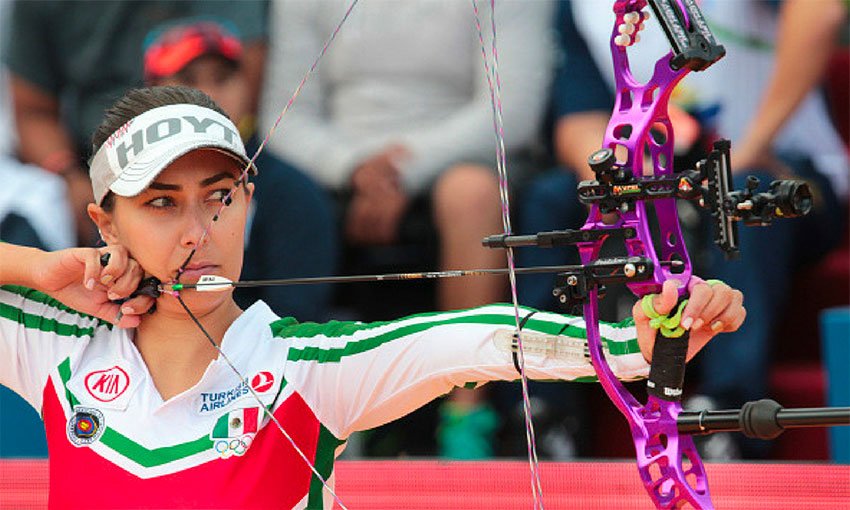
Yet another athlete who has given up the red, green and white of Mexico is archer Linda Ochoa, who has announced that she will compete for the United States.
The 32-year-old Guadalajara native had problems with sporting authorities and fellow competitors for some time before she decided to pull the pin on competing for Mexico.
In January, Ochoa said she was taking an indefinite break from competing in archery events, citing a lack of funding as the main reason for her decision.
However, she also said that she was sick of the “deception and blackmail” of other archers.
Source: Sin Embargo (sp), Informador (sp)