The federal government’s welfare largesse has benefited the ruling Morena party at the ballot box, according to the director of an international anti-poverty organization and a think tank chief.
In 2022, the government will distribute more than 446 billion pesos (US $22.1 billion) to some 23 million beneficiaries of 13 social programs, the newspaper Reforma reported. Among the recipients are old age pensioners, young people with educational scholarships and participants in government programs such as the Youth Building the Future apprenticeship scheme and the Sowing Life employment/reforestation scheme.
Gonzalo Hernández Licona, an economist and director of the Multidimensional Poverty Peer Network – a global anti-poverty grouping of 61 countries and 19 organizations – told Reforma that the government’s large outlay on social programs affects the decisions citizens make when they cast a vote.
The results of state elections held earlier this month – at which Morena won the governorships in four of six states – demonstrated that, he said. Most of the support for Morena came from people aged 50 and over, said Hernández, a former head of national social development agency Coneval. “It came from the beneficiaries of social programs,” he added.
Miguel Székely, director of the Center for Educational and Social Studies, told Reforma that President López Obrador and Morena – which the president founded – have been very effective at deinstitutionalizing social programs. In other words, he explained, people who benefit from such programs tend to think of the payments they receive as a product of the goodwill of the president rather than a social right.
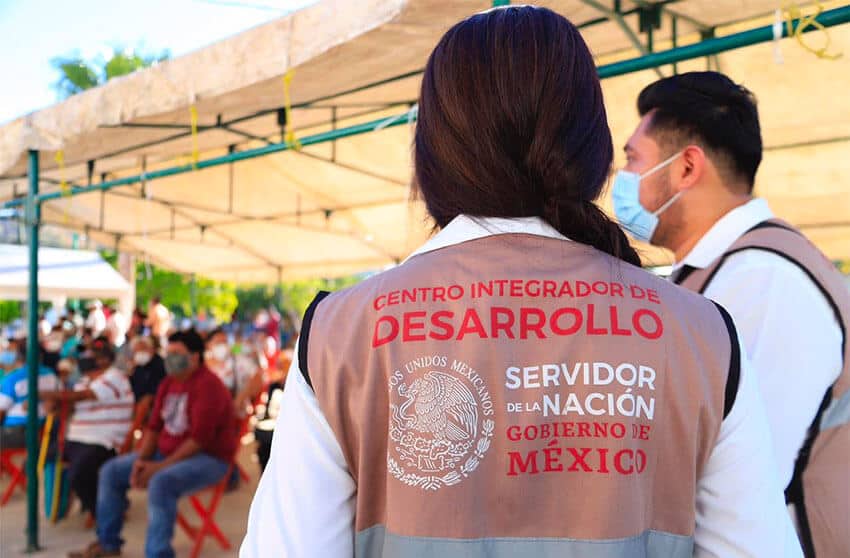
Unlike previous governments, the López Obrador administration has a battalion of foot soldiers – the so-called servants of the nation – to inculcate that idea, Székely added. The servidores de la nación, who assist the on-the-ground delivery of social programs, also sow fear that welfare programs will end if Morena doesn’t remain in power, the think tank chief said.
The dissemination of such an idea – and more importantly the acceptance of it – creates an obvious electoral advantage.

López Obrador, who has used the maxim “for the good of all, the poor come first” to justify his government’s expenditure on social programs, is constitutionally forbidden from seeking a second term as president, but a perception that Morena must remain in power in order for the welfare largesse to continue could benefit the ruling party’s candidate at the 2024 presidential election.
Foreign Affairs Minister Marcelo Ebrard and Mexico City Mayor Claudia Sheinbaum are considered the frontrunners in the race to secure the Morena nomination and are already campaigning to do so.
Clara Jusidman, an economist and former Mexico City government official, charged that the government doesn’t just use its social programs for electoral purposes but is dedicated more broadly to perpetuating its power. “The entire state apparatus is turning into a huge electoral machine,” she said.
Some observers, including opposition lawmakers, have described Morena as the new PRI, or Institutional Revolutionary Party, which ruled Mexico for most of the 20th century in what Peruvian writer Mario Vargas Llosa described as a “perfect dictatorship” – and was notorious for vote buying.
Morena president Mario Delgado denied that accusation earlier this month, asserting that Morena hadn’t become a party of the state like “PRI in its darkest period.” For Morena, he added, the purpose of being in power is to transform the country.
With reports from Reforma