The federal government will spend 40 million pesos (US $2 million) to build a solar plant that will provide electricity to the community of Santa María del Mar, an indigenous Huave community in the Isthmus of Tehuantepec, Oaxaca, that has gone without electricity for the past nine years.
Community official Efraín Solano Alinarez said the community had signed an agreement to build the plant with representatives from the National Institute of Indigenous Peoples and the Federal Electricity Commission, the two federal agencies that will share its cost.
Santa María del Mar has been demanding access to electricity from the federal government since the inauguration of President López Obrador on December 1.
For almost 10 years, Santa María del Mar has been engaged in a bitter conflict with neighboring San Mateo del Mar, another Huave community, over access to 1,165 hectares of communal land claimed by both communities.
Near the start of the conflict, residents of San Mateo del Mar cut off the electricity supply to Santa María.
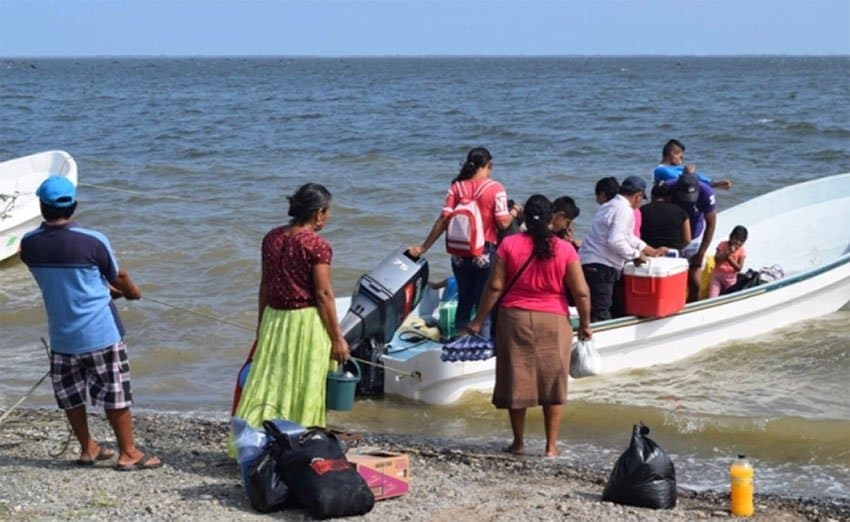
They have also maintained a blockade on the only highway connecting Santa María to the rest of the state, forcing residents of the latter to travel by boat to reach their community. In 2017, three Santa María residents drowned when their launch overturned in Laguna Superior.
On June 19, 2018, a court issued a definitive ruling in favor of Santa María del Mar, but the conflict has continued, causing problems for Santa María in terms of access to education, health care and food.

Residents are also demanding the federal government build another road connecting them to the rest of the state, as well as a health clinic.
Source: El Universal (sp) NSS Oaxaca (sp)