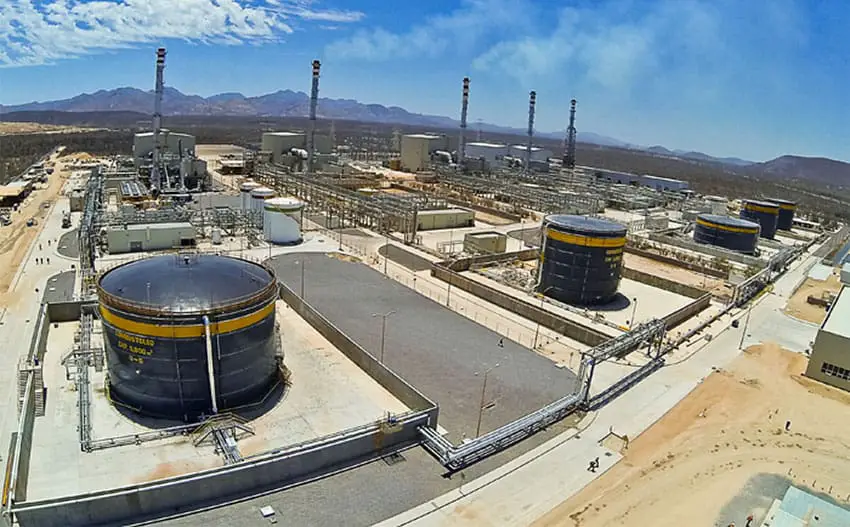
After a series of blackouts across Baja California Sur on Sunday and Monday, the National Energy Control Center (Cenace) declared a state of emergency on Monday afternoon.
The blackouts started on Sunday night in different neighborhoods of La Paz and Los Cabos and lasted between 40 minutes and an hour and a half. There have also been blackouts in the municipalities of Loreto, Mulegé and Comodú, affecting a total of over 400,000 people.
Around 1:30pm on Monday, Cenace announced an emergency warning because the state’s grid was using part of its operating reserve to cover demand. At 2:57pm, the agency declared a state of emergency because the operating reserve had fallen below 4%.
Cenace did not give any explanation regarding the cause of the blackouts.
The Center for Renewable Energy and Environmental Quality, a renewable energy advocacy organization, blamed the blackouts on the inflexibility of the state’s electrical grid, which it says is operating above its capacity.
On Tuesday, four Baja California Sur state deputies issued a statement saying they had received many complaints and questions about the blackouts from their constituents, and asked the Federal Electricity Commission to explain the problem.
Baja California Sur Civil Protection officials said they are in constant contact with the CFE, and are monitoring hospitals and other facilities where electric power is vital to prevent interruptions.

Source: El Financiero (sp), El Sol de México (sp), Noticias la Paz (sp), El Sudcaliforiano (sp)