Teacher strikes have cost students in Oaxaca almost two years of classes during the past 14 years, according to an education advocacy group.
A study conducted by Mexicanos Primero revealed that teacher members of the Oaxaca-based Section 22 of the CNTE teachers’ union stopped work on 380 days between 2005 and 2019. A school year has 200 days.
Around 925,000 students at more than 12,000 preschools, primary schools and secondary schools in Oaxaca have been affected by the strikes.
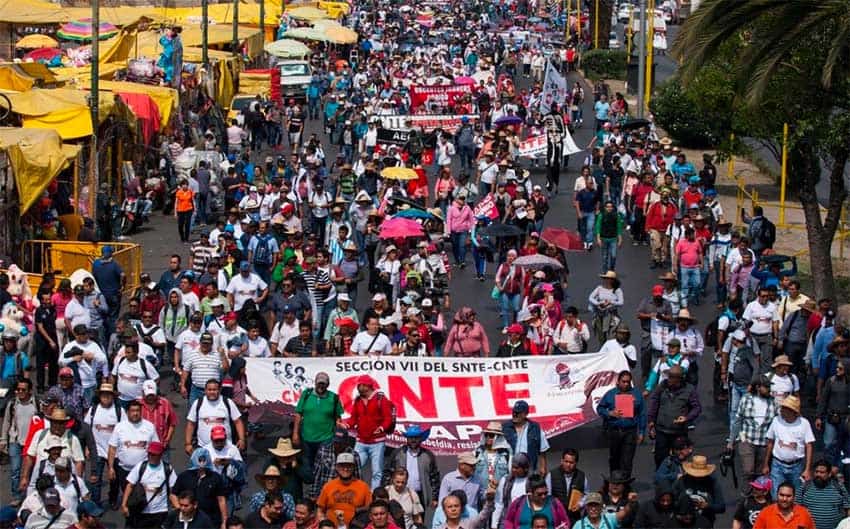
The work stoppages continued yesterday: a group of CNTE members marched in Mexico City during a 24-hour strike in Oaxaca.
Jennifer O’Donoghue, general director of Mexicanos Primero, said the CNTE union has staged strikes and protests to pressure authorities since its foundation in the late 1970s.
In recent years, the dissident union has protested frequently to demand the repeal of the previous federal government’s 2013 education reform, taking particular umbrage at compulsory evaluations for teachers.
Teachers in Oaxaca stopped work on a total of 161 days during the six-year presidency of Enrique Peña Nieto between 2012 and 2018, compared to 94 days during the administration of his predecessor, Felipe Calderón.

The school year with the highest number of lost days was 2006-2007, when teachers in Oaxaca were engaged in a pay dispute with then-governor Ulises Ruiz. Students had no classes to attend on 72 days.
During the past month, CNTE members have succeeded in shutting down the lower house of federal Congress for several days.
The union is unconvinced that the government’s plan to abolish the education reform will go far enough to meet their demands.
Since President López Obrador took office in December, teachers in Oaxaca have stopped work on eight days, according to Mexicanos Primero.
To maintain pressure on the government to fully repeal the 2013 reform, the CNTE union is planning a 48-hour work stoppage on May 1 and 2 in several states including Oaxaca, Chiapas, Michoacán and Guerrero.
Source: Milenio (sp)