Mexico City’s fabled dance halls have been shuttered for five months but for some lovers of cumbia and salsa, the lack of infrastructure created an opportunity to improvise.
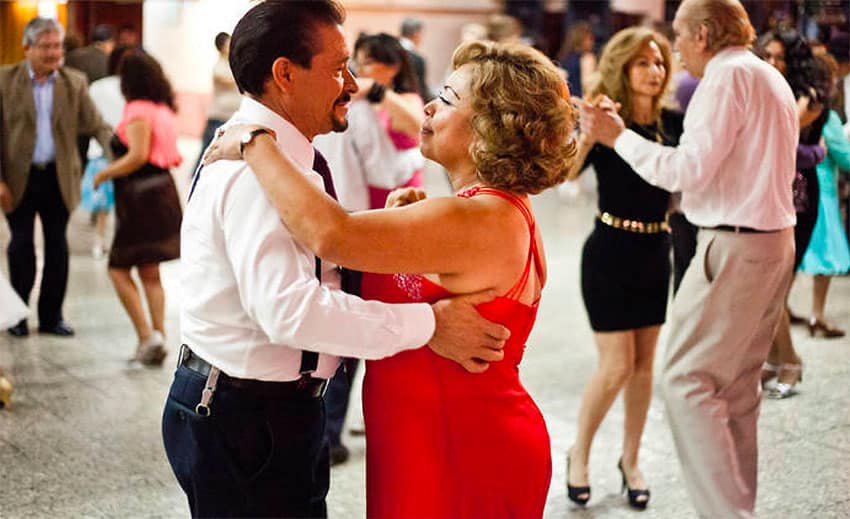
That’s what 52-year-old Martha Rivero Maldonado and her friends did, and now they meet up in San Juan Park to cut a rug, where more than 100 people have chipped in to purchase a speaker.
Yesterday especially Rivero felt she could not let the holiday pass without dancing. She made lunch for her employers and left work in the afternoon headed for the park, fixing a patriotic ribbon in her hair during the metro ride, and wearing red, white and green necklaces.
She’s been dancing all her life, and won’t let the coronavirus stop her.
“I try to dance only with one partner, and we have antibacterial gel that we put on every time we finish dancing. We also wear face masks,” she explained.
“This ugly pandemic has taken many things from us, but it could not take away the most Mexican thing that Mexicans have: dancing,” she said while putting on her makeup as the train neared San Juan Park.
“This is our life, dancing. It takes away my depression and we need that now. People, relatives and friends, have died. We have to move on,” she said.

Source: Reforma (sp)