Bus drivers in the state of México announced that they will form self-defense groups to protect themselves from criminals who target public transportation in the Mexico City metropolitan area.
Axel García Aguilera, the president of the Izgasa transportation company and a representative of the Autonomous Drivers’ Alliance (AAA) in México state, said state and municipal police have failed to address the problem of crime on public transportation because they are infiltrated by organized crime.
“Yes, we are planning to create self-defense groups, and not just for transportation, but citizen self-defense groups,” he said.
A year and a half ago, the AAA gave the state government a Risk Atlas showing the neighborhoods where organized crime operates, as well as documentation of the murders of 10 bus drivers and nine transportation union representatives by organized crime. But García says the government has not taken any action.
According to statistics gathered by the alliance, over 1,000 crimes take place on public transportation every day, but most are not reported because victims don’t trust the police or they see filing a report as a waste of time.
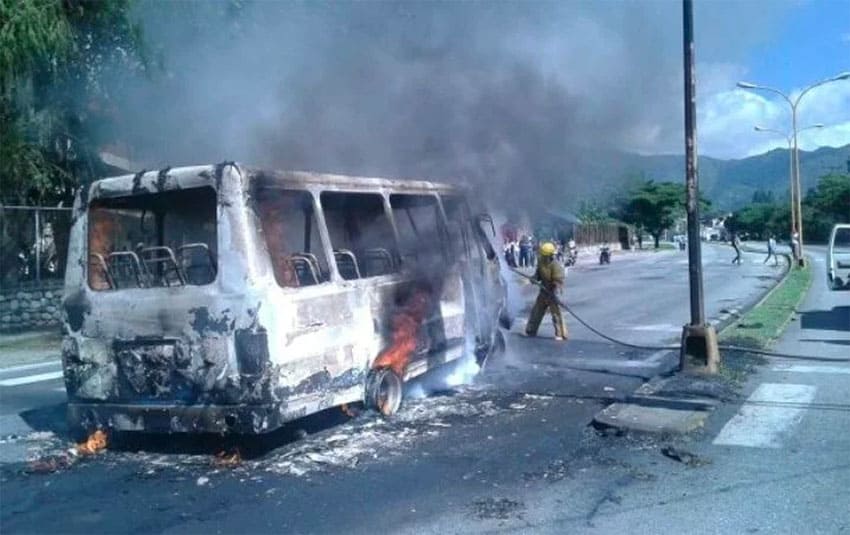
García explained that extortion gangs put colored stickers on buses to mark which drivers have paid protection fees, which run between 3,000 and 5,000 pesos per vehicle (US $154 to $257). Failing to pay fees has resulted in vehicles being burned and drivers being beaten and even killed.
In his morning press conference on Thursday, President López Obrador said the National Guard could be deployed to México state to help monitor public transportation.

México state authorities say the Jalisco New Generation Cartel is involved in the extortion racket.
Source: El Universal (sp)