Wednesday, January 21, 2026

US donation to aid restoration of Puebla monastery’s murals

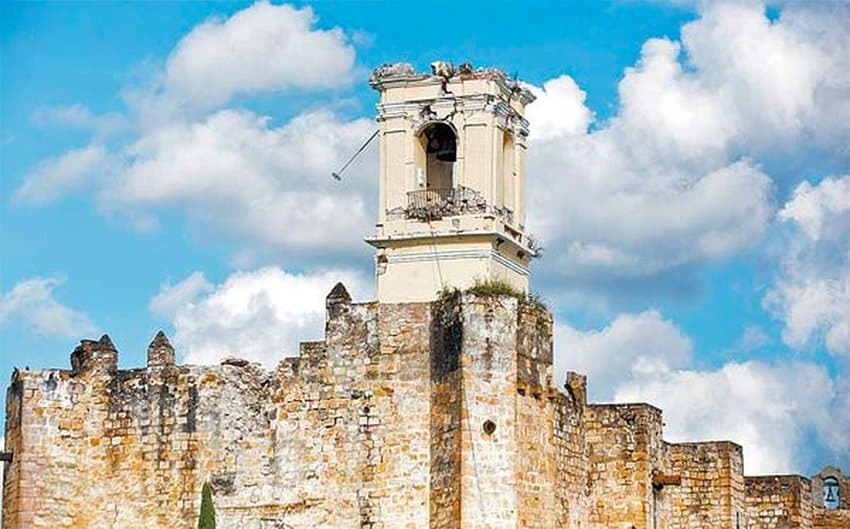
The United States Embassy has donated US $200,000 to the National Institute of Anthropology and History (INAH) to help restore a 16th-century monastery in Huaquechula, Puebla.

Construction of the monastery of San Martín de Tours begun in 1531 and was finished in 1580. Built by the Franciscan order, the monastery’s walls are still adorned by remnants of rich murals.

But the building was damaged in the September 19 earthquake last year.

The donation by the U.S. Ambassador’s Fund for Cultural Preservation means that INAH will be able to restore a large area of “excellently crafted mural paintings with a great aesthetic, pictorial and historical importance,” said Diego Prieto, the institute’s director.

Restoring the murals began in June and is expected to be completed next year.

Established in the year 2000, the ambassador’s fund has financed the conservation of cultural sites and objects in 120 countries around the world.

Another recent contribution in Mexico was a $500,000 donation for the restoration of a Mayan archaeological site in Palenque, Chiapas.

Source: Milenio (sp)

Have something to say? Paid Subscribers get all access to make & read comments.
IED device laying on the ground

In 1 year, Michoacán authorities deactivated more than 1,600 improvised explosive devices

0
The number of improvised explosive devices (IEDs) located, seized and deactivated by state authorities in Michoacán more than doubled last year, indicating that criminal groups' use of the makeshift bombs is becoming more prevalent.
Head of IMPI Santiago Nieto Castillo sitting at a desk

Mexico leads LatAm in AI patents after IP office reports record year

0
According to the Mexican Institute of Intellectual Property (IMPI), last year it granted 972 patents to Mexican individuals, the highest figure in 30 years.
a bird

Climate change: Migratory birds are starting to abandon the state of Jalisco

0
A number of once-common species — such as the American grebe and the roseate spoonbill — simply aren't coming back anymore, due to the drying wetlands and rising temperatures in western Mexico.
BETA Version - Powered by Perplexity