Arbolillo, Veracruz, will no longer only be known as a sleepy fishing village on the Gulf of Mexico with fantastic food and friendly people.
It will now have to endure the unenviable attention that comes with being dubbed a favorite narco burial ground after a collective made up of families of kidnapping victims identified the town as the location of a series of recently-excavated mass graves.
The Veracruz Attorney General’s office said last week that 166 skulls had been exhumed from 32 hidden graves on a property in the state.
However, citing security reasons, Attorney General Jorge Winckler Ortiz didn’t disclose the location of the property, where a total of 174 craniums have now been found.
Arbolillo residents, known as alvaradeños due to the town’s location on the Alvarado Lagoon, have witnessed the presence of suspected members of the Gulf and Zetas drug cartels in the area, located around 60 kilometers south of the port city of Veracruz.
But finding out that a property on the outskirts of their town has allegedly been used as a dumping ground for so many victims of violent crime has come as no less of a shock to the usually jovial locals.
In March 2017, members of the Solecito Collective alerted Winckler Ortiz to the suspected presence of hidden graves in Arbolillo and requested permission to carry out a search of the area.

The state government, however, denies that the coastal community is the location of the hidden graves, a position that Solecito founder Lucía Díaz rejects.
“We went there [the alleged site of the mass graves in Arbolillo] and saw that they had left clothes and other things there. It was clear to us that they [investigators] did a quick and bad job,” she said.
Journalists from the newspaper El Universal also traveled to the alleged location of the mass graves, which they reported is cordoned off and guarded by police.
Díaz is convinced that some of the human remains belong to people who have disappeared during the administration of current Governor Miguel Ángel Yunes Linares, who assumed office in December 2016.
“There are [victims relating to] three Solecito Collective cases who appeared in the graves and they disappeared during the government of Yunes.”
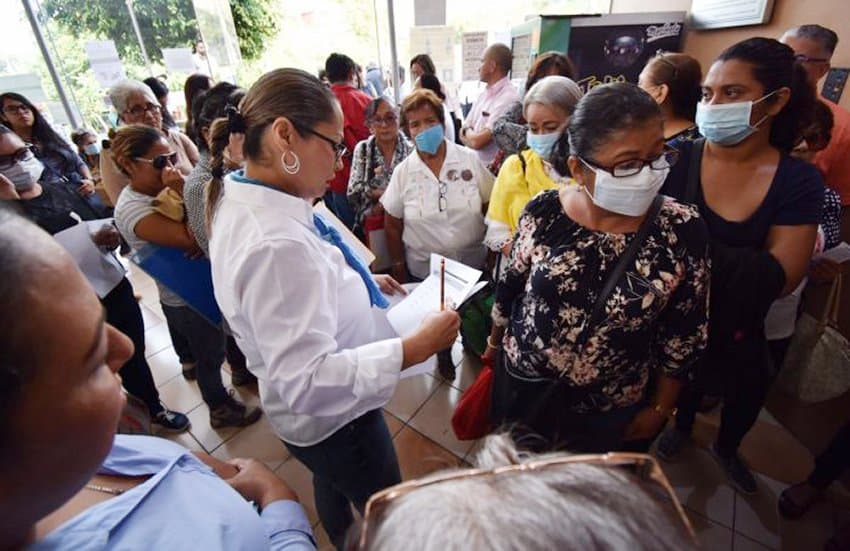
The collective has also accused the Attorney General of violating national and international protocols in the process of exhuming the graves, and violating the rights of families by not informing them first when graves are discovered.
In a radio interview yesterday, Yunes Linares rejected the claim that Arbolillo is the location of the graves containing 174 skulls and accused Díaz of being a liar.
“It’s a complete lie of the woman who said it, that the discovery is in Arbolillo . . . It forms part of this whole discourse of lies that this woman constantly tells, that she constantly makes public to feel important,” he said.
The governor added that the real location of the discovery will be announced at a later date and that members of victims’ collectives will be given access to the site at that time.
Díaz, who has been searching for her missing son since 2013, fired back today, describing the governor as “indifferent, insensitive and lacking principles” and accused him of failing to deliver campaign promises with regard to searching for and identifying remains.
Her organization has been active in identifying grave sites, often through anonymous tips from people with connections to organized crime, leading authorities to mass graves.
She said politicians will come and go but the parents of the missing will continue to search.
“You want your sons to be governors,” she said, addressing Yunes. “We just want to know where our sons are.”
Source: El Universal (sp), Xeu (sp)