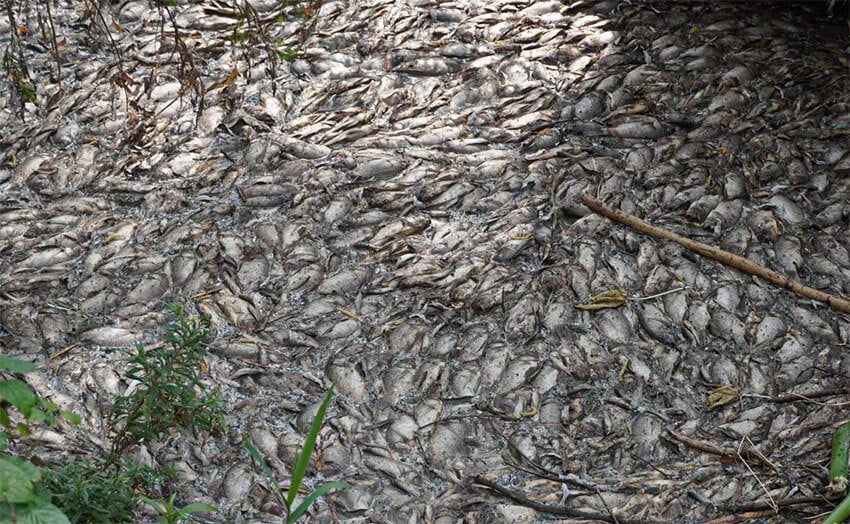
The dumping of dregs from the production of tequila killed some 60 tonnes of fish in a reservoir in eastern Jalisco, local authorities said.
According to the mayor of Ayotlán, Rodolfo Hernández, tequila makers have discarded residue from the production of Mexico’s most famous tipple near the San Onofre dam.
Transported to Ayotlán in tanker trucks, the dregs are dumped into nearby holes from which the water reaches the reservoir, depleting oxygen in the water and causing fish to die, Hernández said.
Before the die-off – which began late last month – the number of dumping incidents increased, he said.
“There are holes in the ground and they arrive there and throw out the [tequila] dregs. We took office in October and we had a commitment to take action [against the illegal practice] … but it was too late. Now we have an 80% death rate for mojarra and tilapia in the dam,” Hernández said.
The reservoir is used for fishing and irrigation and as a water source for cattle. Testing of the quality of the water began in late November.
Under pressure from fishermen, environmental activists and the Jalisco Human Rights Commission, state and federal authorities made machinery available to the municipal government to remove the thousands of dead fish.

One company that was allegedly dumping dregs near the dam was shut down by authorities, but the illegal disposal of the refuse continues, said activist Salvador Escoto.
Tequila production in Jalisco primarily occurs in the municipality of Tequila, located about 70 kilometers northwest of Guadalajara, but the spirit, made from the blue agave plant, can also be legally produced in certain municipalities in four others states: Guanajuato, Michoacán, Nayarit and Tamaulipas.