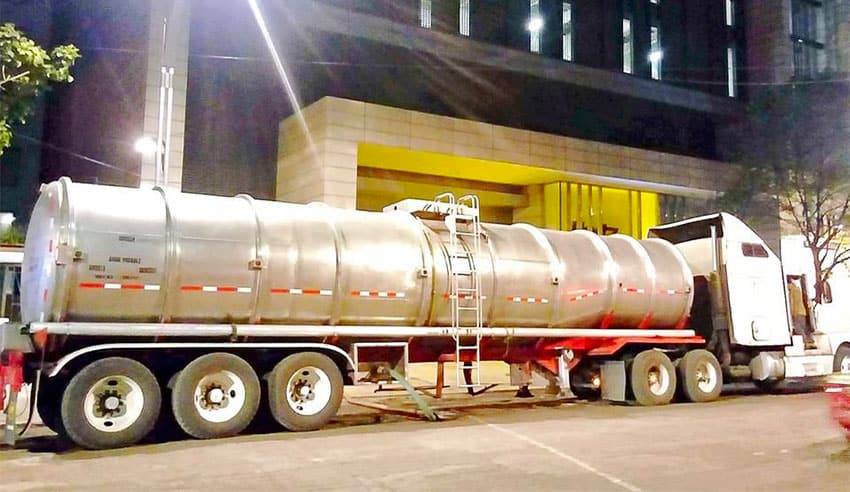
Tanker trucks provide more than 90% of the water used at Mexico City airport due to the inability of the capital’s supply network to meet demand.
Thirty-eight trucks, each with a capacity of 40,000 liters, supply water to the airport on a daily basis at a cost of 177,281 pesos (US $9,015) per day, or 64.7 million pesos (US $3.3 million) per year.
A single supplier has provided all the water that has been trucked to the site during the past 10 years, according to contracts posted to a government purchasing website. Adolfo Trejo Castarena also has a contract to continue supplying water to the airport until the end of 2020.
In 2018, the Mexico City Water Department (Sacmex) supplied 57 million liters of water to the airport – just 8.5% of the total used – while tanker trucks delivered the other 91.5%, equal to 616 million liters.
About 70% of the latter amount went to Terminal 1 at the Benito Juárez International Airport, while the remaining 30% was trucked to Terminal 2.
Sacmex is unable to allocate more water to the airport without compromising its capacity to deliver water to homes and businesses in neighborhoods in the same area.
In order to reduce its reliance on tanker truck deliveries, airport management has requested federal government permission to carry out studies to look at ways in which rainwater can be harvested and stored at the site and wastewater can be treated before being reused.

Demand for water has increased with growing passenger numbers.
Twenty-four million passengers used the airport’s two terminals during the first half of 2019, 71% more than in the same period of 2012 when 14 million passengers flew to or from Mexico City.
Source: El Universal (sp)