A group of non-profit organizations wants the municipal council in La Paz, Baja California Sur, to explain where the water and other services will come from to serve new real estate developments that have been announced in the area.
At least nine environmental organizations, including the Citizens’ Observatory of Water and Sanitation, the Center for Biodiversity, the Inter-American Association for Environmental Defense and the Mexican Center for Environmental Law (Cemda) have, for the second time, asked La Paz Mayor Rubén Muñoz Álvarez to take into account the city’s water shortage when considering approving real estate projects.
Cemda’s regional director, environmental lawyer Mario Sánchez, told the newspaper Diario El Independiente that while “the pandemic makes the problem of water shortages more evident,” council members have not responded to repeated requests from environmental organizations that would like representatives of local government to disclose the city’s capacity to meet the current demand for water and electricity before announcing new developments.
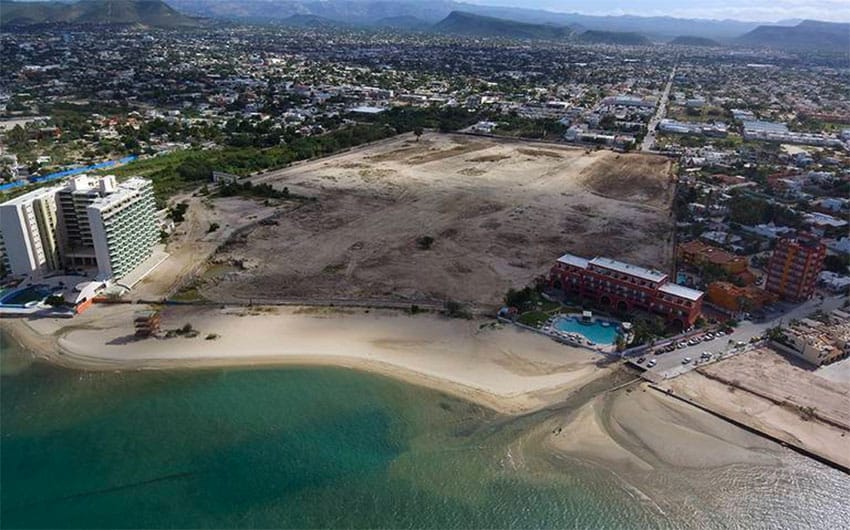
Sánchez says that at least 10 new projects have already been approved, including coastal real estate developments and housing projects.
Environmental activists claim that the La Paz aquifer, the main source of water for the city, is overtaxed and the city has long been faced with a water shortage.
The capital of Baja California Sur has seen its population grow by at least 15% in the last five years, Sánchez says. The surge in demand for water, coupled with the lack of efficient management of the resource, has generated pressure on the city’s water system as the aquifer is being depleted, he says.
Sánchez and the other associations he represents claim that in 2018 La Paz had a water deficit of 7.4 million cubic meters, a figure that could be much higher today.

Cemda cites a 2019 study by the Autonomous University of Madrid which estimated that 500,000 liters of water are needed for every 100 square meters of residential construction. In order to supply enough water to just one of the 10 projects that the city has approved, the 200-hectare mega-project Misión Punta Norte, the city would need to provide the planned 4,600 residential lots with approximately 10 billion liters of water during construction, enough to fill four Olympic pools, Cemda says, adding that 4% of existing homes in La Paz are not connected to city water at all.
“It is worrying that the approval of real estate projects continues, including the offering of thousands of residential lots when public administration is not in a position to ensure the provision of services such as clean electricity, waste management and especially water to the entire population of Baja California Sur’s capital,” Sánchez said in a press release.
Water shortages affect cities across the state, and Baja California Sur is required by law to develop a long term water resource plan covering the years 2020 through 2045. The last water plan for the state was prepared in 1985 and expired this year.
Source: Diario El Independiente (sp)