World Cup fever hasn’t started quite yet. The opening of the 2022 global men’s soccer tournament in Qatar isn’t until November 20.
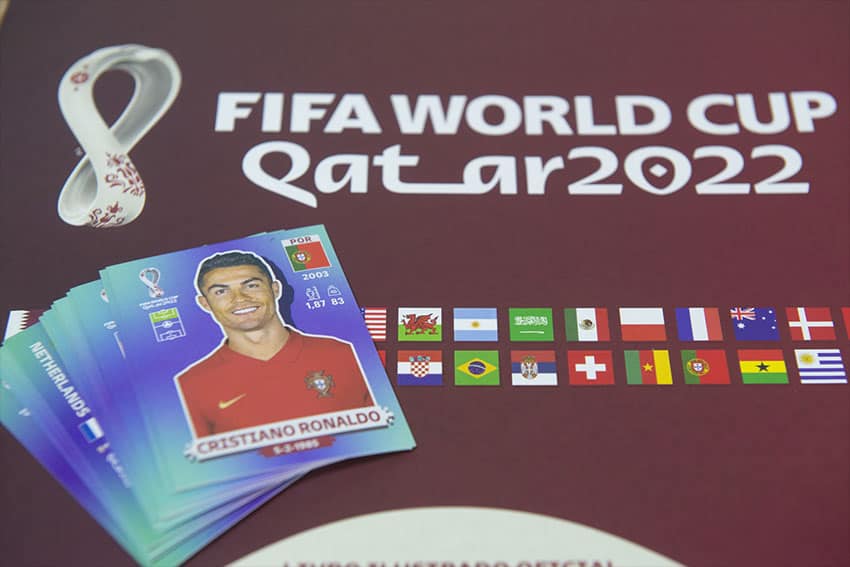
The fever that has begun in Mexico and elsewhere is all about collecting stickers of players, teams and stadiums that will be part of World Cup 2022 — and then putting them into a sticker book, or album.
The race to collect Panini-brand World Cup stickers is so intense that one man in Mexico offered a brand-new, still-in-the-box, 32-inch flat-screen television set (with Roku service included) in exchange for two boxes of stickers.
In Mexico, each Panini box contains 104 packets of five random stickers and reportedly costs 1,872 pesos (US $93). One packet of five stickers is 18 pesos (US 89 cents) and the album costs 59 pesos (US $2.92) including two sticker packets.
The Italian company Panini launched this hobby-turned-craze more than 50 years ago at the 1970 World Cup in Mexico. At that time, fans around the world would buy a packet or two, open them to see which stickers were inside and then trade with their friends to acquire their favorite players or to get rid of their “doubles” — sort of like kids in the United States used to do with their baseball cards.
It was all innocent fun back then, but now the demand for the stickers is intense, especially when it comes to securing stickers of top stars such as Cristiano Ronaldo of Portugal, Lionel Messi of Argentina and Kylian Mbappé of France.
Some retailers who have been selling the stickers (and the albums) since late August are either running short on supplies or are already sold out.

Things got so crazy in Argentina that the government stepped in to help sort things out. Some vendors sold out their supplies in a matter of hours, and other stores and newsstands had long lines. Angry sticker-seekers were fuming, and a few shopkeepers even reported that some were so frustrated over not being able to buy stickers that they “tried to smash up their kiosks.”
(Newsstand owners, in turn, lashed out at Panini, accusing the company of profiting from sales at supermarkets, gas stations and online, leaving them unable to order new packets.)
The Argentine Ministry of Commerce attempted to solve the “sticker crisis” by starting talks between vendors and officials from Panini’s office in Argentina. “[We are] making our legal and technical teams available to collaborate in the search for possible solutions,” its post on Twitter said.
Each of the 32 countries (including Mexico) that qualified for the World Cup has 20 stickers, mainly featuring players, and with other stickers such as stadiums and legends, there are 670 stickers in total.
The demand in Argentina is probably boosted by this likely being Messi’s last World Cup, so people there (and elsewhere) would love to open a pack and find a sticker of the great Messi inside. Such a prize is being offered for between US $22 to US $199 on eBay.
In Mexico, a private Facebook group has been created for the exchange and sale of the stickers. That’s where user Julio Moro reportedly offered the brand-new, flat-screen TV (valued at 3,200 to 3,700 pesos by one media outlet) for two boxes of sticker packets (each costing 1,872 pesos). That Facebook group has 36,300 members, and another that is public has 24,500.
In general, a sticker of an average player will sell for 4 to 10 pesos; stickers that are logos of a team/country go for 10 to 15 pesos; stickers that show a full team or a stadium about 7 pesos; and star players between 20 and 50 pesos.
To complete an album, a person would need to find all 670 stickers, but because they would acquire so many duplicates, they would need to buy about 960 packets of stickers before they would complete the task, according to the British media site HITC.
Panini was started by the brothers Benito and Umberto Giuseppe in 1961, when they began selling stickers and then trading cards of local players. The business took off with the World Cup in Mexico in 1970, before which the brothers landed a deal with the International Federation of Football Association (FIFA) to produce stickers and an album. From that point on, Panini remained the quintessential brand for World Cup stickers.
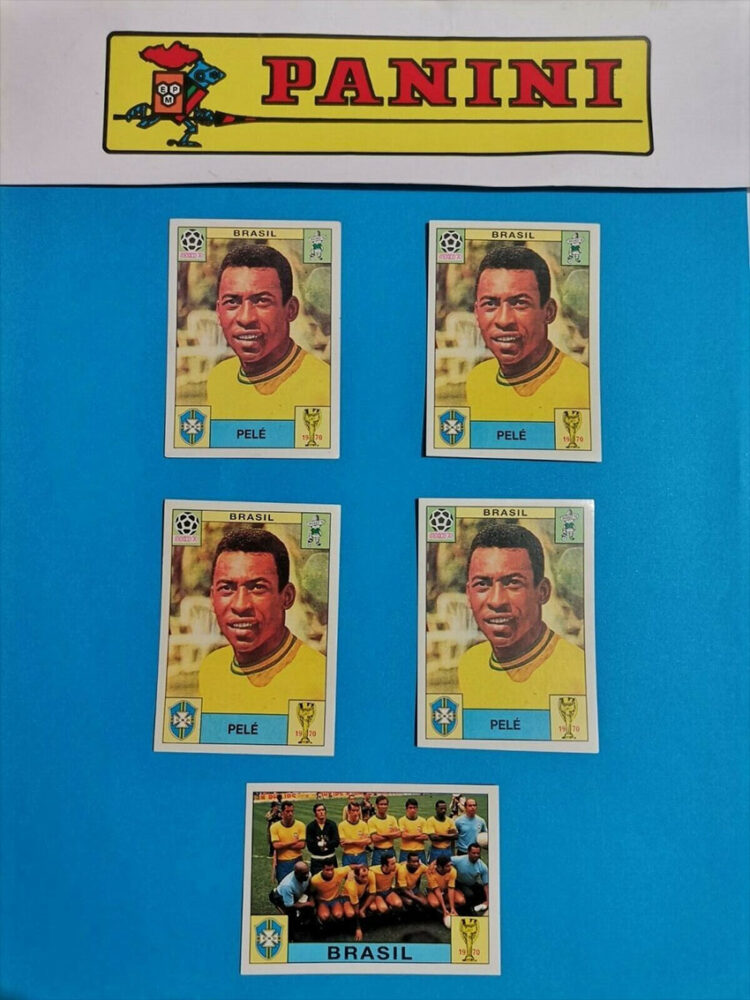
A sticker of Brazilian legend Pelé from the 1970 Mexico set can be had for about US $40 on eBay, although one seller is offering it for US $500.
With reports from Aristegui Noticias, El Financiero, and the Daily Mail