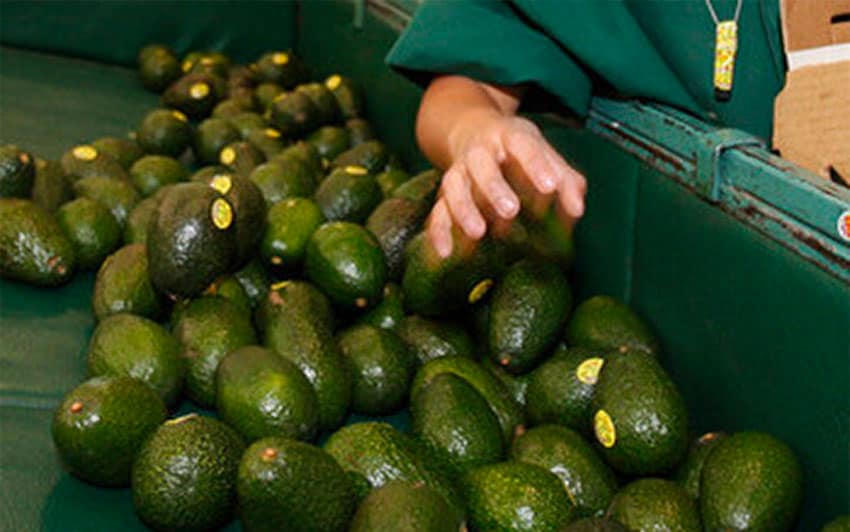
Four competing drug cartels are extorting avocado producers in Michoacán, Mexico, showing how the fruit is becoming an increasingly important source of illicit profits in the context of shifting criminal dynamics in the state.
The Jalisco Cartel New Generation (CJNG), the Nueva Familia Michoacana, the Tepalcatepec Cartel and the Zicuirán Cartel are all involved in this growing criminal economy, according to Michoacán’s attorney general.
Michoacán produces over 80% of Mexico’s avocados, with an annual export value of around US $2.4 billion, earning the fruit the nickname “green gold.”
The cartels charge a monthly protection payment from avocado producers, calculated per hectare cultivated or kilogram exported. Those who fail to make the payments may be kidnapped or killed. One distributor’s daughter was assassinated at the door of his business, El País reported.
In addition, avocado theft is rampant. At least four truckloads of the fruit are stolen every day in the state, according to the Guardian.
Competition for these criminal profits has fed into the wave of violence currently engulfing Michoacán. In August 2019, 19 people were massacred in Uruapan, the center of Michoacán’s avocado industry. Their bodies were displayed in three locations around the town.
Authorities linked the atrocity to a territorial war between the CJNG and the Viagras, the armed wing of the Nueva Familia Michoacana, for control of the town’s criminal economies.

InSight Crime analysis
The extortion of Michoacán’s avocado growers is not new, but is now resurging as the industry’s profitability has boomed as criminal economies in the state have withered.
Michoacán and neighboring Guerrero have long been prized by criminal groups as the center of Mexico’s heroin production. However, the rise of synthetic opioids has caused the price of opium to plummet to under a third of its 2017 value, leaving drug cartels scrambling for alternative income streams.
The value of Mexico’s avocado industry has quadrupled over the last decade due to the fruit’s growing popularity in the United States and Europe. The country’s avocado exports to the U.S. market alone rose by 16% between 2018 and 2019.
Several of the state’s criminal players are experienced at shaking down the avocado industry. The CJNG has reportedly used the tactic to fund their expansion since the 1990s, while the Familia Michoacana entered the business around 2009. They and their splinter groups were thus well-placed to supplement declining opium profits by tightening the screws on local avocado growers.
The resurgence of this criminal economy also reflects the weakening of Michoacán’s self-defense groups. These emerged in 2014 partly in response to such extortion practices and achieved a temporary respite for producers in some regions.
In subsequent years, however, many of these groups have themselves been infiltrated by criminals, leaving local businesses vulnerable once again.
Reprinted from InSight Crime, a foundation dedicated to the study of organized crime.