Home Blog Page 1773

Scientists rule out theory that a new volcano is arising in Michoacán

0
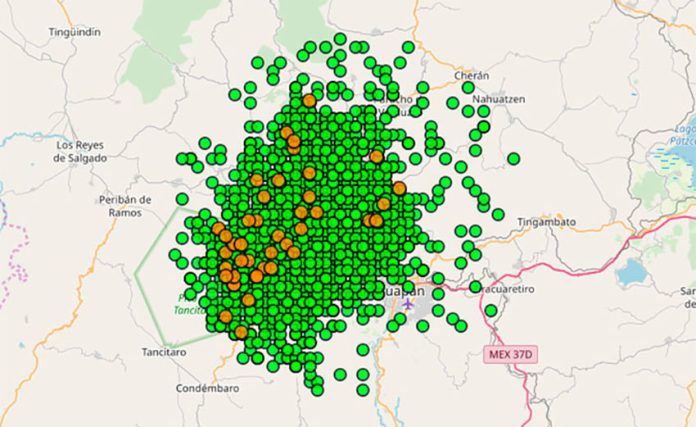
The area in which the earthquakes have been recorded.

Increased seismic activity in Michoacán since the start of last month will not lead to the birth of a new volcano, National Autonomous University (UNAM) scientists have concluded.

There have been more than 3,000 earthquakes with magnitudes between 2.6 and 4.1 since January 5 in an area northwest of Uruapan near the Paricutín Volcano, according to the National Meteorological Service.

About 50 experts from several universities and government agencies traveled to the area to carry out tests to determine whether the earthquake swarm – as a sequence of similar magnitude seismic events occurring in a local area in a relatively short period of time is known – is related to tectonic or magmatic events.

A magmatic event occurs when magma – the molten or semi-molten material from which igneous rocks are formed – moves horizontally or vertically beneath the surface of the earth. Large volumes of magma can potentially break through the surface and form a volcano, as occurred in Michoacán in 1943 with the sudden emergence of the Paricutín Volcano.

Servando de la Cruz Reyna, a researcher in the volcanology department of the UNAM Institute of Geophysics, said that magma has been identified as the most likely cause of the earthquakes in Michoacán but ruled out the possibility of the birth of a volcano because the fracturing of the crust of the Earth has been minimal.

“It is suggested that the source of the force is the movement of magma but at depths of 10 kilometers or more. This is very common in volcanic areas,” he said.

De la Cruz said that scientists have concluded that most of the magma movements are horizontal rather than vertical and for that reason the molten material won’t ascend to the surface of the earth.

Hugo Delgado, director of the Institute of Geophysics, explained that the expert team led by the UNAM scientists carried out a range of studies before ruling out the possibility of the birth of a volcano. They included taking measurements with magnetometers, measuring the levels of carbon dioxide in the soil, testing for the presence of radon, analyzing samples of water collected in the area and looking at deformations in the surface of the Earth.

De la Cruz said that earthquake swarms have occurred in the same region of Michoacán on four occasions but only the first series of earthquakes resulted in the formation of a volcano.

“The first was in 1943 and culminated in the birth of the Paricutín Volcano. Subsequently, there were three others in 1997, 1999 and 2006,” he said, adding that the characteristics of the 2006 earthquake swarm were similar to those of the current one.

Carlos Gutiérrez Martínez, an official with the National Disaster Prevention Center, said that there has been constant communication between the federal government and the UNAM Institute of Geophysics as the studies of the earthquake swarm were taking place.

He explained that government officials have attended technical meetings with the scientists and have been careful not to overreact to the increased frequency of earthquakes in the area.

Source: El Financiero (sp) 

Testing underway for presence of coronavirus; still no cases found

0
coronavirus

The Ministry of Health announced on Monday that it is testing over 5,000 blood samples from across the country for presence of the coronavirus known as Covid-19.

Government epidemiologists said that the samples tested negative for the seasonal and A/H1N1 strains of the flu, and the results of the Covid-19 tests will be released this week.

In light of the World Health Organization’s (WHO) announcement that the world should prepare itself for a possible pandemic of the virus, the Health Ministry’s epidemiology department said that it would update the country’s response to the international outlook.

“So far we have no intention of joining Italy and other countries in their unnecessary travel warnings, as happened in China,” said José Luis Alomía Zegarra, director of epidemiology for the Ministry of Health.

He added that such decisions “will depend on the evolution or containment of [the virus].”

Deputy Health Minister Hugo López-Gatell announced on Tuesday that there was still no sign of Covid-19 in the country.

“The coronavirus has not arrived in Mexico. We have [investigated] 18 suspicious cases and each and every one of them has been ruled out,” he told reporters at the president’s morning press conference.

He said that the Pan American Health Organization recognized Mexico as the first country to adopt a protection protocol after Monday’s announcement to test the samples that came up negative for other strains of the flu.

“And we’re constantly looking for new alternatives to make this protocol more efficient. It’s a general sampling. We received over 5,000 samples of all of the acute respiratory diseases [in the country],” he said, adding that so far results have come up negative.

To date, cases of Covid-19 have been reported in 29 countries outside of China. The number of cases and deaths is expected to rise, considering that the original source of the disease is still unknown and cases of person-to-person transmission have been documented.

More information is needed to determine the incubation period of the virus and whether or not transmission can occur from asymptomatic people.

The WHO reports that the most common symptoms of Covid-19 are fever, fatigue and a dry cough. Some patients experience general malaise, nasal congestion, runny nose, sore throat and diarrhea.

Patients have recuperated without any specific treatment in as many as 85% of cases, but those who experience difficulty breathing require specialized treatment. The most at-risk people are the elderly with conditions such as diabetes, high blood pressure and pre-existing heart disease.

As of Wednesday, there were more than 81,000 confirmed cases of coronavirus worldwide, and at least 2,700 people have died. Tuesday’s figures revealed that for the first time there were more new cases outside China than inside. Chinese officials reported 411 new infections. In the rest of the world there were 427.

Sources: Milenio (sp), El Universal (sp), New York Times (en)

Staff charge negligence at overwhelmed Hidalgo hospital

0
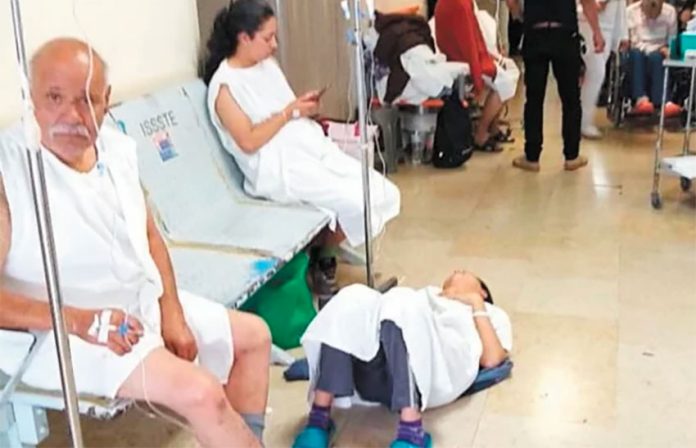
Long waits at Hidalgo hospital.

Overwhelmed staff and weary patients at a state-run hospital in Pachuca, Hidalgo, have accused authorities of negligence and demanded that they open a section of the hospital constructed three years ago to deal with the problem.

They reported that emergency room patients regularly wait up to 20 hours to receive treatment in the facility operated by ISSSTE, the State Workers’ Social Security Institute.

Hospital staff claimed that the situation is unbearable as they receive as many as 60 patients per day and there are not enough beds for such numbers.

The situation has led to patients regularly being treated in waiting room chairs or on the floor. Those who get a bed, they said, are “lucky.”

They said that the situation could be remedied by putting into service an internal medicine ward that was built three years ago on the second floor of the hospital. The area has 59 oxygen-equipped beds, but only 25 have been made available as administrators say there is insufficient staff to attend to all of them.

The situation has led to cases of maltreatment, such as that of a 48-year-old patient identified only by the initials G. H. R., who was diagnosed with bronchopneumonia. He was made to sit in a chair day and night, despite needing to be on oxygen.

The patient’s family tried to speak with hospital director José Antonio McNaught Gutiérrez, but were denied access to his office by a police officer.

The patient was finally taken to the intensive care unit on February 11, but it was too late. He died that day.

Hospital staff said that the man’s death attested to the need for a solution to the problem and that the overcrowding only gets worse on the weekends.

They said that such issues as the intolerably long waiting times in the emergency room have been hidden from federal and state authorities when they make observational visits, claiming that they are only shown the parts of the hospital that are functioning adequately.

Source: El Universal (sp)

It’s not just Mexico’s forests that need protecting for butterfly migration

0
A monarch butterfly, under threat by more than depleted forests.

Mexico, the United States and Canada must share responsibility for the conservation of the monarch butterfly, according to a biologist who warns that the insect’s North American migratory path is at risk of becoming a thing of the past.

Víctor Sánchez-Cordero, a researcher at the National Autonomous University’s Institute of Biology and Mexico’s lead representative on a tri-national scientific committee that studies the monarch, said that the butterflies’ route from southeastern Canada to the fir tree forests of Michoacán and México state is under threat.

He blames the excessive use of herbicides, changes in the way land is used, climate change and a reduction in the availability of nectar and pollen.

“The commitment to conserve this migratory phenomenon not only focuses on Mexico; it’s a shared responsibility between our country, Canada and the United States,” Sánchez-Cordero said.

The researcher, who along with his team developed a system to monitor the migration of the monarch, said that there is a misconception that the most important – almost exclusive – factor in ensuring the continuation of the phenomenon is the conservation of forests in the Monarch Butterfly Biosphere Reserve (RBMM), located about 100 kilometers northwest of Mexico City.

That idea “has placed great international pressure on Mexico,” Sánchez-Cordero said before adding that he and his team published an article in the journal Frontiers in Environmental Science that shows that the decline in the number of monarch butterflies migrating to Mexico is not due to deforestation in the RBMM.

Deforestation has been drastically reduced in the past 10 years but butterfly numbers have continued to decline, he said.

“The dramatic reduction in the density of monarch butterflies that arrive at overwintering sites in Mexico doesn’t correlate with the loss of forest coverage, which shows that this factor is not responsible for the population reduction. … Other hypotheses to explain the decrease must be sought,” Sánchez-Cordero said.

One possible cause for the decline, he explained, is that the excessive use of herbicides is killing milkweed, a plant that is a main food source for monarch butterflies and on which females lay their eggs. Less nectar and pollen in the United States and Canada as a result of deforestation is another possible cause, Sánchez-Cordero said.

He added that large numbers of migrating butterflies have perished in Texas and the northeast of Mexico due to drought linked to climate change.

To conserve the migratory phenomenon of the monarch – butterflies fly some 4,500 kilometers to reach Mexican forests from Canada over the course of three to four generations – a network of conservation areas along their migration routes needs to be developed, Sánchez-Cordero said. He also said that the routes followed by the butterflies should be declared protected areas.

“A new conservation paradigm is needed. … It’s something that we [Mexico, the United States and Canada] should build together,” the researcher said.

Source: El Financiero (sp) 

Court freezes bank accounts of opponents of Nayarit condominium project

0
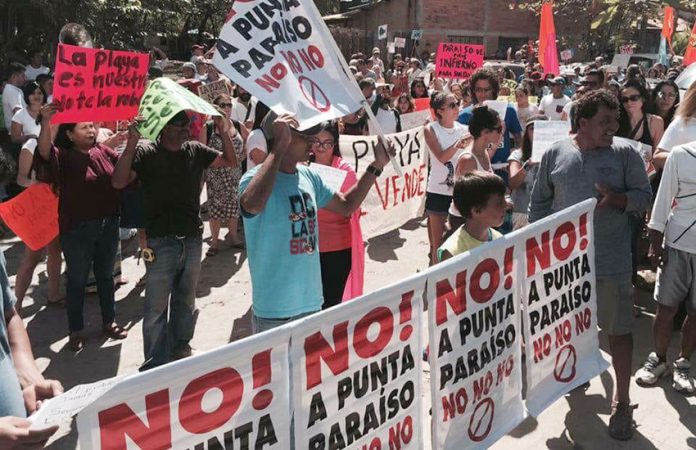
A protest against the San Pancho condominium project.

Residents and public officials in Nayarit involved in protesting the construction of a condominium complex on federally protected coastline have had their personal bank accounts frozen for over three months thanks to a lawsuit brought by the developer.

Despite holding protests as far back as 2018, opponents of Punta Paraíso, a luxury development in San Francisco — San Pancho, to locals — have watched Lemmus Real Estate continue with the project with no apparent regulation from the federal government.

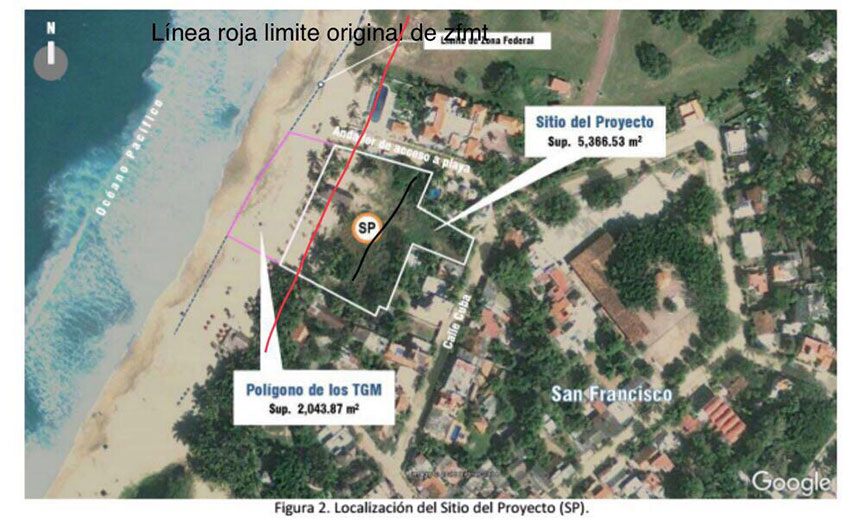
They claim that the company has illegally built on almost 1,200 square meters of the Federal Zone, or Zofemat, a 20-meter wide strip of coastline meant to be protected by the federal environmental protection agency Profepa.

“We met with [President López Obrador] two times, we spoke with his super-delegate [in Nayarit], … we spoke with [Nayarit Governor Antonio Echevarría García] … and of course we protested openly,” said local activist Erik Saracho in an interview with Mexico News Daily.

After more than two years of fighting the development and seeing their demands that the law be applied in San Pancho go unheeded by any regulatory agency, Saracho and others involved in the opposition found themselves in a difficult situation at the end of last year.

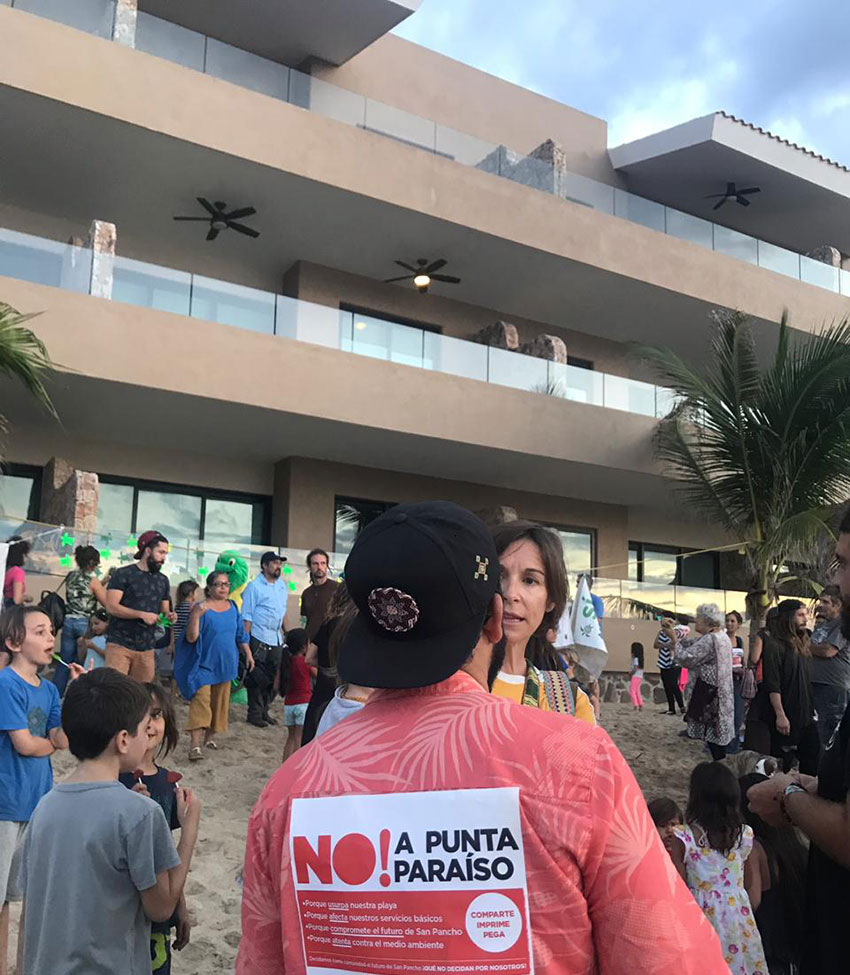
Protesters on the beach in front of the condo development.

In late November, he and five other protesters woke to find that they had no access to their personal bank accounts. Without any official notice from a governmental or legal entity, the activists were told by their banks that their accounts had been frozen due to a lawsuit.

Carlos Lemus of Lemmus Real Estate told a press conference that same month that the company had sued the activists for defamation, claiming that their actions had cost Lemmus Real Estate over 12 million pesos (US $629,000).

“They froze our accounts by means that we consider to be corrupt,” said Ismael Duñalds, a state lawmaker from Bahía de Banderas, the municipality in which San Pancho is located.

“We were never notified. … We were not part of a case in which we could have defended ourselves. … We only found out when our banks told us that our accounts were frozen and there was nothing we could do because of the judge’s ruling,” he said.

“If that is the case, … then [freezing their accounts] would be illegal,” said Mexico City-based environmental attorney Raziel Villegas, who is not associated with the case. The lawyers representing Duñalds and the other activists were unable to comment, as it is still in litigation.

He said that the defendants should have known they were being sued and been given the chance to defend themselves in court before such actions were taken.

SP indicates the location of the condominiums. The red line shows the boundary of the Federal Zone.

The activists appear to be up against a formidable opponent with no apparent accountability. One said that Lemus personally threatened to put her in jail if she did not stop protesting.

When contacted by Mexico News Daily, Lemus said that the claims of frozen bank accounts were “false statements” and declined to comment further.

Judge Manuel Edgardo Servín Orozco of the Fourth Civil Court of Jalisco, who issued the ruling, likewise turned down requests for comment, as did Profepa.

Duñalds and the others know that they are up against a formidable opponent — Saracho himself called their case a “long shot” — but they haven’t lost hope.

“If we don’t [protest Punta Paraíso], it will set a precedent for companies to do what they want with the rest of the beach in San Pancho,” he said.

Local painter and landlady Elvía García, one of the six whose accounts have been frozen, said that she and the others are “very positive” and continue to fight, because “the situation puts the rest of the beach at risk.”

“We are here, and we’re going to see this through to the end,” she said.

Mexico News Daily

AMLO rejects congressional bid to bring back capital punishment

0
Senate leader Monreal, left, and the president are both opposed to bringing back the death penalty.

President López Obrador announced his opposition to a proposal to reinstate the death penalty at his morning press conference on Wednesday.

“I don’t believe in the death penalty and I also don’t think it’s an option, an alternative,” he told reporters.

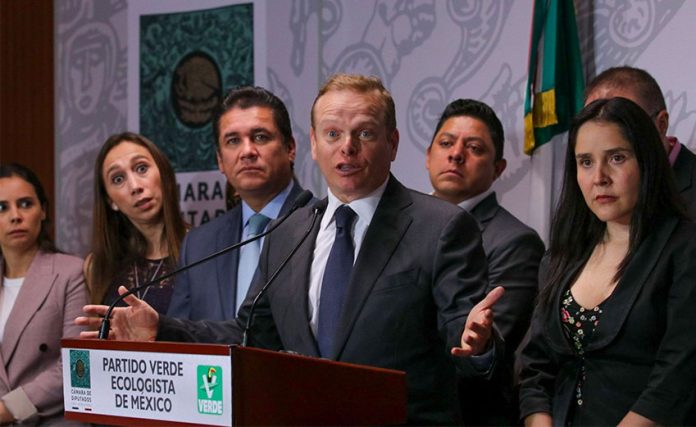
His declaration came in response to a proposal on Tuesday by federal deputies from the Green Party and his own Morena party to put up for discussion the amendment of four articles of the constitution, as well as the country’s withdrawal from two international treaties by which is it bound not to reinstate the punishment.

They proposed the death penalty for those found guilty of femicide and homicide of people under 18 years of age, saying that the measure would be temporary “until Mexico returns to times of peace and tranquility.”

Green Party national director Carlos Puente and the party’s parliamentary leader in the Chamber of Deputies, Arturo Escobar, also suggested that the Supreme Court be the entity to decide on the matter.

Last week, National Action Party (PAN) Senator Víctor Fuentes Solís proposed a debate on the issue after the widely publicized femicides of Ingrid Escamilla and 7-year-old Fátima in Mexico City.

Morena party Senate leader Ricardo Monreal spoke against it, calling the death penalty a “barbarity.”

“We cannot, for the circumstances and crises which we’ve experienced in this country in recent years, establish this type of barbarous penalty,” he said.

The death penalty was abolished in Mexico in 1929 and the country signed the American Convention on Human Rights, also known as the “Pact of San José,” in 1969.

Article 4 of the treaty, which deals with the right to life, stipulates that “the death penalty shall not be reestablished in states that have abolished it.”

Source: El Financiero (sp)

After fruitless anti-drug abuse campaign, AMLO tries more direct approach

0
The president displays a graphic in the government's new phase of drug abuse campaign. Below the word 'danger' it says 'poison.'

President López Obrador announced the commencement of the second phase of his addiction prevention campaign after recognizing that the first phase was unsuccessful.

“We’re going to begin the second phase of the campaign to raise awareness of the harm that drugs cause,” he said at his morning press conference on Wednesday.

Recognizing that the government’s efforts have so far not had the desired effect, he said that the second phase will have a clearer message than the first.

“It didn’t have the effect we wanted. … What we want is to raise awareness, to announce what happens [with drugs], so we opted for this more direct campaign. We’re going to speak clearly,” he said.

Artists and filmmakers participated in the first phase by appearing in videos to persuade viewers to change their habits and avoid drug use.

The new campaign will include videos that warn of the physical and emotional consequences of consuming drugs.

López Obrador said the content will be produced by communications officials in the government rather than private sector enterprises because “they charge a lot; they are very creative but they are also very expensive.”

AMLO, as the president is commonly known, emphasized the importance of taking care of young people and asked the public not to discriminate against them in order to help ensure the success of the campaign.

He also highlighted the results of his “Youths Building the Future” apprenticeship program, which provides young people with job training and economic support to help them obtain gainful employment.

“We’re helping the young people who were discriminated against, who people turned their backs on and just called ninis,” he said, referring to a name used to disparage out-of-work young people by saying they neither study nor work (ni estudia, ni trabaja).

“They coined that term and that was all they did for the young people. An attitude of disdain and marginalization. No longer,” he added.

“Young people have the possibility to work, they are being hired as apprentices, 900,000 youths are earning minimum wage while they’re being trained. They’re receiving their certificates, I’m signing them. Half of them are staying on to work for the same companies at which they were trained,” he said.

Stating that his administration’s goal is to help young people choose the right path, AMLO reiterated his commitment to strengthening moral, cultural and family values.

“We’re going to begin a direct campaign about what this underworld of painful sacrifices, this bitter reality, really entails,” he said.

“We’re dealing with the causes of insecurity, violence, corruption [and] preventing conspiracy between authorities and criminals, tending to the needs of the people.”

Sources: Milenio (sp), El Sol de México (sp)

Mexico regrets US court ruling over youth shot by border patrol

0
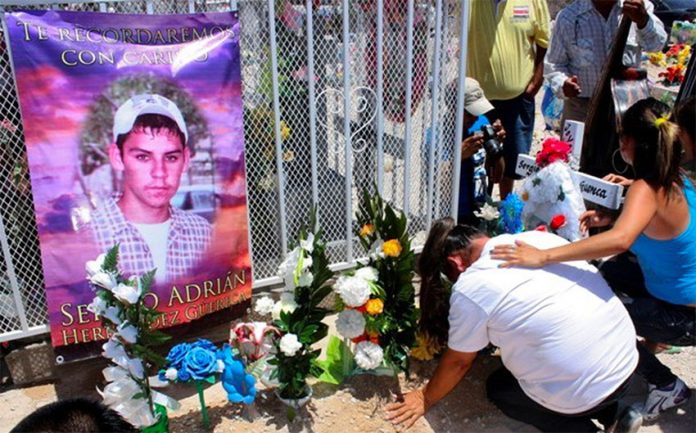
A memorial to the Mexican teen shot and killed by a US border patrol agent.

The federal government has expressed regret about a ruling by the United States Supreme Court that prevents the family of a teenage boy who was killed in Ciudad Juárez, Chihuahua, in 2010 from suing the U.S. border patrol agent who shot him.

In a statement issued by the Ministry of Foreign Affairs (SRE), the government said that it was deeply concerned about the effects that the February 25 ruling will have on similar cases in which Mexicans died on their side of the border after being shot by border patrol agents from the U.S. side.

“With this precedent, such cases could now face limitations in demanding justice and compensation in courts of that country,” the SRE statement said.

Sergio Adrián Hernández Güereca, 15, was shot in June 2010 by Jesús Mesa, a border patrol agent who was on duty in El Paso, Texas. Mesa was on a bicycle patrol when he was alerted to the presence of people smugglers, the BBC reported.

Hernández and a group of his friends were in the dried-up concrete bed of the Rio Grande at the time.

According to the youth’s family, Hernández and his friends were daring each other to run across the unmarked international border in the middle of the culvert built to contain the river, and touch a fence on the U.S. side.

Mesa detained one of the boys for illegally crossing the border but Hernández and another youth returned to the Mexican side and hid behind a pillar. The 15-year-old was shot twice as he peeked out from behind the pillar.

U.S. authorities ruled that the border agent had acted in self-defense even though they found no evidence that Hernández had thrown stones at him as he claimed.

Mexican authorities charged Mesa with murder but the United States refused to extradite him. Hernández’s parents subsequently attempted to sue the border agent in the United States for violating the U.S. Constitution by using excessive force.

Lower courts dismissed their claim before the case reached the U.S. Supreme Court on Tuesday. The justices divided five to four along conservative-liberal lines to uphold the lower courts’ decision.

The conservative justices argued that “a cross-border shooting is by definition an international incident” and therefore should be solved diplomatically rather than legally. Allowing the boy’s parents to pursue compensation in the United States would have implications on foreign relations and national security, they said.

Writing for the majority, Justice Samuel A. Alito Jr. said that Hernández’s parents couldn’t sue Mesa without congressional approval.

Ruth Bader Ginsberg, one of the dissenting judges, said that the border agent’s “allegedly unwarranted deployment of deadly force occurred on United States soil” and that it did not make sense to dismiss the parents’ claim because the bullet ended up on the Mexican side of the border.

A lawyer for the family said that the ruling would “promote a Wild West attitude” on the U.S.-Mexico border.

“To be left with no remedy … given such a violent and unprovoked shooting, weakens the constitutional foundation of America’s house,” Robert Hilliard said.

In the SRE statement, the government said that it would continue to provide assistance to all Mexicans affected by cross-border incidents. It also noted that Mexico and the United States formed a border violence prevention group in 2014 that has met on six occasions and made progress on issues such as accountability and transparency.

Source: Milenio (sp), BBC (en) 

Listen, AMLO: femicides are not just ‘regular homicides’

0
AMLO: 'Let the grownups handle this.'

I think I speak for many right now when I say, “What the hell, AMLO?”

I say this as a fan, and with not a little concern. I would have voted for him had I been a citizen myself, and though I’d have reservations today, I probably still would. But his response to the crisis of femicides has been so tone deaf that it has me wondering if he’s going senile. Where are his handlers?

You’d think by this point someone would have given him something to just read.

Especially unbecoming was the embarrassing sight of his wife initially supporting the women’s strike set to take place on March 9, and then, hours later, issuing a turnaround encouraging women not to strike.

Yikes.

We want the government to respond. But how can it do so? Do any of us really have a plan? With a justice system that is barely even symbolic, let alone effective, in this country, is it possible to fix a piece of it without fixing the whole of it? Believe me, I want all of it fixed. This particular issue of extreme gender violence just happens to be the one that horrifies me the most.

Recent news of child abuse (girls, of course) that horrifyingly falls into this category has me wondering how it is that history has such a sick way of repeating itself. This hatred is a sickness, but where does it come from? Is it psychological or sociological?

Back in the 1950s and 60s, when my mother was a child, she was physically and sexually abused until she finally managed to leave home at 18 and move to another city. Her abuse wasn’t a secret. She told everyone she could, trying to get help: teachers, other family members, people at church. While most people no doubt felt sorry for her, everyone opted to stay out of it, as it was a “private family issue.”

The memories of my mother’s stories came rolling back to me as I read about Kimberly, 8, who’d been killed by her father and stepmother just as her mother had finally been awarded custody. The mother only found out about her daughter’s death when she arrived to pick her up from court.

Neighbors said they were aware of the girl being beaten on a regular basis. Did anyone even try to help her? As long as there is so little faith in the justice system that regular citizens are afraid to speak out even when faced with the obvious abuse of a minor, we’re going to continue going down this awful path.

In the meantime, AMLO seems to be the modern equivalent of those who told my mother, “Look, that’s very sad, but it’s a personal family issue and we’ve got bigger fish to fry, OK? Come now, let the grownups work.”

I’ve said it before and I’ll say it again, as many times as necessary: femicides are not just “regular homicides” in which the victims just happen to be female. Femicides are crimes in which they are killed because they are women. Men are not killed for being men. That’s what makes them different.

Women aren’t being dramatic, and we’re not panicking over nothing. We’re not making this stuff up. We’re screaming and yelling, and the only thing that seems to get anyone’s attention is mass petty crime like spray painting some monuments or vandalizing a courthouse. Now that is something that gets some attention and condemnation!

I’ve seen the smirks. I’ve seen the contempt. I’ve seen the flashes of anger at being challenged. Hell, I read them in the comments section of my own articles every week (special shout-out to my haters who disparage my writing yet read every. single. one. of. my. columns.).

What will a strike do? I have no idea. Will it move anyone, or just make them hunker down further in their own views? Will it make the haters resent us and hold us in contempt even more?

Women have tried por las buenas. We’ve asked nicely. We’ve asked peacefully. We’ve participated in programs to help women even as their funding has been cut. It didn’t work. So fine. Por las malas.

You don’t like women marching and destroying things? Well we don’t like getting killed. Guess we’ll have to figure something out.

Sarah DeVries writes from her home in Xalapa, Veracruz.

Morena, Green Party legislators propose death penalty for femicide

0
Some of the 13 Green Party deputies who support the death penalty for homicide and femicide.

Five lower-house lawmakers with the ruling Morena party and the entire contingent of 13 Green Party (PVEM) deputies presented on Tuesday a proposal to allow the death penalty in cases of femicide and aggravated homicide.

Under the proposal, which seeks to repeal the prohibition of capital punishment as outlined in Article 22 of the Mexican constitution, rapists who subsequently kill their victims, murderers of female minors and people found guilty of aggravated murder could be sentenced to death.

The Morena and PVEM deputies argued that even the threat of life imprisonment hasn’t been a sufficient deterrent to stop people from committing crimes of extreme cruelty, such as the murders this month of 25-year-old Ingrid Escamilla and 7-year-old Fátima Aldrighett.

The deputies said that the state has an obligation to punish the most heartless criminals with the severity that they deserve.

“We believe that the death penalty is a punishment that could help to reduce the … frequency of crimes such as those we have referred to,” the lawmakers said.

Their proposal does not seek to change any other parts of Article 22, which also prohibits physical punishments such as mutilation and torture.

Some lawmakers in the upper house of Congress also floated the idea of reconsidering the merits of the death penalty following the femicides of Escamilla and Fátima, whose deaths shocked Mexicans and led to the organization of a national women’s strike on March 9.

Senator Víctor Fuentes Solís of the National Action Party last week proposed holding a debate on whether men found guilty of the femicide of girls and women should face the death penalty. He said that experts from countries such as the United States and Japan, where capital punishment still exists, could be invited to participate in the debate.

However, the Morena party leader in the Senate, Ricardo Monreal, quickly poured cold water on the idea that the death penalty could be legalized in Mexico.

“Due to the circumstances and the crisis that the country has lived through in recent years, one cannot establish such barbaric penalties,” he said.

Even if there were sufficient support among lawmakers to legalize the death penalty, international law would stand in their way as Mexico is a signatory to the American Convention on Human Rights, which many Western Hemisphere countries signed in San José, Costa Rica, in 1969.

Article 4 of the convention – titled “Right to Life” – states that “the death penalty shall not be reestablished in states that have abolished it.”

However, that hasn’t stopped lawmakers from presenting proposals in recent years that sought to reintroduce capital punishment. Three such proposals were presented during the three-year term of Congress between 2006 and 2009 and another followed in the 2009-2012 period of the subsequent legislature. All were rejected.

In June 2018, the PVEM revived a proposal it first presented in 2009, its lawmakers advocating for the death penalty in cases of intentional homicide with aggravating circumstances such as rape, abduction and human trafficking. The same month, Nuevo León Deputy Jesús Gilberto Rodríguez Garza announced that he was presenting a proposal in favor of the death penalty for drug traffickers, murderers, kidnappers and rapists.

He also said that he favored chopping off the hands of thieves, as Nuevo León Governor Jaime “El Bronco” Rodríguez proposed while running for president in 2018.

Capital punishment dates back to pre-Hispanic times in the territory now known as Mexico but has been outlawed for almost a century. The Aztec, or Mexica, people, for example, imposed the death penalty via decapitation, stoning and hanging, among other methods.

A criminal code drawn up in independent Mexico in 1835 allowed convicted criminals to be killed with guns or clubs but the death penalty was abolished in 1869. However, it was reintroduced two years later before it was abolished again at the federal level in 1929.

Source: Milenio (sp), El Financiero (sp)