Home Blog Page 2153

Late diagnosis of violin spider bite could cost baby his toes

0
Violin spider blamed for child's bite.

Doctors in Nayarit believe they have saved a 10-month-old baby’s leg after he was bitten by a violin spider.

Kevin Cataño was bitten last weekend in Acaponeta but his condition was not diagnosed until a discoloration of the skin appeared on several parts of his body, which was later diagnosed as necrosis.

At that point doctors at a clinic in Acaponeta began to suspect a spider bite and transferred the child to a hospital in Tepic. As he was being admitted, the boy suffered a seizure and cardiac arrest.

When it was determined that the bite was that of a violin spider doctors sought help from the the Federal Commission for Protection Against Health Risks (Cofepris) to obtain the necessary antidote, which was donated by the pharmaceutical laboratory Silanes.

The boy’s condition started to improve following administration of the antidote and despite an early assessment that the boy’s left leg would have to be amputated, physicians say the limb has been saved.

The only current risk is that he will lose his toes.

Medical staff have done more than treat Kevin for the bite.

Doctor Daniel Balderas said several of his colleagues have not only given their time but the money to pay for the medicine needed in their patient’s treatment.

He said the antidote had been sought in both Mexico and the United States but proved hard to find.

“. . . nobody had it, it’s not being produced. We were told that a synthetic antidote is in development, but for the time being hospitals . . . will have to resort to an alternative corticoid and dapsone-based treatment.”

The violin spider is also known as the brown recluse spider.

Source: El Universal (sp)

People and pelicans suffer under Baja California heat wave

0
A hot day in Baja California.
Hot weather in Baja California.

A sweltering heat wave in Baja California has cost the lives of seven people and temperatures are expected to remain above 30 C for the foreseeable future.

Three migrating pelicans also succumbed to the heat.

According to the state Health Secretariat, six people died of heat stroke in the capital city of Mexicali, while another died of heat exhaustion in Tecate.

Most of victims had been under direct sunlight at a time when the thermometers reached 38 C.

“With these deaths we have reached last year’s total of deaths caused by heat,” said a health official.

Hot weather has sent 29 people to hospital for heat-related illnesses: 15 suffered heat stroke, 13 suffered heat exhaustion and one person was admitted with severe sunburn.

The intense heat wave has sent the temperature dangerously close to 50 C in Mexicali, and not even a migrant bird species has had a respite.

Yesterday, 10 pelicans migrating south from the Salton Sea in California were beaten by the heat before they made it to the Sea of Cortés.

The 911 emergency line received reports of pelicans lying on the streets, triggering a deployment of federal environmental officials.

The birds were found dehydrated, and three had died. The remaining seven were transported to a local zoo were they are expected to recover fully.

Health and Civil Protection authorities throughout the state have warned the public to stay indoors as much as possible as a preventive measure.

Temperatures are expected to remain high but well below 40 C: highs around 32 C are expected around the state. Still, authorities warn people to remain hydrated and avoid performing exhausting exercises.

Source: Milenio (sp), La Jornada (sp)

New stock exchange begins trading, breaking a 43-year monopoly

0
BIVA, Mexico's second stock exchange, began operating today.

A new stock exchange launched in Mexico today after five years of preparations, breaking a 43-year monopoly on the public market.

The Bolsa Institucional de Valores, or BIVA exchange, joins the existing Bolsa Mexicana de Valores (BMV), or Mexican Stock Exchange (BMV), giving Mexico two exchanges for the first time since 1975.

The BIVA will trade the same instruments as the BMV including equities, debts and warrants, with the competition between the two expected to help drive economic growth.

The new exchange will offer a new source of financing to companies and more options for investors, the newspaper El Financiero reported today.

In its opening auction, the BIVA said that more than 100 buy and sell orders were issued and that the first entered into its system came from the brokerage firm Finamex.

The exchange uses technology provided by New York-based Nasdaq and, according to its corporate brochure, “BIVA is one of the most advanced exchanges in the world.”

BIVA CEO María Ariza told Nasdaq associate vice-president Mark Driscoll that BIVA’s “ambition is to be seen by Mexican and global investors as a technological and innovative stock exchange.”

In the interview — which is published on the Nasdaq website — Ariza said “we’ve triggered regulatory changes that have modernized the stock market in Mexico” and “we want to give the Mexican market and its companies more visibility around the world so that global investors can invest in new opportunities our country has to offer.”

She also said that BIVA wants to “completely reshape the way a company enters the public market and the whole experience of being a public company.”

The Harvard-educated CEO described technology as a “key player” for BIVA, explaining that modern exchanges use it for trading, surveillance, data analysis and distribution.

Ariza said that some of BIVA’s trading characteristics are protocols in line with international standards, broker dealer anonymity, block trading book, closing auction and full market depth of the books.

“In a continuously-changing world, where new technologies and asset classes come into play every day, we need to be at the forefront to give a better service to our clients and continue to attract new players into the markets. Nasdaq helps us to make this possible and continue growing,” she said.

Today’s commencement of trading is the culmination of a process that started more than five years ago.

In February 2013, the Mexican company Cencor submitted the project to create a new stock exchange to federal financial authorities and subsequently worked closely with the Secretariat of Finance, Mexico’s central bank and the Mexican Banking and Securities Commission towards its development.

In October 2015, the company formally applied for a concession to organize and operate the new exchange and the authorities granted approval in August last year.

This morning’s opening ceremony was attended by Finance Secretary José Antonio González Anaya, Cencor CEO Santiago Urquiza and Ariza, among other officials.

Mexico is the 15th largest economy in the world but ranks eight places lower in terms of market capitalization, according to the World Federation of Exchanges.

All 14 countries with larger economies than Mexico have at least two stock exchanges.

There are currently 146 listed companies in Mexico with a combined market capitalization of US $466.1 billion but with the entry of the BIVA, the number of public companies is expected to grow to 200 in the next three to five years.

Source: El Financiero (sp), Nasdaq (en), El Economista (sp)

Monarch butterfly expert led efforts to protect the insect’s Mexico habitat

0
Brower, expert on the monarch butterfly.

A prominent American scientist and foremost monarch butterfly expert who led efforts to preserve the Mexican winter habitat of the delicate orange-and black insect died last week at his home in Virginia.

Lincoln P. Brower was 86.

His wife, Linda S. Fink, said he had Parkinson’s disease.

According to an obituary published Sunday by The Washington Post, the Princeton and Yale-educated scientist made key discoveries about how the monarch butterfly protects itself by converting a toxic compound from the milkweed plant — its only food source — into a chemical compound that sickens its predators, mainly birds.

During his long academic career, which included teaching and research stints at three United States universities, Brower made more than 50 trips to Mexico to study the monarch butterfly in the mountainous forests of Michoacán and México state, where those from east of the Rocky Mountains migrate each fall.

“It has the most complicated migration of any insect known,” Brower told the Chicago Tribune in 1998.

“Somehow they know how to get to the same trees every year. It’s a highly specific behavior that is unique to the monarch butterfly.”

Brower first visited Mexico in 1977 and told the Tribune 21 years later that the experience was unforgettable.

“All of a sudden the color of the trees changed. I didn’t realize what I was looking at. It was like a wall, turning from green to gray. It was monarch wings, folded as they roosted — the underside of their wings are grayish,” he said.

“So, here was this wall of butterflies, and I just couldn’t believe it. For the first time in my life, I saw millions of monarch butterflies right in front of me. They were covering the trees, they were all over the boughs. They were on the trunks. They were on the limbs. They were on the bushes. They were everywhere. It is one of the most marvelous sights you can behold in the biological world.”

But during later visits, Brower began to see that the number of monarchs was shrinking and joined efforts by environmental groups to have the butterfly officially recognized as a threatened species.

In a 2005 interview with the Post, he said: “Why should we care? For the same reasons we care about the Mona Lisa or the beauty of Mozart’s music.”

The monarch’s Mexican habitat is now a UNESCO World Heritage Site located about 100 kilometers northwest of Mexico City on the Michoacán-México state border.

Officially called the Monarch Butterfly Biosphere Reserve, the site covers 56,259 hectares of rugged forested mountains and receives millions of butterflies every year.

Brower received an award from the Mexican government for his work to preserve the monarch and in 2016 was also recognized for his conservation efforts by the Center for Biological Diversity in the United States which gave him the E.O. Wilson Award.

Brower, who was born in Madison, New Jersey in 1931 and first fell in love with butterflies at age five, edited two books and was the author or co-author of more than 200 scientific studies.

He taught at Amherst College in Massachusetts and the University of Florida before becoming a research professor at Virginia’s Sweet Briar College in 1997. All told, the scientist studied the monarch for more than six decades.

Lincoln Pierson Browser is survived by Fink, his wife of 27 years and an ecology professor with whom he frequently collaborated on scientific projects, as well as two children from his first marriage, a brother and two grandchildren.

Source: The Washington Post (en)

Frida the earthquake rescue dog gets a statue in her honor

0
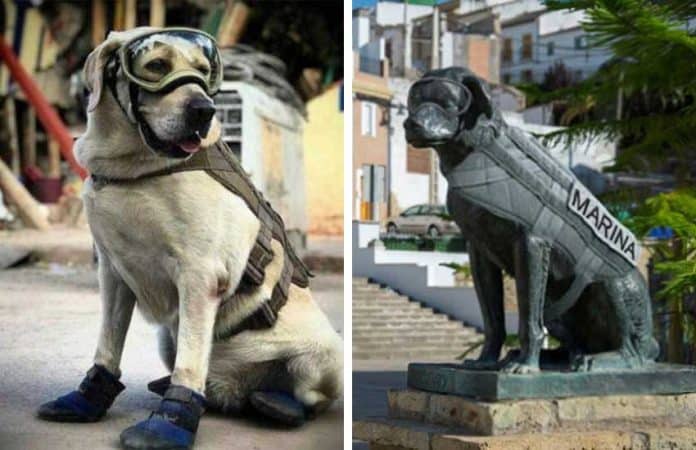
Rescue dog Frida, left, and her statue in Puebla.

The eight-year-old search and rescue dog that became a social media star and bona fide Mexican icon after last September’s earthquakes has been honored with a statue in Puebla.

Frida herself was on hand at the recent unveiling ceremony in the state capital’s Ecological Park, where the white Labrador — decked out in her customary protective goggles, blue booties and vest — put her highly-sensitive nose against her bronze replica to check it out.

Made out of unwanted keys, the statue of Frida stands next to another in the likeness of the dog’s trainer, Israel Arauz.

Both canine and master played key roles in the search efforts following the September 7 and 19 earthquakes that claimed hundreds of lives and devastated parts of southern and central Mexico, including Puebla where the monuments now stand.

In front of the two statues a plaque reads: “Memorable symbols of the strength Mexicans can have when we decide to come together for great causes.”

In her distinguished career of public service, Frida has helped to save the lives of 12 people who were buried under the rubble of buildings that collapsed in the 2010 Haiti earthquake and found 41 bodies of victims of a landslide in Guatemala in 2012.

She also contributed to rescue and recovery efforts after the Pemex tower explosion in Mexico City in 2013 and the 2016 Ecuador earthquake.

The Puebla statue is not the only piece of art that celebrates the heroic actions and achievements of Frida.

The navy canine unit sniffer has also been featured on t-shirts, in comic books and in a large colorful mural in the Mexico City neighborhood of Roma, clearly demonstrating that she has won over the hearts and minds of many.

For now, Frida continues to be at the ready to lend a paw if her skills, including her highly-sensitive sense of smell, are needed in the event of another natural disaster.

But in the future she could act as a mentor for younger dogs that are training to become Mexico’s next generation of highly-valuable and much-loved canine heroes.

Source: mexico.com (sp), CBS News (en)

New legislation will require taxis to be powered by renewable energy

0
A taxi in Querétaro: they may still be yellow but they'll be green too.

Taxis in Querétaro will be mostly green within five to six years, state lawmakers predict.

The Querétaro state Congress has approved a series of amendments to its mobility laws that will promote the use of renewable energy and electric vehicles by taxi owners.

The new regulations are among the state’s green policies, which have resulted in 45% of taxis — about 3,000 — in Querétaro city to be powered by natural gas instead of gasoline.

Lawmakers expect that in five or six years’ time 100% of taxis in the greater Querétaro metropolitan area will be powered by renewable energy sources.

The new regulation requires that all new taxi concessions issued this year go to electric vehicles (EVs). The law allows for hybrid vehicles to obtain a license throughout 2019, but in 2020 licenses will go to EVs only.

Taxi licenses and permits will also be reviewed, allowing for a single owner to have up to 10. If a taxi permit holder wants to operate a fleet larger than the 10-vehicle limit, the vehicles must be electric.

“The sale of taxi permits in the black market will no longer be tolerated,” said the president of the congressional mobility commission. If permit holders fail to comply with the EV-only regulation, their permits will be rescinded.

Taxi licensees will have between 10 and 16 years to renew their fleets, allowing for a gradual replacement of gasoline-powered cars with their environmentally-friendly counterparts.

Source: Milenio (sp)

New mayor will head violence-torn municipality, continue search for his father

0
Father, left, and son: the search will continue.

When 34-year-old medical doctor Blas Godínez Ortega is sworn in as mayor of one of Chihuahua’s most violent municipalities later this year, life as he currently knows it will inevitably change.

But one constant that has been a part of his day-to-day existence in his home town of Gómez Farías since late last year will probably remain: he will continue to search for his missing father.

In the early hours of November 8, Blas Godínez Loya — whom the mayor-elect followed into the medical profession — was abducted from his home by suspected members of a criminal gang.

The 62-year-old community hospital director hasn’t been seen since.

One line of investigation is that Godínez Loya was kidnapped in order to treat gang members who had been wounded in gun battles at the time as a bloody turf war escalated in the mountains surrounding the municipal seat.

Authorities suspect that to be the case because other doctors have been abducted for that reason in the Sierra region of the northern border state before they were later returned unharmed.

But more than eight months after his disappearance, Godínez Ortega still doesn’t know what happened to his father or whether he will ever see him alive again.

His dad’s disappearance — and continuing violence in the region — provided strong motivation for the doctor to put his name forward as a mayoral candidate in the July 1 elections.

“It was a moral duty to my father, to my family, to the municipality,” Godínez Ortega told the newspaper Milenio.

“What happened to my father marked my life in many ways and one of them was politics. [It made me] take the radical decision to start working with the people, with my municipality . . . to make Gómez Farías a better place to live,” he said.

[wpgmza id=”41″]

The doctor was endorsed by the Social Encounter Party (PES) and stood in the election as the mayoral candidate for the same coalition that Andrés Manuel López Obrador represented in his landslide victory in the presidential race.

Godínez Ortega’s triumph was less emphatic — he won less than 2,000 votes in a municipality where there are 6,000 names on the electoral roll — but it was a victory all the same and one that will allow him to start working towards the changes he wants to see.

The doctor told Milenio that while he was on the campaign trail some local residents expressed surprise that he would choose to contest the election while his father was still missing.

But he explained that just like medicine, politics is in his blood: Godínez Loya also stood as a candidate for mayor, representing the Institutional Revolutionary Party (PRI), at elections in 1986.

Godínez Ortega also said he had the opportunity to meet López Obrador at a rally in Chihuahua, where he told the political veteran what had happened to his father and asked for his support to combat insecurity in Gómez Farías.

“His face was full of surprise at what I was telling him and then he gave me a very fraternal hug . . .” he recalled.

“He told me that we wouldn’t be left on our own, that he was going to help us fix the situation that we are living through and help us to govern.”

Godínez Ortega knows that he has a big — and potentially dangerous — job in front of him but taking a leaf out of López Obrador’s book, he said that he will eschew personal security, charging that politicians should live under the same conditions as the citizens they represent.

He also directed a message to criminal organizations, urging them to respect doctors and all local residents “who for the most part have nothing to do with . . . the dispute between cartels.”

The mayor-elect added that he would continue to search for his father and assured local residents that he will do all he can to prevent similar cases from occurring in the future.

“As a son, I will never stop looking [for my father] . . . and as an authority [figure] I will not allow what happened to me to happen to another citizen . . .” Godínez Ortega said.

He also pledged to continue to work as a doctor during his term as mayor, which will commence in September.

“I will allocate time to continue attending to my many patients and as I will not fail the citizens [of Gómez Farías], I will not fail my patients because [I will be] a mayor for three years but a doctor my whole life.”

Source: Milenio (sp)

For a healthy snack, there’s nothing like chicharrón. Or is there?

0
Chicharrón: eat all you want?

For anyone who enjoys eating chicharrón, or fried pork rinds, the news was too good to be true. And it probably was.

Claims have been made recently by some nutritionists and others that eating chicharrón won’t lead to weight gain and could even benefit a person’s overall health.

Proponents of eating the delicacy found at markets all over Mexico say one of the desirable qualities is its high collagen content, making one feel satisfied sooner during a meal, meaning that less is eaten and weight will be lost.

Chicharrón is also said to have a high unsaturated fat content, considered to help reduce cholesterol, improve bone health and help those suffering from diabetes and heart disease.

Every 28 grams of the pork rind contains 17 grams of protein, a characteristic said to help consumers reach satiety sooner and benefit their muscles as well.

It also has stearic acid, a saturated fatty acid that does not contribute to elevating cholesterol levels in the blood.

But nutritionist Eva Mariana Rodríguez Pineda says the claim that chicharrón is a beneficial food that will not contribute to gaining weight is a questionable one.

“Any excess of calories consumed during a day can lead to gaining weight. There is not a single food item that, on its own, will make you gain or lose weight. What matters in the end is the amount of energy you consume and the amount you use,” she said.

The belief that chicharrón does not impact weight comes from ketogenic diet proponents, the nutritionist said.

The high-fat, adequate-protein, low-carbohydrate diet is used by physicians to treat difficult-to-control epilepsy in children. The diet forces the body to burn fats rather than carbohydrates.

Fried pork rinds are an acceptable food item in such a diet, said Rodríguez.

The nutritionist was blunt in asserting that the best diet is one that is balanced and includes carbs, fats and protein, and that restricting any of those three main nutrients could lead to poor health.

Rodríguez advised that anyone interested in eating food without restriction should stick with vegetables, as they are low in calories and their fiber content aids digestion.

So where does that leave chicharrón in a healthy person’s diet?

You can eat it, Rodríguez said, but only once in a while.

Source: Milenio (sp)

Oaxacan elders are dancing their way out of isolation thanks to non-profit group

0
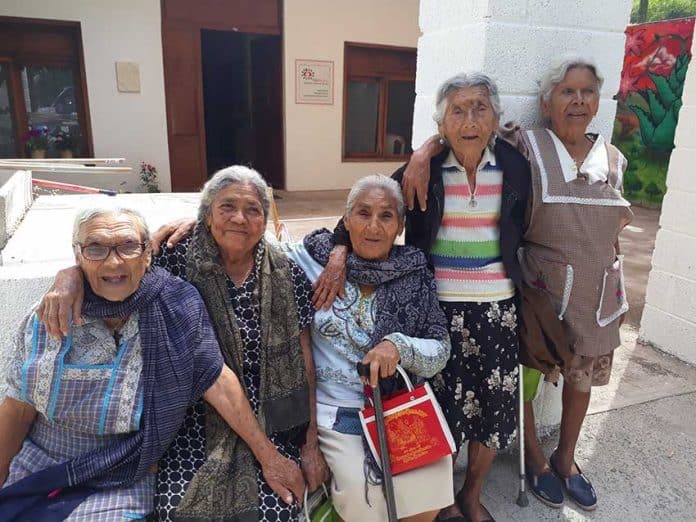
Happy senior citizens in Santo Domingo Tonalá.

In the small town of Santo Domingo Tonalá in the Mixteca region of Oaxaca, the sound of zumba music rings out. But anyone peeking their head around the door to see who these eager zumba dancers might be will likely be surprised by the sight.

Behind the walls of this small community center are 15 or so of the town’s elders dancing to the zumba beat.

This happy scene hasn’t always been the case in this small town whose population rises and falls depending on migration. Eight years ago, when the idea for a non-profit group to help the elderly was just a spark in the eye of the founders, many of the elders who are dancing today were living isolated lives, with little chance of community interaction.

In 2010, Karen Rasmussen joined Alejandra Olguin in a visit to Olguin’s family home in Santo Domingo Tonalá. Olguin’s family migrated to the United States before she was born but continues to visit their home village.

While enjoying breakfast at the market, Rasmussen spotted an old woman who, she said, could have been her own grandmother, struggling to buy the most basic of vegetables.

[wpgmza id=”40″]

“I was stopped in my tracks,” said Rasmussen. “Here I was enjoying my green juice after a hearty breakfast and this woman was struggling to buy tomatoes. ”

The women investigated further and since Rasmussen had a background in international development and Olguin had personal connections in the town, they put a plan in place to help the elders. The organization would be called Nija’nu A.C.

The project started out offering practical aid, through food packages, house repairs and helping the elders to get their paperwork in order to receive their state pension (1,160 pesos every two months, or US $61 at the current exchange rate).

They hired local workers to create access ramps, repair ceilings and even paint the walls of the elders’ houses in new uplifting colors. Once the immediate physical needs were covered, the team began to hear stories about how isolated the elders felt.

Many had family who had migrated to the U.S. and therefore found themselves alone in their old age. Others had no family left alive, while still others had children who were too busy trying to make a living that they weren’t able to give much time to their parents. Whatever the reason, these elders wanted a chance to meet their peers and to feel part of the world again.

Though Nija’nu was and continues to be entirely funded by individual donations and there wasn’t a huge amount of spare cash, the team began to put in place some community events. The logistics were not easy. Many elders struggled to walk and to get out of their homes, so kind and patient local taxi drivers had to be enlisted to pick the elders up and take them to the events.

What started as an afternoon viewing old films evolved into multiple activities through the week. Nija’nu fundraised enough money to rent its own community center, where the elders can go every day. The house has two bedrooms for visiting volunteers as well as an outdoor patio, so the elders can enjoy their classes al fresco.

A whole variety of activities are offered from learning to write their names, to pottery and painting. The elders can come to dance and staff member Karina Ramírez Duran has trained in teaching zumba to the elderly.

“The elders have such a busy life now,” said Rasmussen with a sweet giggle that often showed itself when discussing them. “I think some of the younger members of Santo Domingo Tonalá would also like their own community center.”

While any societal change can be a slow process, Nija’nu has noticed that the local municipal government has started to react to the needs of the elderly members of the community. Over the last few years they have helped by providing hearing and vision tests and giving food aid once every six months in all of the poor communities. There is also help with post-earthquake recovery that prioritizes vulnerable populations.

Every year, Nija’nu publicly celebrates the International Day of the Elder in the main square, where seniors hold banners declaring their rights and even dance in public as the music plays.

The group has also forged connections with the local school, which creates important links between the youngest and oldest generations of the town. During the annual school parade they hired a mototaxi and the elders drove around waving flags and banners. Many of the elderly that Nija’nu helps have gone from being invisible to taking center stage in the community in which they have spent their entire lives.

Rasmussen has seen a great change in the elders that she works with.

“When we first started Nija’nu we noticed that if the elders got sick that they didn’t even try to get well,” she said.

Now, with the support of friends made through Nija’nu activities and with the care of Nija’nu staff, they see a reason to try.

Nija’nu hasn’t just helped the elders, though. It has also provided four part-time jobs within the community. Rasmussen has watched them thrive and grow over the last few years. Their latest staff member, Adriana Espinosa Luengas, contracted polio as a child and struggles with mobility. As a result she is going to train in “chair zumba,” which will help some of the elders who are in wheelchairs or cannot stand for long.

She is also teaching the elders to write their names and with the help of Nija’nu she has learned to use a computer, and now sends the monthly reports via email.

“I like seeing how everyone is thriving,” Rasmussen said when asked how it felt to look on the project that is now in its eighth year.

She has seen friendships form between the elders, which provides another layer of support for them.

As for the dancing, this is something that has become a regular occurrence in the Nija’nu community center. Whether it is zumba class or free dancing to the beat of the marimba, the smiles on the seniors’ faces say it all.

“The elders love dancing,” said Rasmussen.

Running a non-profit organization has its challenges and the future isn’t always certain but we can only hope that the sound of zumba and the laughter of the elders will be ringing out in Santo Domingo Tonalá for many years to come.

If you are interested in donating to Nija’nu or would like to offer voluntary services, information can be found on their website. You can also follow Nija’nu on Facebook.

[soliloquy id="57153"]

Susannah Rigg is a freelance writer and Mexico specialist based in Mexico City. Her work has been published by BBC Travel, Condé Nast Traveler, CNN Travel and The Independent UK among others. Find out more about Susannah on her website.


7 escapes in 16 months from Culiacán jail with aid of personnel

0
The state prison in Culiacán.

Seven highly dangerous prisoners have escaped over the last 16 months from the state penitentiary in Culiacán, Sinaloa, aided by prison personnel, according to a report today by El Universal.

The most recent escape was early Sunday morning when two inmates left the facility dressed in the uniforms of prison guards.

They, like the other five escapees, were federal prisoners in a jail intended for inmates accused or convicted of state crimes.

Of the 2,233 inmates, 560 are being held under the federal justice system.

And while the Culiacán penitentiary has been equipped to serve as a holding facility for federal prisoners, having a mixed population complicates security measures.

Public Security Secretary Fermín Hernández Montealegre explained that during the last year the state had repeatedly requested the transfer of 10 inmates to federal facilities, including the two newest fugitives.

Among five inmates who escaped in March last year were Juan José Esparragoza Monzón and Francisco Zazueta Rosales. The former was a financial operator with the Sinaloa Cartel and the latter the chief bodyguard of the sons of former boss Joaquín “El Chapo” Guzmán Loera.

Zazueta had been interned at the Culiacán penitentiary for just one month at the time of the escape.

The escapees fled with the help of the facility’s head guard, José Mario Murillo Rodríguez, who left the penitentiary with his former prisoners.

The investigation that followed revealed a lush lifestyle the inmates enjoyed: large-screen TVs, DVD players, PlayStation and 8 Xbox video game consoles and several mobile phones were among the devices found.

It was also reported that the day before the escape the inmates had held a party with bands, liquor and visiting women.

Six of the seven inmates who have escaped from the jail were members of the Sinaloa Cartel.

Source: El Universal (sp)