Home Blog Page 930

Yucatán’s ancient Maya ruins of Oxkintok: lots to see in a small space

0
Oxkintok
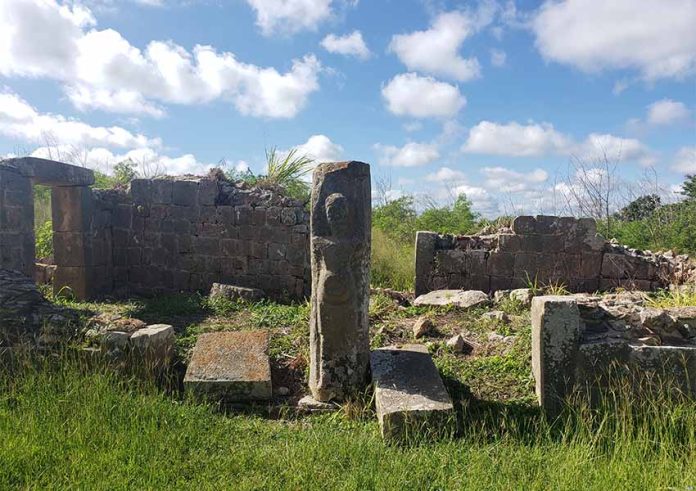
Oxkintok's Devil's Palace, with a statue of a skeleton-like person.

Planning to visit Yucatán? Make time to explore some hidden attractions away from the crowds. The state has several lesser-known but still impressive archaeological sites that will give you insight into ancient Maya life. The remains of the ancient city of Oxkintok is an outstanding example.  

Oxkintok is located among lush vegetation about 70 kilometers south of Mérida off highway 180. The site’s labyrinth, arches and anthropomorphic statues are key highlights. 

The National Institute of Anthropology and History (INAH) says Oxkintok could mean “the city of the three flint suns,” although other interpretations also exist. It was also called Tzat Tun Tzat or Maxacan, according to INAH.

The city was occupied for around two millennia, from about 500–300 B.C. to around A.D. 1200–1450. Its location between trading routes enabled it to gain prominence in the early Classic period (A.D. 300–550), according to INAH, which says the city became wealthy during the beginning of the Puuc region’s development in the sixth century. 
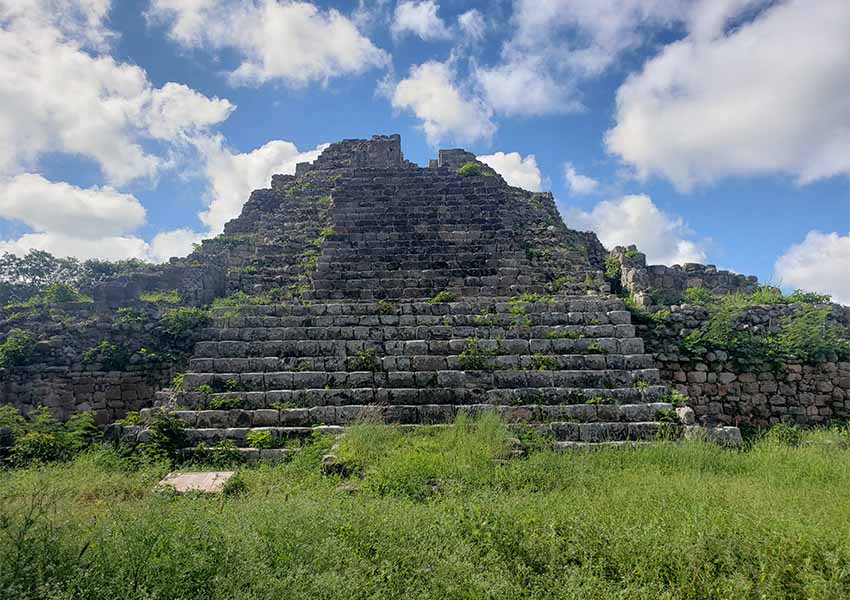
Oxkintok
The pyramid of the Ah May Group.

While the site is fairly small, there’s plenty to see: archaeologists have discovered several tombs and burial offerings on the site. Expect to spend two to three hours here to see everything.

Once you enter the site from the north, you can walk up to the Ah Canul Group, a section with several plazas and buildings, including palaces.

As you enter the northern section of this group, you’ll see a pyramid with a doorway-like opening on its side. Nearby is the Pop Palace, identified as one of the earliest buildings on the site and named after a matting design on the floor.

There is also an interesting round platform in this area that may be an altar. Another notable building is a pyramid located to the east with a temple on top. But a must-see in this section is the plaza with anthropomorphic statues.
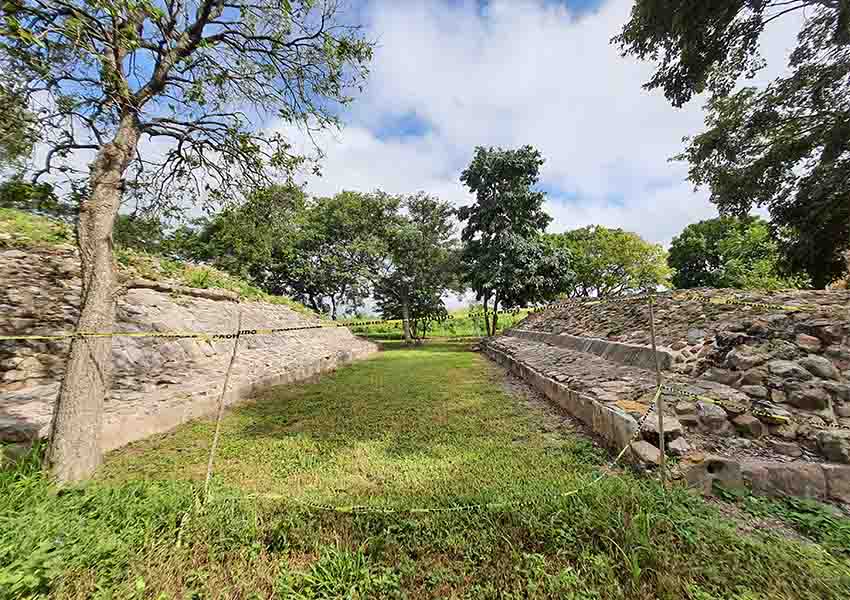
Oxkintok
Oxkintok’s ball court is believed to be one of the oldest discovered in Mexico.

Keep an eye out for the Ch’ich Palace, whose entrance has two statues in fairly good condition that may represent important characters. There’s a notice identifying this palace, so you can’t miss it. Next to it is the Devil’s Palace. There’s a statue here that is thought to represent a skeleton-like person.

Don’t forget to see the plaza towards the east with an arch on a building. You can enjoy some beautiful views from this arch, and during the solar equinoxes in March and September, an astronomical event similar to Dzibilchaltún occurs here. 

South of the site is the Ah May Group, built on a large multilevel platform with a surface area of 15,000 square meters. This group is considered the center of civic and ceremonial activities. I’d advise checking out the 15-meter-tall pyramid with a crowning temple.

Among the many other structures in the the Ah May Group are possible elite residences and altars. The views from here across the site will help you envision Oxkintok’s past splendor. 
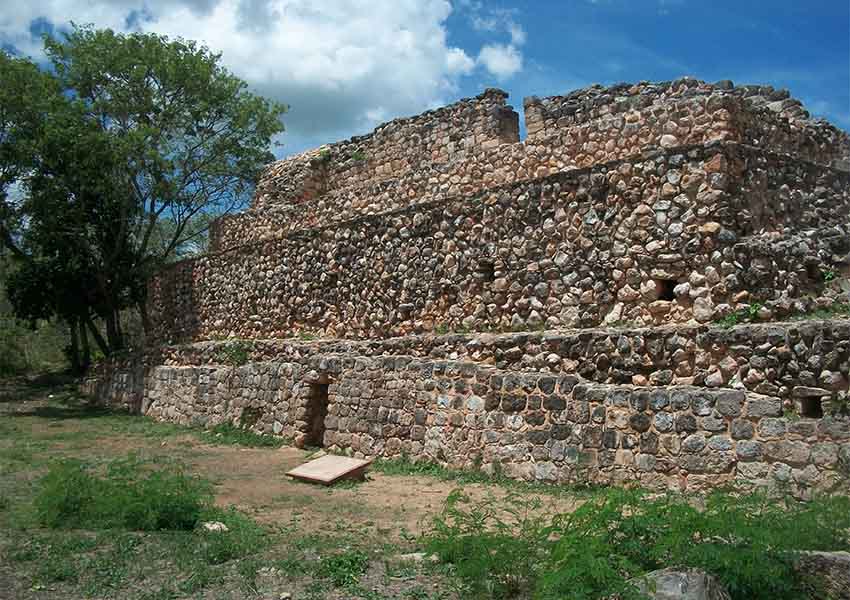
Oxkintok labyrinth
Oxkintok’s mysterious structure often referred to as the Labyrinth has three levels thought to symbolize the celestial level, Earth and the underworld. Creative Commons

Perhaps the site’s most intriguing and famous structure is an isolated building called Satunsat, meaning “the place to get lost.” It’s also known as the Labyrinth. It has three levels with passages, stairs and narrow rooms. 

The three levels of Satunsat are thought to represent the ancient Maya’s conception of the universe being in levels — the celestial level, Earth and the underworld, called Xibalba. You can see small openings on this building from the outside that look like mini windows. Unfortunately, the entrance to this building was closed during our visit, so, we couldn’t explore its interior.

The Ah Dzib Group, with several plazas and buildings, is also worth seeing. There’s another beautiful arch here that offers good photo opportunities. INAH believes a ball court in this section is one of the oldest surviving ball courts from the Maya civilization. The Mayan World Museum of Mérida (Gran Museo del Mundo Maya de Mérida) has a magnificent ball ring from this court.

While exploring the site, you’ll also spot some grinding stones that were perhaps used in daily life.
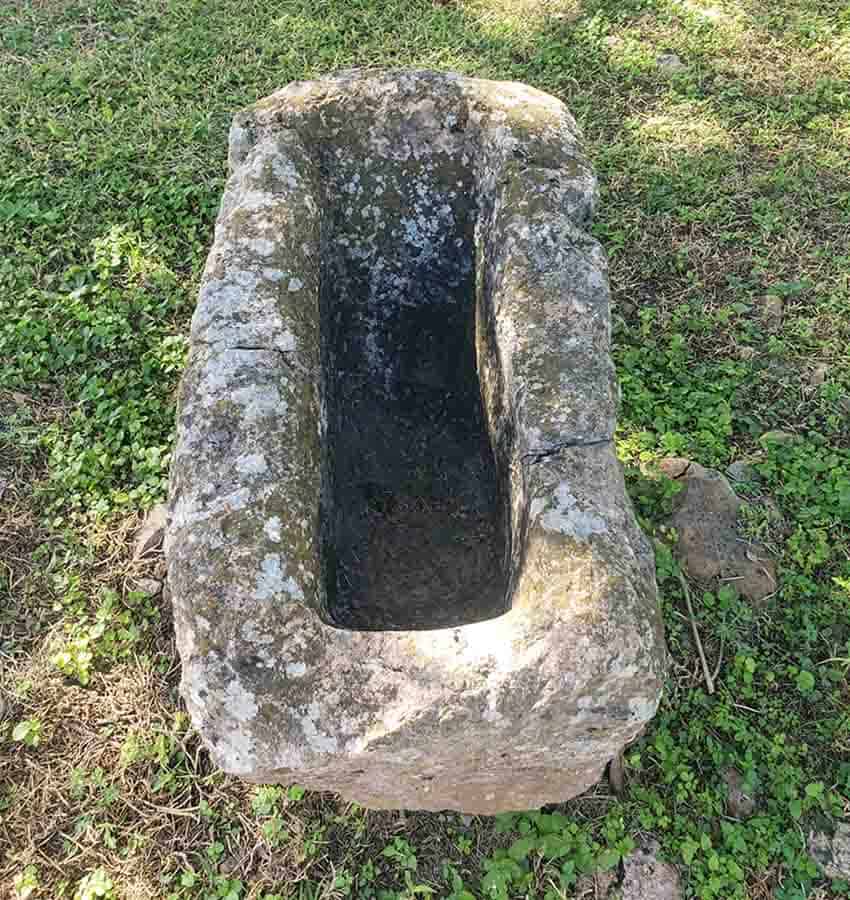
Oxkintok
You can see these unusual grinding stones at various points around the site.

The discoveries at Oxkintok are probably not over: there are unexcavated mounds and ongoing excavation work. 

You can combine a visit to Oxkintok with a trip to the nearby Calcehtok caves in the town of Calcehtok, if you’re up for some physically demanding adventure.

And if you want to see more ancient Maya sites, continue on the Ruta Puuc – a travel route with archaeological sites and caves – including Uxmal

Looking for something a bit less strenuous? The nearby town of Maxcanú is also worth a visit, and will become even easier to visit when its planned stop on the future Maya Train is built.
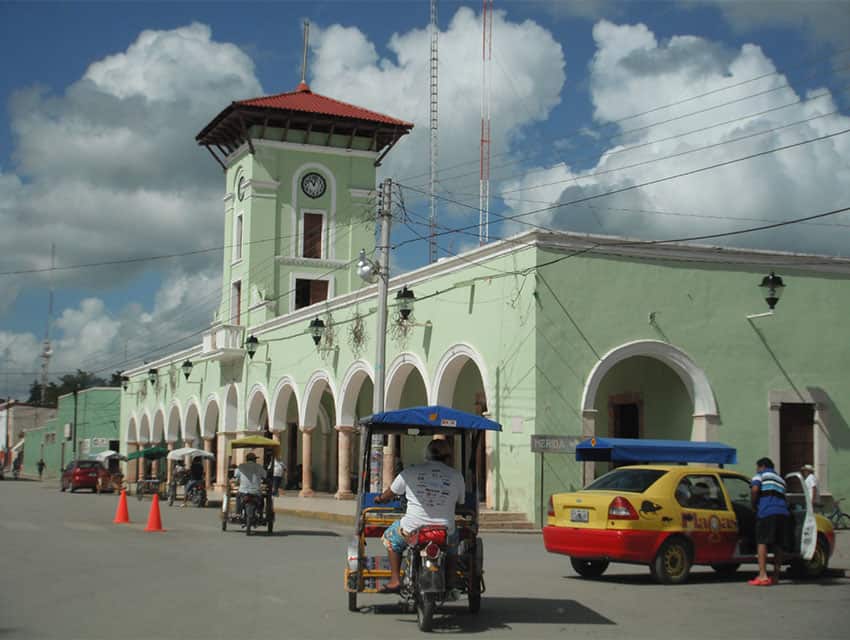
Maxcanu, Yucatan
After finishing up at Oxkintok, visit nearby Maxcanú for some authentic Yucatán cuisine and a glimpse of Mexican small-town life. Creative Commons

Thilini Wijesinhe, a financial professional turned writer and entrepreneur, moved to Mexico in 2019 from Australia. She writes from Mérida, Yucatán. Her website can be found at https://momentsing.com/ 
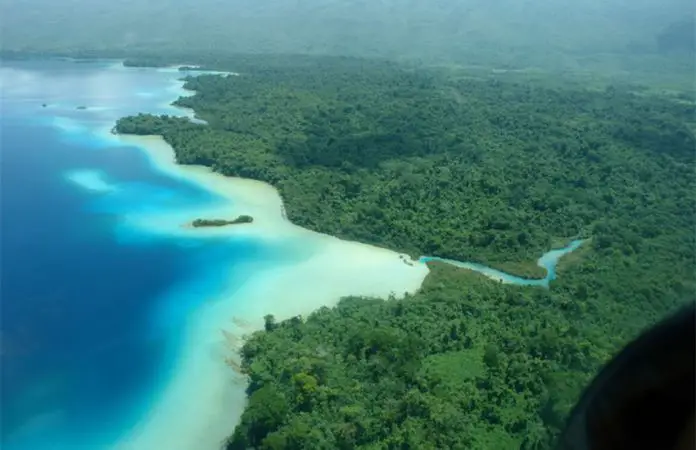
Chiapas’ Lacandon Rainforest: see this Eden-like paradise before it’s gone

0
Laguna Miramar in the Azul Montes Biopshere Reserve
The Montes Azules Biosphere Reserve, part of the Lacandon Jungle, which some tourism companies have stopped visiting in recent months for security reasons. (Creative Commons)

Arriving in Chiapas’ Selva Lacandona (Lacandon Rainforest) is like arriving at the Garden of Eden, like penetrating a portal that connects the earthly to the divine.

Arriving here is to enter an extravagant, secretive green world where the “cats-and-dogs” rain never stops, to enter a habitat that every year is drenched with 2,000 to 5,000 millimeters of rain that blesses, heals and nourishes the life of the jungle.

Coming here means immersing yourself in an oceanic, infinite jungle rooted in Mexico’s deepest southwest.

In the Lacandon Rainforest, one can fall asleep in the tropics and dream of moist evergreen and montane forests,  then awake under a temperate conifer canopy, only to again fall asleep again and awake in a cold montane cloud forest.  It all overflows with abundance.

Lacondon Rainforest in Chiapas, Mexico
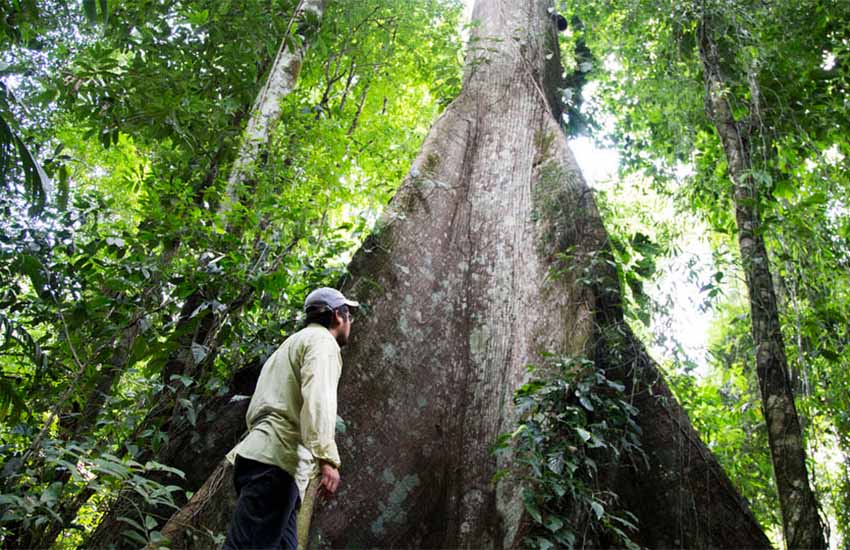
The Lacandon is the home to nearly 600 species of trees, including cedar, mahogany and rosewood. Autonomous University of Nuevo León

Visiting the Lacandon Rainforest is to become part of a symphony of mysteries, with questions and answers that lay in the Mexican subconscious.  It is exploring a paradise of more than 1.5 million hectares of rainforest that welcomes both believers and nonbelievers to their own nirvana.

It is a divine thing, a personal evolutionary moment, an earthly heritage that belongs to the people and the Chiapas municipalities of Las Margaritas, Altamirano, Ocosingo, Palenque, Maravilla Tenejapa, Marqués de Comillas-Zamora Pico de Oro and Benito Juárez.

Visiting the Lacandon is to experience, with enormous national pride, the home of 24% of Mexico’s terrestrial mammal species, 44% of its birds, 13% of its fish, 10% of its reptiles and 40% of its diurnal butterflies.

The diversity of the Lacandon is beyond spectacular.  It is simply magnificent.

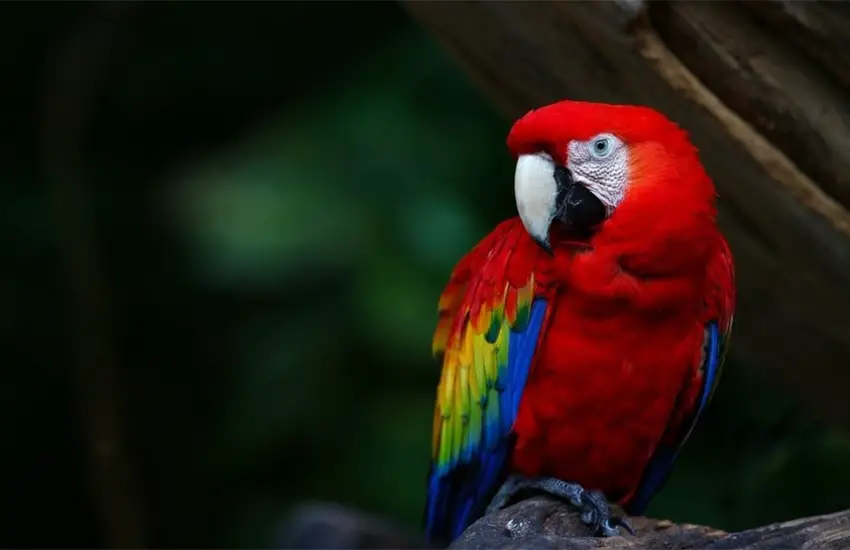
scarlet macaw in Lancandon Rainforest, Chiapas, Mexico
A scarlet macaw, also known as a Guacamaya roja, living in the Lacandon, which is home to one-third of Mexico’s bird species. Creative Commons

It is finding yourself among 3,400 species of vascular plants and almost 600 species of trees.  It is to fill your mind and soul with the bouquets of mahogany, cedar and rosewood and orchids and bromeliads, while kapoks and other colossal trees stand above like titans, watching everything below.

On its southern border is the Lacantún, a tributary that feeds the Usumacinta River — Mexico’s mightiest, whose name in Nahuatl means “land of little monkeys.” In the Usumacinta, you wade across the same waters that feed the rainforests of the Calakmul and Sian Ka’an Biosphere Reserves  that unites us with our Guatemalan brothers and sisters.

Arriving in the Lacandon is also coming home to the world’s largest number of bat species. It is visiting the land of the scarlet macaw, the tapir, the jaguar, the crocodile, the catfish and the spider monkey. It is becoming one with the mighty harpy eagle and the river otter, with Mexico’s largest freshwater turtle (Dermatemys mawii), multicolored butterflies and the howler monkey.

With an invitation from biologist and environmentalist Julia Carabias a decade ago, I traveled to the Lacandon for the first time and felt the same anticipation and excitement as when I first arrived, four decades ago, at my beloved Amazonia.

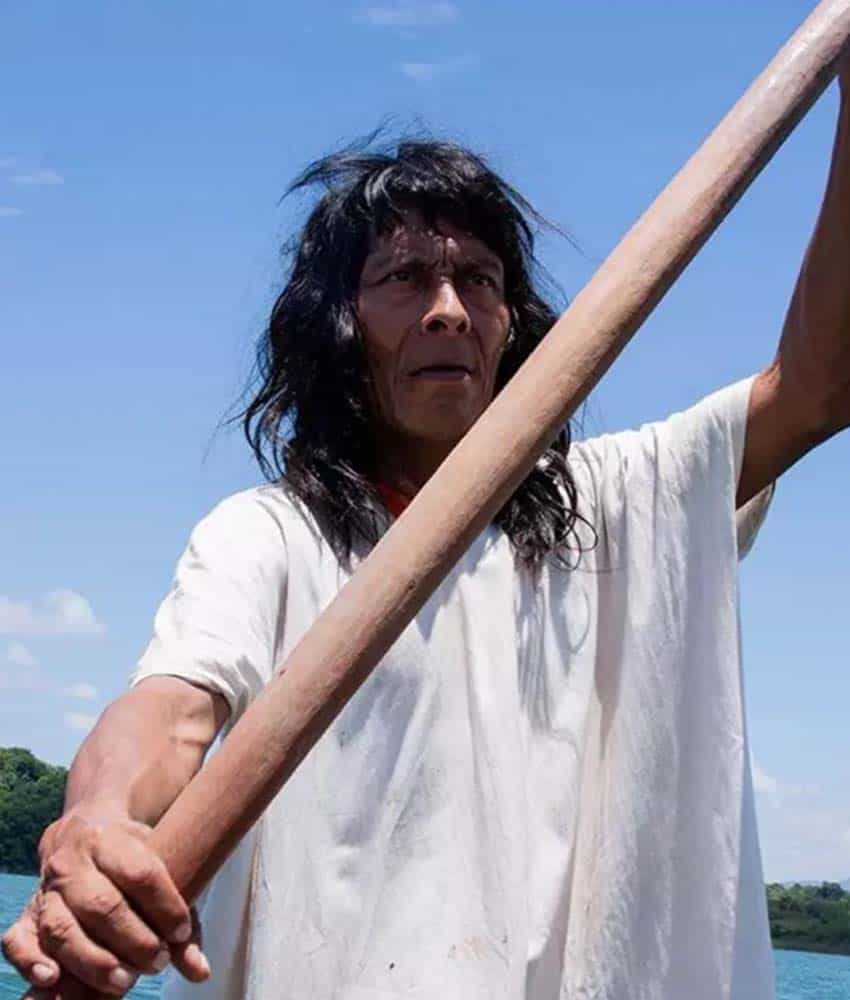
indigenous resident of Lacondon Rainforest in Chiapas, Mexico
The Lacandon is also home to multiple indigenous peoples in Mexico who have lived there for centuries. MIKE & ILIANA ALCALDE/MÉXICO NATURAL

To visit the Lacandon, I traveled first to San Cristobal de las Casas, Chiapas, then to the Chajul Research Station in the Montes Azules reserve. I stayed at the community eco-lodge Canto de la Selva (Song of the Jungle).

The jungle bewitches, the jungle heals, the jungle educates, the jungle transforms.

Amazonia and the Lacandon are the mothers of all rainforests and home to a myriad of ancestral indigenous peoples and languages.  They are home to gazillions of trees and other flora that generously provide us with food, medicine and oxygen. Every day, their forests suck in millions of tons of carbon dioxide that help mitigate global warming, helping humans survive.

Without these two massive rainforests, we all would be in dire straits.

Lancondon Rainforest in Chiapas, Mexico
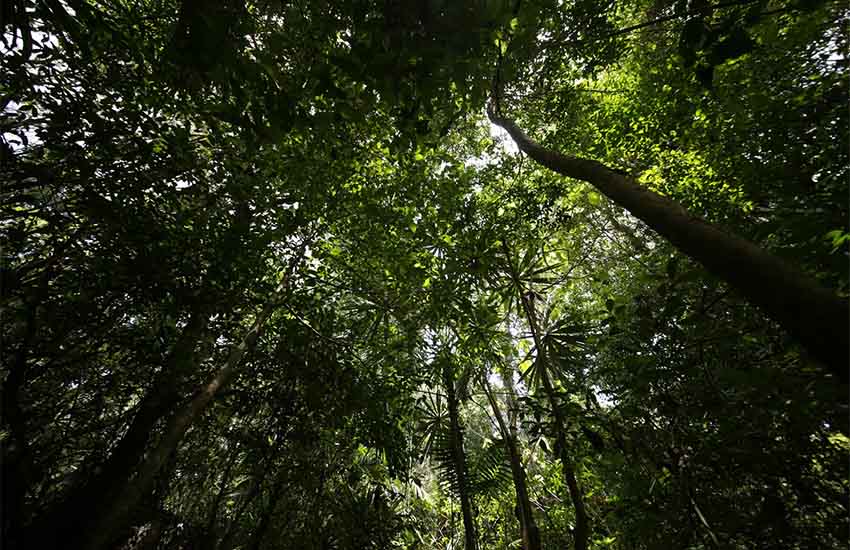
Despite human incursion, the massive Lacandon still boasts 1.5 million hectares of rainforest. Semarnat

Let’s forget for a moment the fatuous obsession to build mammoth trains that cut through and destroy the Maya rainforest.  Because the Lacandon is the real Maya train, the biological corridor that connects and gives life, that freely offers its priceless environmental services, that has provided a home for centuries to indigenous peoples and their ancestral knowledge.  All these are divine, evolutionary gifts that we Mexicans still do not appreciate enough.

But arriving in the Lacandon is also to gaze squarely at the contradiction between the divine and the earthly, between the idealized and the real.  It is arriving in a region that has already lost two thirds of its rainforests, and today has only 600,000 hectares of well-conserved forests.

To arrive here is also to emerge in Chiapas, Mexico’s poorest and most forgotten state.  This is the land of the Maya Lacandon, the Tzeltal, the K’iche’, the Mam, the Tzotzil, the Chol and other abandoned peoples who have been largely neglected by politicians in turn, decade after decade, regardless of their political party.

In Chiapas, eight of every 10 inhabitants live in poverty. A third of the population suffers extreme poverty.

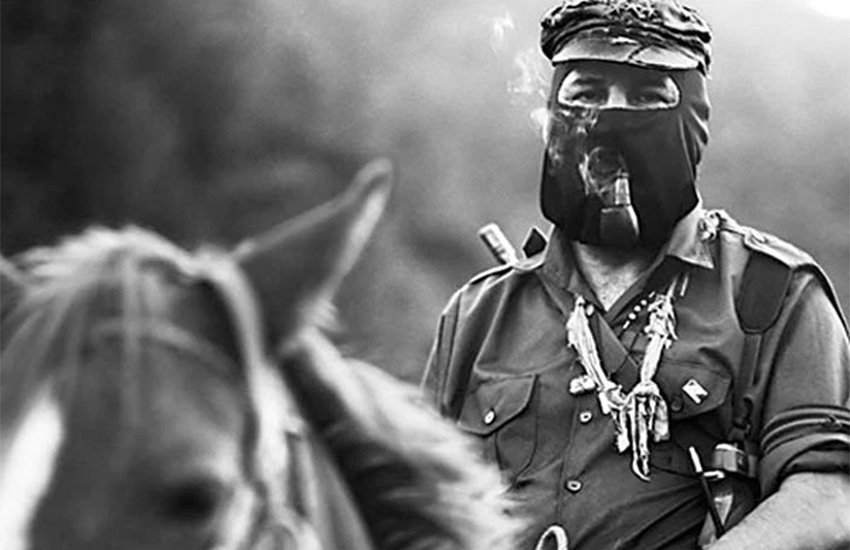
Subcomandante Marcos of the EZLN
Subcomandante Marcos, the founder of the Zapatista movement in Chiapas. File photo

According to Mexico’s National Council to Assess Social Development Policies (Coneval), Chiapas is the only one of the country’s 32 states where half of the population lacks a monthly income sufficient to cover basic food needs.  Arriving in Chiapas is to bear witness to where Mexicans live with disgraceful basic education, infrastructural and health services; a state with millions of our citizen compatriots to whom politicians turn only when they need their votes.

And let’s be honest, if it weren’t for the Zapatista insurrection of January 1, 1994, led by the Zapatista Army of National Liberation (EZLN) and its head, Subcomandante Marcos — an idealist turned into an icon for resistance, that spokesperson with a balaclava —many people today would find it difficult to place Chiapas on Mexico’s map.

This is why, dear reader, I urge you to rush to the Lacandon Rainforest. Dare to glide into this Mexican, Latin American and universal paradise.

Get inside, but with respect for the protected areas of Bonampak and Yaxchilán, of Chan-Kin, Metzabok and Nahá, of the Sierra la Cojolita community reserve and the Montes Azules and Lacan-Tún biosphere reserves.

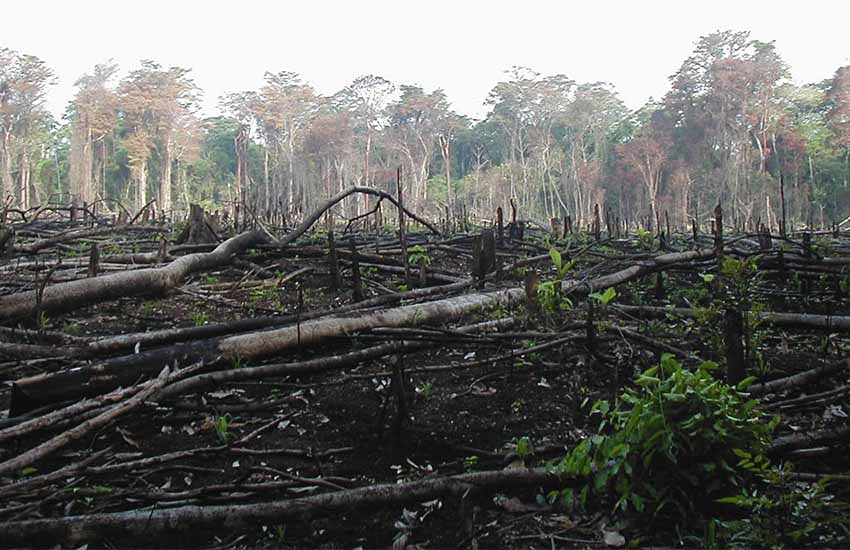
Lacondon Forest in Chiapas
Part of the forest burned to clear the land for farming. Creative Commons

Because, one not-too-distant day in the future, these might be the last strongholds where your children and grandchildren will be able to rejoice at the magnificent Selva Lacandona, our Maya mother rainforest.

If you care to know more about the Lacandon and the conservation efforts that have lasted more than 30 year, I suggest you visit Natura Mexicana or National Geographic’s Welcome to the Jungle: Exploring Mexico’s Lacandón.

  • This article is dedicated to Julia Carabias, with admiration and solidarity, for her more than three-decade long fight to protect the Lacandon Rainforest

Omar Vidal, a scientist, was a university professor in Mexico, is a former senior officer at the UN Environment Program and the former director-general of the World Wildlife Fund-Mexico.

Carlos Slim predicts strong GDP growth as nearshoring increases

0
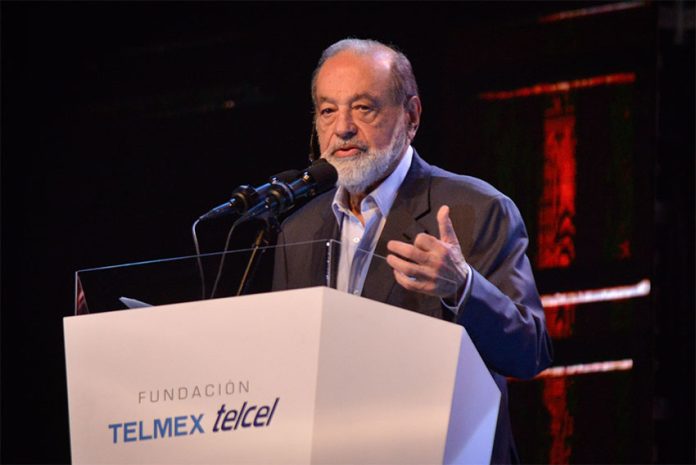
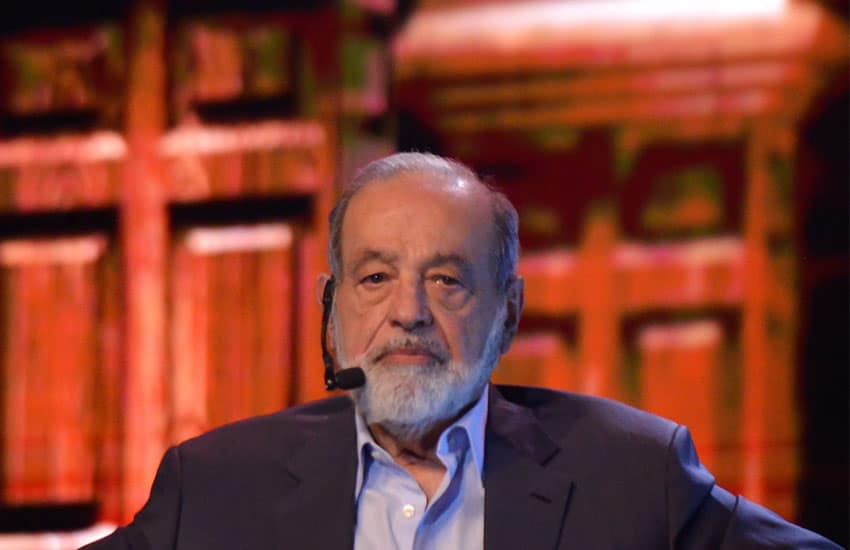
Billionaire Carlos Slim speaking at a business event in September.
Billionaire Carlos Slim speaking at a speaking event in September. Mario Jasso / Cuartoscuro.com

The Mexican economy will boom in coming years as the United States reduces its reliance on Chinese-made products, billionaire businessman Carlos Slim predicted Wednesday.

Speaking at an event at the National Autonomous University (UNAM), Mexico’s richest person said that the U.S. has depended heavily on imports from China for over 20 years but will increasingly look to Mexico due to its “economic confrontation” with the world’s most populous country.

“The products they imported from [China] will have to be produced here,” Slim said.

The magnate said that the United States and Canada could increase their domestic manufacturing capacity, but asserted that only Mexico can compete with China on production costs.

Slim, the owner of companies such as Telcel, Sanborns and Carso Infrastructure and Construction, said that increased investment in manufacturing capacity in Mexico could spur annual economic growth of 6% or higher. Mexico hasn’t seen sustained growth at that level since the 1950s and ’60s, a period when successive governments pursued an economic strategy known as the “Mexican miracle.”

The nearshoring phenomenon is already benefiting the Mexican economy, and Slim believes that benefit will only grow.

“What I see for all of you is a prosperous Mexico with sustained growth, with a lot of opportunities for job creation and economic activities,” he told UNAM students.

Remarks made by Economy Minister Raquel Buenrostro this week support that view, as she said that more than 400 North American companies are planning to relocate to Mexico from Asia.

Slim said he was confident that Mexico will seize the opportunity, although Mexico’s nationalistic energy policies are seen as one barrier to investment.

“Public finances are healthy and will remain healthy until the end of this government, that’s important. I’m convinced that the coming years will be years of a lot of work and a lot of opportunities,” he said.

Slim also said that the North American free trade pact, the United States-Mexico-Canada Agreement, is an important factor in the economic success he envisions. The agreement, which took effect in 2020, allows tariff-free trade for a wide range of products provided certain conditions are met.

Slim also highlighted the importance of oil to the Mexican economy and noted that production is increasing once again.

“What I want to stress is that the world you’re going to get, … the world you’re going to live in will be one of a lot of work, a lot of investment and a lot of [economic] activity,” he told students.

With reports from El País, Milenio and Expansión

AMLO declares he has no money, will rely on govt. pension in retirement

0
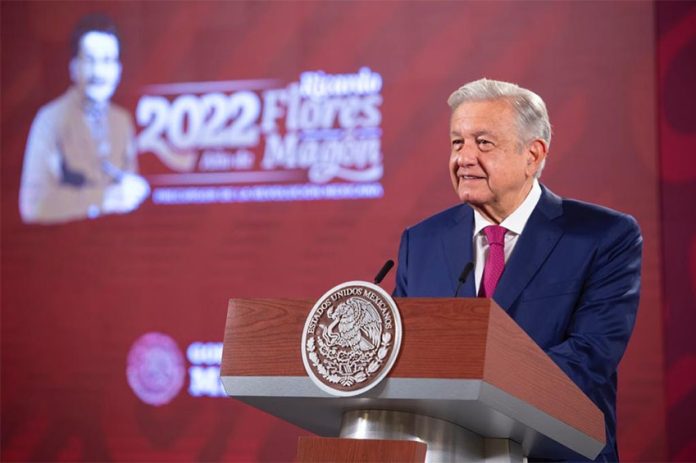
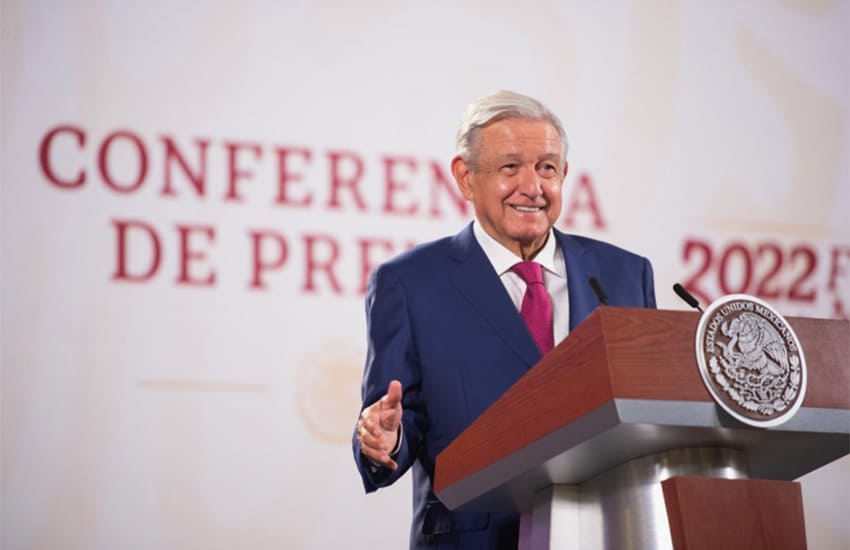
The president at his Wednesday morning conference.
The president at his Wednesday morning conference. Presidencia de la República

President López Obrador said Wednesday that he intends to live on a government pension once he leaves office in 2024 as he hasn’t accumulated wealth during his long political career.

“I’m president [now] but I have to think about requesting my Issste penion … because I don’t have money,” the 68-year-old told reporters at his regular news conference. Issste is the State Workers Social Security Institute.

López Obrador, who currently earns a net monthly salary of 136,700 pesos (just over US $7,000), said that unlike many other politicians, he hasn’t used the positions he’s held to get rich.

“Even though I was an opposition politician, I could have amassed a lot of money,” said AMLO, who was Mexico City mayor between 2000 and 2005 before running unsuccessfully for the presidency in 2006 and 2012.

“… Opposition politicians also have money, especially those who were corrupted. All of a sudden [some politicians have]  ranches and fine horses, after coming from the social struggle … [they smoke] cigars and [have] latest-model cars,” said López Obrador, who inherited a ranch in Palenque, Chiapas, from his parents.

The president, who prides himself on his personal austerity, said “there is an idea, or there was an idea, that a poor politician is a bad politician.”

He also said there is an idea that his government is opposed to the wealthy. “No! We’re against corrupt people, which is different. Not everyone who has money is evil,” López Obrador said.

The president said earlier this year that he believed he would qualify for an Issste pension of between 25,000 and 30,000 pesos (about US $1,300 to $1,500) a month. He said late last year that he would steer clear of politics once he’s retired, and live a peaceful life on his Palenque ranch.

“I’m going to turn off my phone. My sons and my grandchildren will always be welcome [to visit], but zero politics because we have to hand the baton to those who come behind us,” AMLO said.

Mexico News Daily 

Data shows tourism uptick in September compared to 2021

0
A view down a narrow, brightly painted street in Guanajuato.
The number of visitors who stay more than one night at destinations in the country's interior (like Guanajuato, pictured) has also gone up. Foto de Dan Torres en Unsplash

September was a good month for tourism in Mexico, according to new data from the National Institute of Statistics and Geography (INEGI) — but it wasn’t quite as good as September 2019, a few months before the COVID pandemic was declared.

In September of this year, Mexico received 2.77 million international tourists, which was a 12.9% increase compared to the same month in 2021, according to INEGI’s International Traveler Survey. However, that number was 8.8 percent lower than the arrivals for September 2019, back when masks were something worn primarily for Halloween and costume parties.

Moreover, the number for September 2022 was a few ticks lower than the 3.1 million international tourists who visited during August 2022, when summer vacationing with the kids was still in high gear.

The survey noted that while many foreign visitors are day-trippers to border towns or cruise ship passengers, there were 1.63 million tourists in September 2022 who stayed over at least one night in the interior of Mexico — a 27.1% increase over September 2019.

Of course, tourists spend money: a total of US $1.8 billion in September 2022, which was better than the US $1.5 billion spent in September 2021 and the US $600 million spent in September 2020, according to INEGI.

The survey also presented average expenditures by each tourist who arrived by air: US $1,057 in September 2022, compared to US $1,123 in September 2021 and US $957 in September 2020.

Overall, for the first nine months of 2022, it was reported that 27.5 million international tourists entered the country, an increase of 22.4% over the same period in 2021 — but still not as many as the 32.8 million for the same period in 2019.

The cumulative January-through-September spending figures for 2022 were US $19.3 billion, which beat last year’s total by 56% and even surpassed the US $16.9 billion spent during the same period of 2019, according to INEGI data, although higher 2022 prices due to inflation have had an impact.

With reports from La Jornada and the National Institute of Statistics and Geography (INEGI)

Interest rates rise again to record high of 10%

0
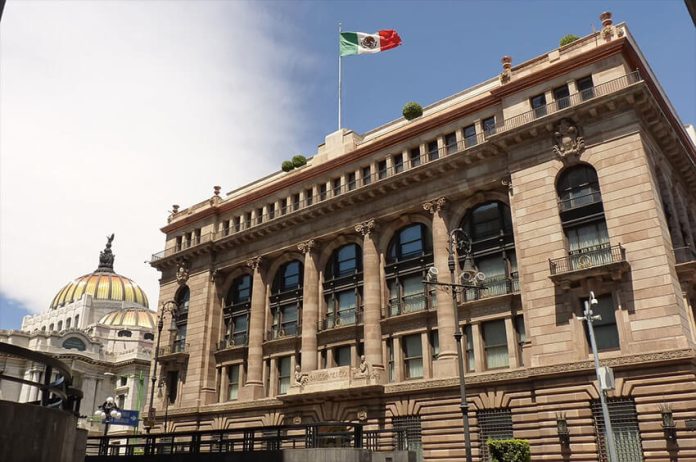
The central bank's headquarters in Mexico City.
The central bank's headquarters in Mexico City. Wikimedia Commons CC BY-SA 3.0

As expected, the Bank of México (Banxico) lifted its benchmark interest rate by 75 basis points to a new record high of 10% on Thursday.

Four of five Banxico board members supported a fourth consecutive 0.75 percentage point hike, while Deputy Governor Gerardo Esquivel voted in favor of a more modest 0.5% increase.

The decision came a day after the national statistics agency INEGI reported that annual headline inflation eased slightly to 8.41% in October, but core inflation rose to a 22-year-high of 8.42%.

Banxico said in a statement that “accumulated pressures associated with both the pandemic and the military conflict [in Ukraine] have continued to affect headline and core inflation.”

It said that the central bank board “evaluated the magnitude and diversity of the shocks that have affected inflation” and “considered the increasing challenges for monetary policy stemming from the ongoing tightening of global financial conditions [and] the environment of significant uncertainty,” among other factors.

“… Based on these considerations, the board decided by majority to raise the target for the overnight interbank interest rate by 75 basis points to 10.00%. With this action, the monetary policy stance adjusts to the trajectory required for inflation to converge to its 3% target within the forecast horizon,” Banxico said.

“The board will thoroughly monitor inflationary pressures as well as all factors that have an incidence on the foreseen path for inflation and its expectations … with the objective of setting a policy rate that is consistent at all times,” with two goals, the national bank said: making steady, timely progress toward a headline inflation target of 3% while taking into account the impact on the economy and financial markets.

The Bank of México has now raised its key rate by 6 percentage points since June 2021, when the current tightening cycle began. Each of its four 75 basis point hikes followed increases of the same size by the United States Federal Reserve.

Mexico News Daily 

Citigroup to purchase Deutsche Bank’s Mexico license

0
Citibanamex company building in Mexico
Citigroup is currently accepting bids for its Mexican arm Citibanamex. Moisés Pablo Nava/Cuartoscuro

Citigroup said on Tuesday that it would purchase Deutsche Bank’s Mexican banking license to maintain its corporate investment and private banking presence in the country following the planned sale of its local retail unit, Citibanamex.

“The acquisition of this license, subject to all the corresponding regulatory approvals, facilitates our exit from consumer banking and the ability to continue with our institutional operations in Mexico,” Citi said in a statement to the Reuters news agency over email.

Citi Chief Executive Jane Fraser announced early in 2022 that the financial group would retreat from consumer, small-business, and middle-market banking in Mexico. However, Fraser also said that it would keep its Mexican investment bank and private banking in order to cater to institutional clients in the country, because “Mexico is a priority market for Citi.”

This is all part of Fraser’s efforts to sell some international operations and simplify the firm, she said. The current deal with Deutsche Bank would make it easier for Citigroup to continue offering services to large corporations and wealthy clients after the sale.

millionaire businessman Carlos Slim Helu at event in mexico City
Carlos Slim’s company Grupo Financiero Inbursa is one of the main bidders to buy Citibanamex. He’s competing against fellow Mexican magnate Germán Larrea’s Grupo México. Mario Jasso/Cuartoscuro

Although no financial details were given about the agreement, a buyer is expected to be named by the end of 2022 or beginning of 2023.

Among the main bidders to buy Citibanamex, are Grupo Financiero Inbursa, owned by billionaire Carlos Slim, and mining Mexican titan Germán Larrea, the main owner of the copper mining concern, Grupo México. Both are the front-runners to buy the local retail arm of the group valued at between US $7 billion and US $12 billion.

However, the small local firm Grupo Financiero Mifel, backed by Advent International, is leading a group of investors who will also present an offer, Mifel said in a statement.

Citigroup is asking bidders to submit final binding bids for the next round, which should mark the end of the auction process, according to the newspaper El Financiero, which said another round is unlikely.

This week, President Andrés Manuel López Obrador said in his morning press conference that he expects the deal to be closed before the year ends.

With reports from El Financiero, Milenio and Reuters.

Carbon monoxide poisoning killed 3 US tourists in CDMX rental, officials say

0
Jordan Marshall, Kandace Florence and Courtez Hall. Courtesy photos from the families

Three United States citizens who were found dead in a Mexico City apartment late last month are believed to have died of carbon monoxide poisoning, although one of the victims reportedly told her boyfriend that she felt “drugged” after drinking at a bar the night before she passed away.

Two men and one woman were found Oct. 30 in an apartment they rented through Airbnb in the western borough of Cuajimalpa. Jordan Marshall, Courtez Hall and Kandace Florence traveled to Mexico City to celebrate the Day of the Dead holiday, according to media reports.

The Mexico City Attorney General’s Office said that studies indicated that the three friends died of carbon monoxide (CO) poisoning at an apartment in the La Rosita neighborhood, located near the Santa Fe business district.

Police said they found the bodies after security guards reported a strong smell of gas emanating from the apartment where the three Americans were staying. That suggests that carbon monoxide wasn’t the only gas that leaked as CO is odorless.

Leaky gas water heaters and stoves can emit carbon monoxide, which can cause headaches, dizziness, confusion and death if inhaled.

Airbnb told the news agency Bloomberg that the deaths were a “terrible tragedy” and that it was ready to assist authorities with their investigations. Marshall and Florence were in their late 20s while Hall was in his early 30s. The two men were reportedly teachers in New Orleans, while Florence was an entrepreneur in Virginia who had just started a candle business.

According to an El País newspaper report, Florence sent messages to her boyfriend in the early morning of Oct. 30 and told him that she felt “drugged.”

The newspaper spoke with Victor Day, who said that his girlfriend told him at about 3 a.m. on Oct. 30  that she felt extremely tired and had vomited. “She told me she felt drugged before she went back to the apartment,” Day told El País.

He saw on his girlfriend’s Instagram stories that she, Marshall and Hall had been drinking wine on an outdoor terrace in the capital. Criminals in Mexico City are known to slip drugs into people’s drinks in order to facilitate subsequent crimes, including sexual assaults, that they intend to commit. However, there was no indication that the three Americans were victims of any crime while out on the night of Oct. 29, or that the two men felt unwell after leaving the bar.

In messages sent to Day, Florence said she felt like she had taken ecstasy, as the drug MDMA is commonly known. “Where’s Jordan? Are you home or are you still out,” Day inquired. “I just got here. I’m literally in pain and pacing around the apartment. I’m shaking,” Florence responded.

The couple subsequently spoke on a video call and Day said he heard his girlfriend vomiting and retching. “She was visibly suffering,” he told El País.

“I tried to call her again [later], but I didn’t get through. I told myself that maybe it was nothing; that she would throw up whatever they gave her, sleep, we would talk again in the morning, and she would tell me what happened. Unfortunately, that was the last time I spoke to her,” Day said.

El País reported that the victims’ relatives don’t know what bar the three tourists visited on the night of Oct. 29. The U.S. Embassy in Mexico City told the newspaper that it was monitoring the case and providing consular assistance to the victims’ families.

Day made it clear that he didn’t agree with the conclusion that the deaths were caused by carbon monoxide poisoning. He said the apartment where the three friends stayed was advertised as having carbon monoxide sensors and questioned why they weren’t activated if gas was leaking.

“If gas was the cause, how is it possible that the sensors didn’t go off to alert them? How is it possible that the security guards who found them were not poisoned as well? And how could Kandace tell me that she felt drugged long before she returned home?” Day asked.

With reports from El Universal, AP, Reuters and El País

400 companies seek nearshoring opportunities in Mexico, says Econ. Minister

0
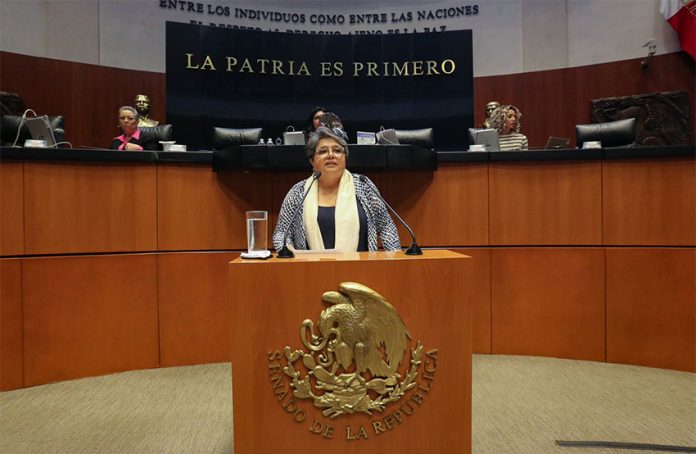
Economy Minister Raquel Buenrostro appeared before the Senate on Tuesday.
Economy Minister Raquel Buenrostro appeared before the Senate on Tuesday. Twitter @SE_mx

According to the Economy Ministry, hundreds of companies are interested in relocating to Mexico owing to the country’s geographical proximity to the United States and to the U.S.-Mexico-Canada Agreement (USMCA).

“More than 400 North American companies have the intention to carry out a relocation process from Asia to Mexico,” Economy Minister Raquel Buenrostro said at an appearance before the Senate on Tuesday.

She said that the interest in relocating to Mexico stems from the importance of the treaty, which has “strengthened the relationship with the U.S. and Canada.” However, she added that an agreement to resolve the energy dispute under the USMCA must be secured to move forward with the investments.

In July, the U.S. requested dispute settlement consultations with Mexico under the USMCA over a series of changes in Mexico’s energy policies. Although the U.S. hasn’t called a dispute panel to rule on the subject, the U.S. ambassador to Mexico said in October that the possibility has not been ruled out.

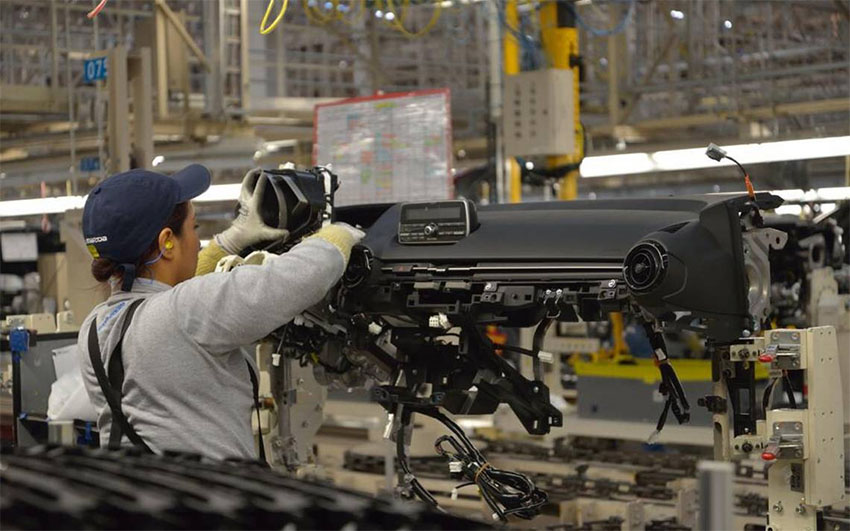
A woman at work in a vehicle manufacturing plant in Guanajuato.
The automotive manufacturers are one of the main industries taking advantage of nearshoring opportunities. Gobierno de Guanajuato

According to Credit Suisse, if the U.S. was to call a dispute panel to rule on the energy policy dispute, the sanctions resulting from such a decision could interfere with the nearshoring plans of the 400 companies interested in relocating.

Nearshoring has become an important driver of foreign investment in the country. According to the latest study conducted by Credit Suisse, in October alone, Mexico registered an investment of US $2.05 billion from this activity.

So far this year, nearshoring has drawn a total of US $17.2 billion — 25.5% more than the figure reported in the same period of 2021. Most of the investment income has been fueled by companies in the automotive industry such as Volkswagen, Continental, Pirelli, and Michelin.

This is in line with a recent study led by the Bank of Mexico (Banxico) which noted that a growing number of companies are finding a solution in Mexico to the trade conflict between China and the U.S., which is forcing them to move their production and supply chains closer to home.

Recognizing the importance of nearshoring for Mexico, Buenrostro stressed on Tuesday that neither Mexico, the U.S. or Canada want confrontations over the USMCA consultations, “… and least of all now that we are going through a global crisis and when relocation is so important,” she said. She added that Mexico’s geographical location as well as the country’s size and market features, have resulted in Mexico being the U.S.’ largest trade partner.

On Nov. 3, Buenrostro had a video call with U.S. Trade Representative Katherine Tai, in which Tai stressed the importance of making prompt progress in addressing the USMCA consultations. Both reportedly agreed to stay in regular communication about the issues discussed.

With reports from Milenio, Expansión and El Economista

Rallies to “defend” the National Electoral Institute planned nationwide for Nov 13

0
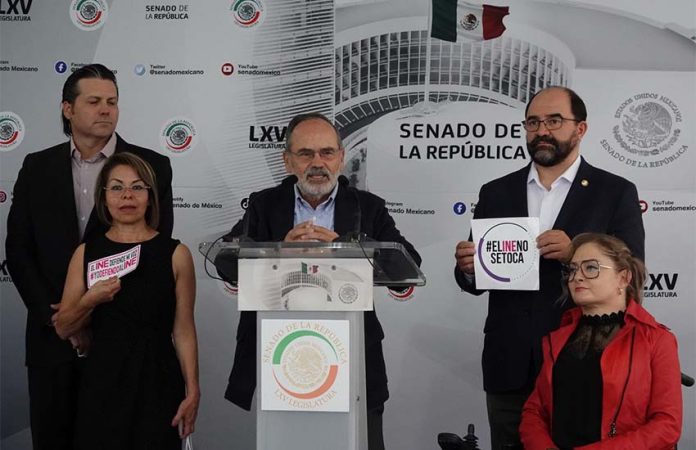
Members of the group Grupo Plural Reforma hold the slogan that has been circulating among protesters online, saying, "The INE shall not be touched."

Demonstrations will occur throughout Mexico on Sunday to protest the federal government’s controversial electoral reform bill.

The protests, organized by civil society and political organizations, are currently scheduled in 25 Mexican cities as well as at the Mexican consulate in Los Angeles. 

The electoral reform seeks to dissolve the National Electoral Institute (INE) and create a new electoral authority, as well as cut funding and replace the 11 INE members, who are chosen by political consensus, with seven directly elected delegates.

This is part of a broader set of proposed changes to the electoral system, including funding cuts for political parties and the elimination of proportional representation seats in Congress. 

President Lopez Obrador has accused the rallies’ organizers of opposed to his government, but he also urged Morena members not to provoke protesters.

The protesters have outlined four primary demands:

  • a rejection of the electoral reform
  • a rejection of changes to any secondary laws negatively impacting the INE’s duties
  • a refusal to cut the electoral body’s budget
  • maintenance of the constitutionally established method of electing the INE’s members. 

President López Obrador stated during his regular press briefing today that the protesters have a right to mobilize, claiming that he will clear Mexico City’s zócalo to make space for the demonstration. In another press briefing, he characterized the mobilization as a protest against his government. 

“The people should know that it is a demonstration against us because we are carrying out a policy in favor of the people. [The opposition parties] are classist, racist and undemocratic. They are the ones who participated in electoral fraud and would like to continue having control over the INE,” he said.

The protest’s organizers denied the president’s statements. 

“We are calling for a peaceful march, and exclusively in defense of the INE. We are not protesting against anyone,” said organizer Amado Avendaño  

While a recent poll conducted by the INE showed that 93% of its 400 respondents support the electoral reform, another conducted by the newspaper Reforma demonstrated that citizens were largely in favor of the electoral authority, with an approval rating of 73%. 

Opposition politicians and others have noted that the INE is essential to maintaining Mexico’s young democracy, which emerged just over two decades ago when 70 years of one-party rule by the Institutional Revolutionary Party (PRI) ended. 

The opposition has also maintained that dissolving or weakening the INE is non-negotiable. Because the ruling party Morena only holds a simple congressional majority, it needs opposition support to gain the two-thirds vote required for constitutional changes, a situation that provides checks and balances. 

The PRI’s willingness to maintain a unified stance with other opposition parties in a coalition against Morena has lately been in doubt, following its support of a bill authorizing the military’s participation in public security tasks until 2028. Nevertheless, PRI president Alejandro “Alito” Moreno said at a press conference on Tuesday that PRI members will join in the protests on Sunday.

“Mexico needs us to unite in this important battle,” Moreno said.

This is the first time that a sitting Mexican president has initiated such sweeping electoral changes before a major election. The country will hold its largest election ever in 2024. Some have contended that the proposed changes against the electoral body could help the president challenge the election results if his party were to lose.

Sunday’s protests are expected to remain peaceful, with organizers already in communication with public security officials. The president also asked members of his Morena party not to provoke demonstrators.  

With reports from La Jornada, Reforma, and Latinus