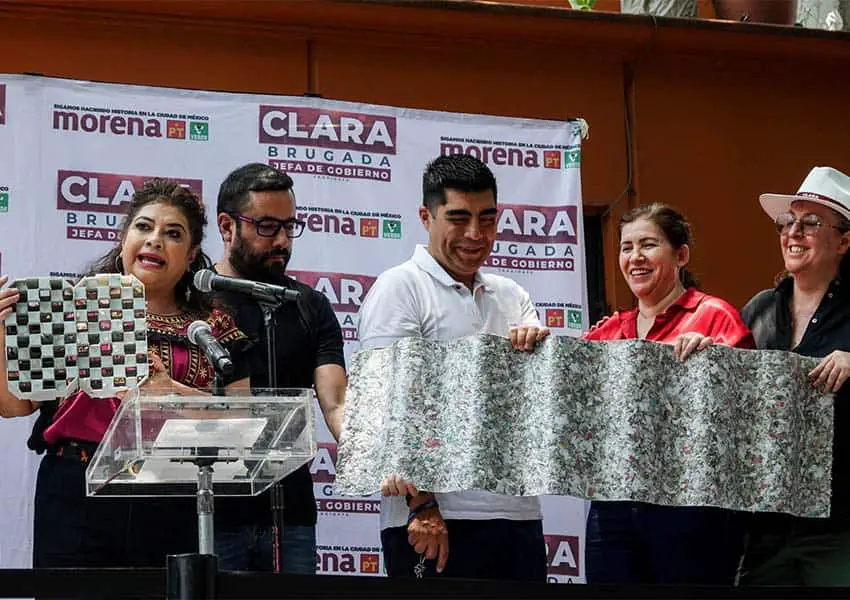
Mexico City’s mayor-elect Clara Brugada has urged her supporters to join a massive cleanup to remove her campaign’s “election trash” — i.e., her no-longer-needed electoral campaign materials — from the city’s streets.
The Morena-party winner said on her social media channels that her plan is to recycle the signs and banners into eco-friendly construction materials — which she referred to in Spanish as “tabiques verdes” or “green bricks.” Brugada said they’ll be used to build the 100 community centers throughout Mexico City that she promised in her campaign.
“Today we start with this call to all our supporters to take to the streets and remove the campaign materials from public spaces…” Brugada said in a press conference on Tuesday. “We are going to process all the banners and all the propaganda and remove it.”
The recovered materials would also be used to construct public furniture and other city infrastructure, Brugada said.
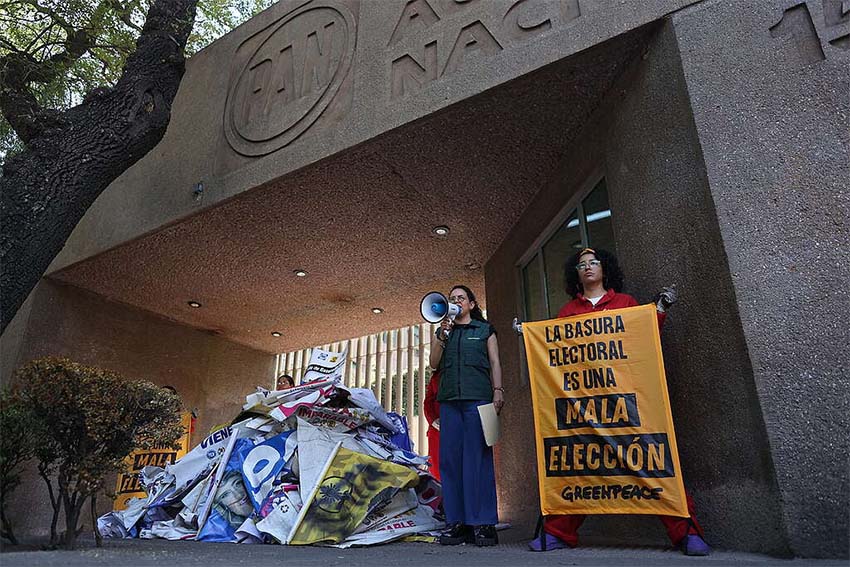
In May, just weeks before Mexico City’s elections took place on June 2, Greenpeace activists in the capital protested against these sorts of campaign materials posted by candidates for the city’s various local, state and federal elections each election cycle, calling them environmentally unfriendly “election trash” that’s rarely recovered by campaigns post-election, adding to the city’s refuse burden and often becoming street litter.
Brugada’s election trash cleanup campaign began on Tuesday morning, as the mayor-elect took to the streets in the Anzures neighborhood of the city’s Miguel Hidalgo borough.
News outlet Animal Político contacted Brugada’s communication team twice to request more details about the recycling plan and the technology she would use to re-purpose her campaign materials but reported that Brugada’s team didn’t respond. However, one of the 12 community centers she built in the city’s Iztapalapa borough — the Utopia Libertad center — is constructed with recycled PET plastic and other repurposed materials, according to the Utopia Program website.

Brugada was the borough mayor of Iztapalapa until September 2023, when she resigned to run for Mexico City mayor.
Brugada hasn’t explained how she will collaborate with the local government in collecting the election trash. According to the Mexico City regulations, the General Directorate of Urban Services collects, manages and recycles the city’s solid waste.

What are Clara Brugada’s Utopias?
During her mayoral campaign, Brugada promised to build 100 community centers modeled after the 12 she created during her time as borough mayor of Iztapalapa.
Called Utopias, the Iztapalapa community centers offer recreational and educational classes and cultural activities to residents in a wide array of areas, ranging from art, digital design and theater to reading circles and film debate groups, therapeutic swimming and team sports.
Some Utopias also host flagship institutions open to the public such as a climate change museum, an aquarium and refuges for turtles and axolotls.
According to Brugada, each capital borough will host one Utopia, which would function “as a model of well-being and transformation of public space,” said the candidate. Each community center’s thematic focus would be different, including ones with environmental and rural themes and a women’s Utopia.
According to Brugada, each Utopia will cost 100 million pesos (US $5.6 million) to build.
With reports from CNN en Español, Animal Político and El Financiero