It’s year end again so the nattering nabobs of negativism in the press and the practitioners of dismal science on economics faculties are looking back to pick past winners and forward to select future winners.
Since only the feeble minded or vaccine makers could label 2020 a good year, they’re concentrating almost exclusively on the future.
“China will be the world’s largest economy.”
“By 2026,” touts one. “By 2050,” touts another.
“Wrong” and “Wrong,” I say.
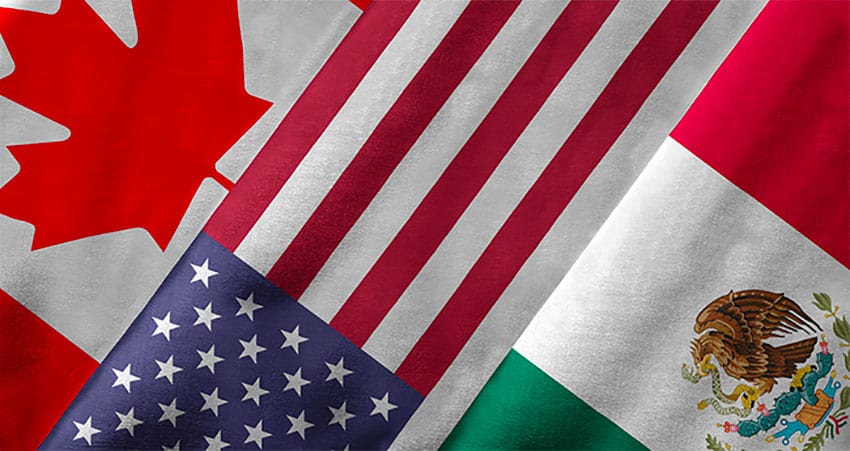
By 2050, and maybe even by 2021 it will be Mexico, joining Canada and the U.S. in the newly recognized North American union as the biggest, and more importantly the best by almost any measure, even the snowflakey Green New Deal.
Let’s talk “best” first, since only bimbos and sumo wrestlers think biggest is best.

World GDP rankings per capita, excluding the accidentally oil rich sheikdoms, place the U.S. and Canada at or near the top of the world rankings. China slinks in as No. 79. Even Mexico outperforms China by 2:1 in this key measure. So much for “Best.”
Biggest? China’s GDP is estimated at US $14.8 trillion. That of the U.S. is estimated at $20.8 trillion. Forgetting for a moment that China’s leaders say they don’t trust their own numbers, even late ballot counters couldn’t close an almost 50% gap by 2026.
So let’s focus on 2050.
The cornerstones of the forthcoming North American union have been mortared in the new USMCA trade agreement. Adding Mexico’s GDP of another trillion dollars and Canada’s $1.6 trillion to the U.S. total makes catch-up a losing chase for any contender, whether China or the splintering EU. So forget China by 2026.
But by 2050, the sky’s the limit.
Imagine a single economic entity tied together by roads and trains from Thunder Bay to Tapachula. Imagine the world’s leaders in old economy fossil fuels. Imagine limitless sunshine (sorry, Canada but you do have hydro) for the new economy based on renewables. Imagine a manufacturing sector matching abundant Mexican labor with capital rich Canada and the U.S.
Now dine on the canard of the world’s biggest economy.
Carlisle Johnson writes from his home in Guatemala.