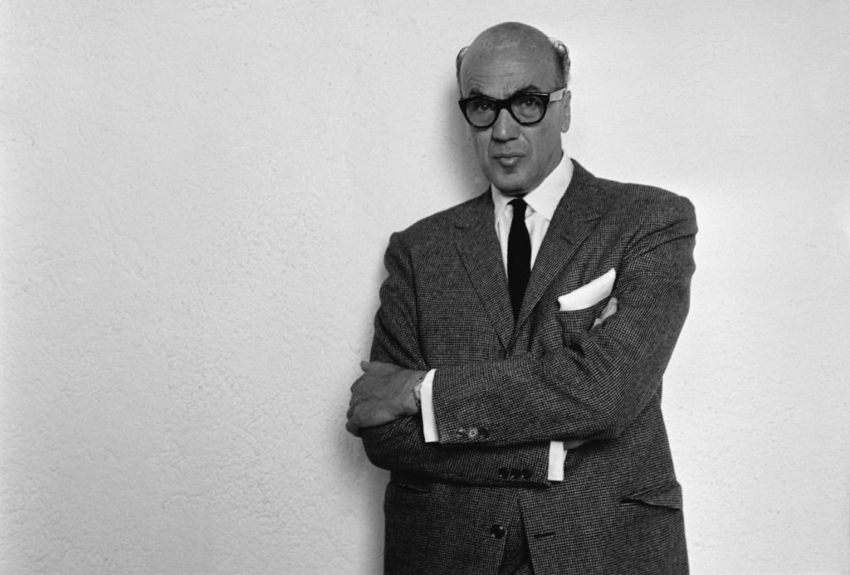
Renowned Mexican architect Luis Barragán‘s legacy continues to be a living source of inspiration in Mexico and around the world. His work demonstrates that modernity can be emotional, spiritual and local without losing rigor or clarity.
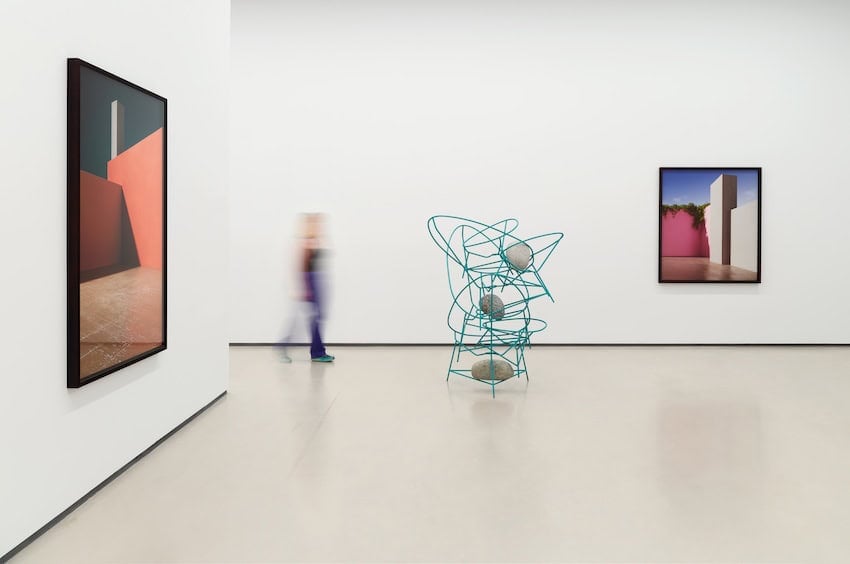
“It teaches us that progress doesn’t mean abandoning identity or memory,” says sculptor José Dávila, one of the artists behind “The Poetic Dimension: James Casebere and José Dávila,” a new exhibition at the Sean Kelly Gallery in Los Angeles inspired by Barragán’s oeuvre and that explores the emotional resonance of his architecture.
The exhibition runs until November 1.
Casebere is known for constructing meticulously crafted models that he then photographs. He says Barragán infused a modernist sensibility into his work while incorporating Mexican vernacular. He admires the colors, textures and materials Barragán used.
“The architect created an experience of space and time in designs that were no longer cold and distant. He developed a language rooted in place,” Casebere says.
At this particular moment in world events, Casebere says he finds Barragán’s work particularly healing, a “peaceful sanctuary of privacy and calm.”
“This exhibition is not just a presentation of works. It is a conversation,” says Dávila, who is known for his sculptures that balance tension and gravity with a distinctive elegance.

The physical vs. the imagined: A dialogue between two artists
Although Dávila’s artworks are sculptures and Casebere‘s are photographs, Barragán’s influence looms over both artists’ work.
“It is a dialogue, but it is also about silence,” says Dávila. “His sculptures are propositions rather than statements. Casebere builds models of imagined spaces and photographs them in a way that makes them feel inhabitable, even though they are constructions. His work creates a tension between what is real and what is imagined.”
“In contrast, my sculptures insist on their physicality. They are objects negotiating gravity, fragility and resistance. The materials depend on one another to remain upright,” Dávila reflects.
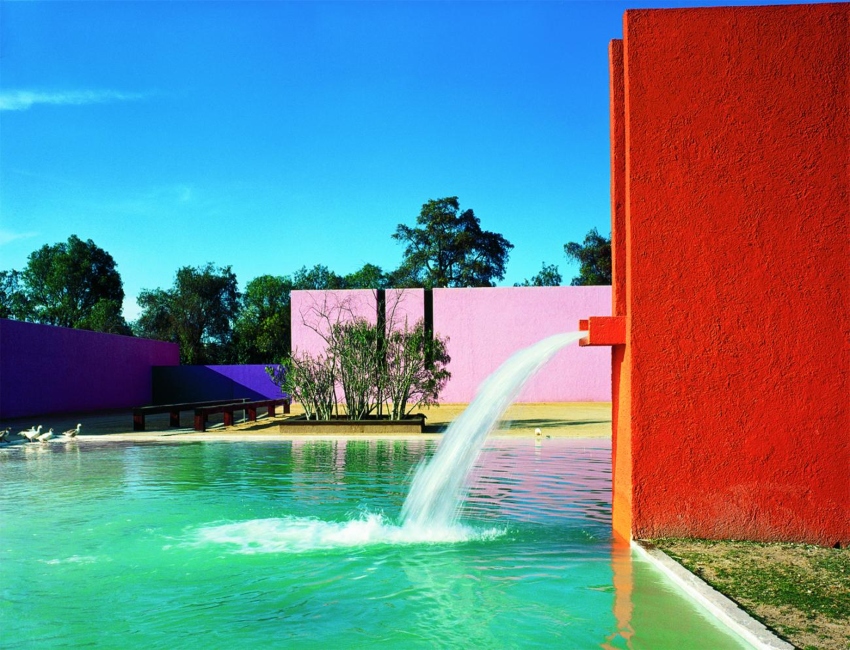
Casebere’s photographs recreate the iconic spaces of Barragán’s architectural creations: Gilardi House, the Gálvez House and the architect’s home and studio in Mexico City.
“I hope to evoke some of the same feelings Barragán transmits, like peace and quiet. I do this by using color and texture to create spaces that emphasize the materiality of the sculptures and the contrast between the organic,” Casebere says. “It is a physical, gravitational work, and I think the combination works interestingly in these times.”
“What interests me is how these two approaches resonate with each other when combined,” Dávila says. “[Casebere’s] photographs point to a kind of architecture of memory, while my work explores the presence of forces in real time and space. Together, they reveal the poetic dimension where matter and imagination converge.”
Inspired by Barragán’s work
When Casebere speaks about Barragán’s work, his voice sounds vibrant. He identifies with the architect’s goals, values and the atmosphere of his architecture.
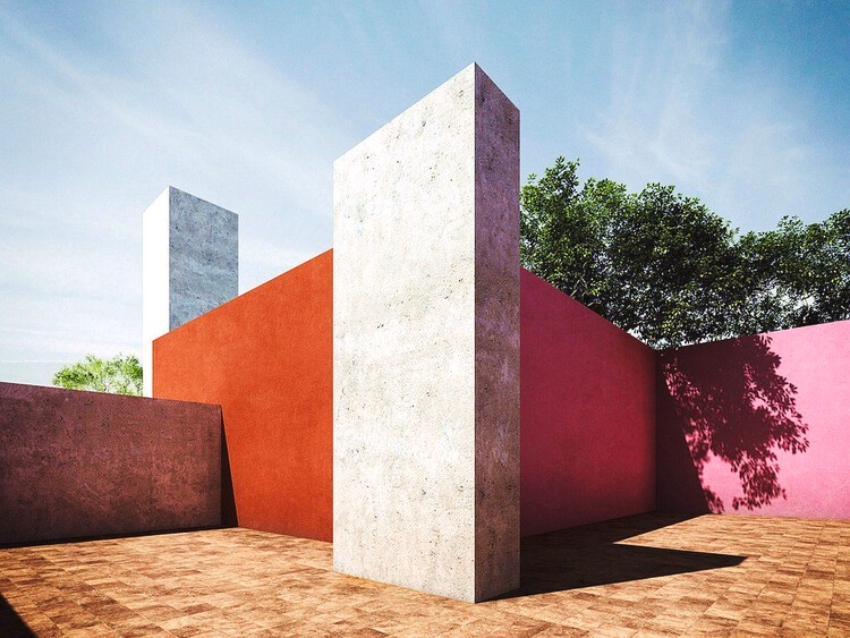
“In many cases, I try to encapsulate it in my work,” he says.
The artist is amazed by the patience and sustained attention to spatial relationships and one’s movement within Barragán’s buildings, as well as the way he adapts cultural history and values without being eclectic.
The architect adapted Mexican experiences, color, texture and materials into a modernist vocabulary, Casebere says. He also emphasizes Barragan’s deep relationship with nature.
“There’s a contrast between simplicity and the structure of organic formations in the natural environment,” he says.
On the other hand, Dávila admires Barragán’s ability to work with immense emotional weight.
“His ability to create an atmosphere that feels both grounded and transcendent moves me deeply,” he says. “He trusted silence, proportion and atmosphere. In that sense, I see him not only as an architect but also as someone who sculpted space itself.”

“His clarity resonates with my own search: how to do the most with the least and how to bring intensity through restraint. How to avoid speed and prefer a slow pace. Architecture as an introspective search rather than an open spectacle,” he argues.
Both artists evoke elemental aspects of Barragán’s universe, such as the fact that architecture can be simultaneously physical and emotional. This legacy brings serenity, calm intensity, sensuality, memory and movement through space and colors into their work. It also encompasses the links between the inside and outside of spaces and light.
“Absence can be as powerful as presence. Silence can convey meaning,” Davila says. “In the shadow of Barragán’s legacy, the works aim to let silence speak.”
Ana Paula de la Torre is a Mexican journalist and collaborator for various outlets, including Milenio, Animal Político, Vice, Newsweek en Español, Televisa and Mexico News Daily.