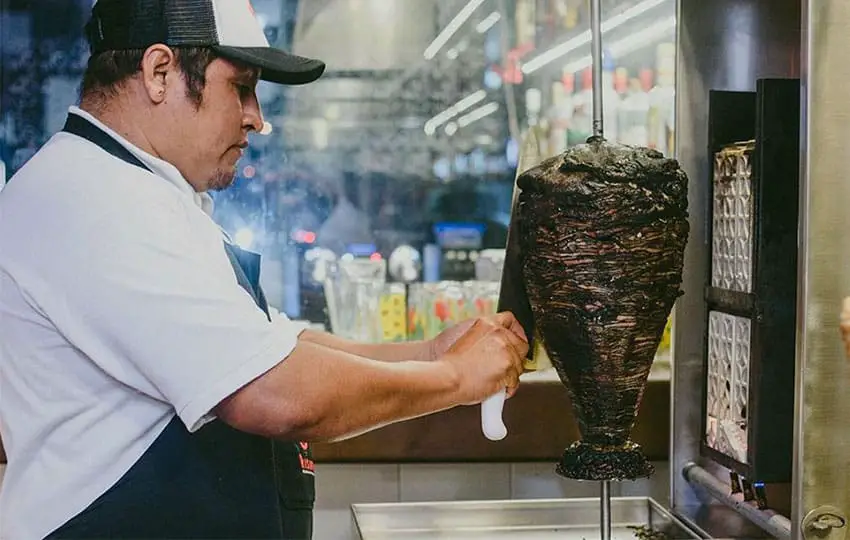
The fiery red pork meat of tacos al pastor is a favorite of both Mexicans and foreigners alike, but one Yucatán taquero, or taco cook, has put a regional twist on the recipe, proving that the cuisine is a living tradition.
The black tacos al pastor of chef Roberto Solís from Mérida are on the cusp of spreading across the country.
Instead of red chiles and the crimson pigment of the annatto plant, Solís uses a traditional Yucatán salsa called recado negro (literally, black message), which gets its dark color from the blackened skin of roasted chiles.
The taco made its debut in an event called Hokolvuh, a chefs’ conference organized by Solís himself. Not long after the conference, he heard that his black taco al pastor had already traveled across the country.
“About a year later they tell me, ‘Hey, I saw your black onions and black pastor in Monterrey,’ and I said no, it can’t be, and when I looked, they really were being sold in the restaurant [there],” he said.
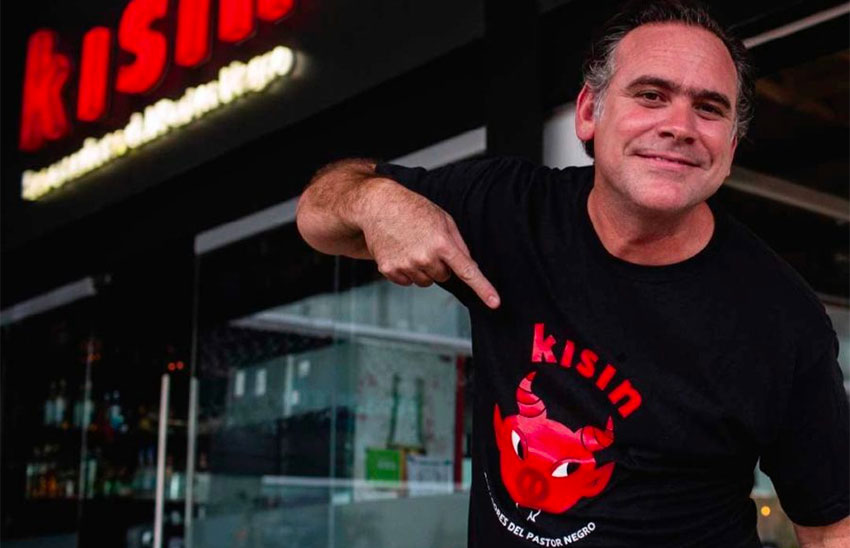
The recipe may have been appropriated but luckily Solís still got the credit for the taco he created to be the signature dish of his Taquería Kisin, in Mérida. It was featured on the Netflix food documentary Taco Chronicles, solidifying his reputation as its creator.
Although its popularity is growing, curious taco connoisseurs currently must travel to either Mérida or Monterrey, Nuevo León, in order to try one.

A taquería in the Roma neighborhood of Mexico City makes a black taco al pastor, but the color comes from the mole negro sauce used to combine the style with Oaxacan influences. This is not the yucateco taco invented by Solís.
The taco al pastor is a product of the influence of Mexico’s Lebanese immigrant community, which created the dish in Puebla in the mid-20th century when it combined the vertical spit of the shawarma with Mexican chiles and spices.
In central Mexico it is traditionally served with fresh diced onions, cilantro and a slice of pineapple. In Yucatán, however, it is not served with pineapple, but salsas made with Greek yogurt, ground fried chicharrón pigskins and guajillo and xcatic chiles give it its own regional identity.
Source: México Desconocido (sp)