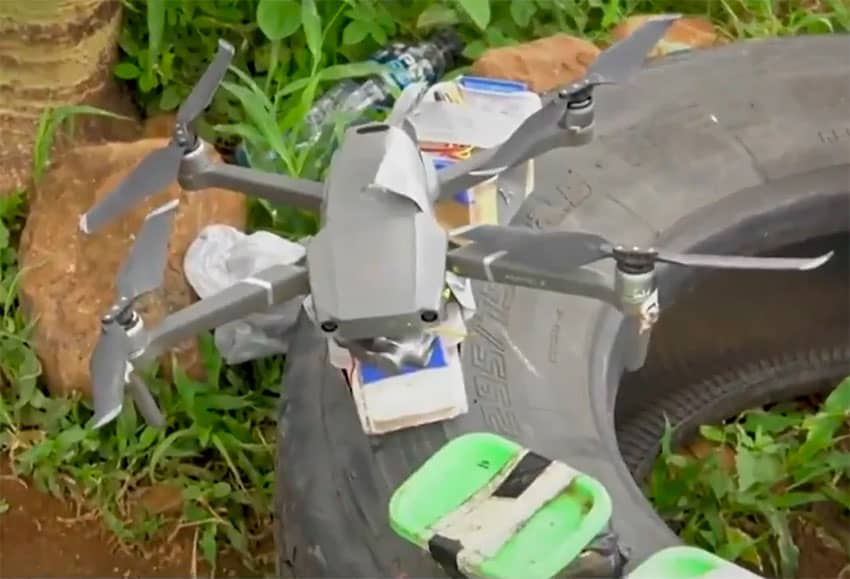
More evidence has surfaced to indicate the Jalisco New Generation Cartel (CJNG) is using drones armed with C4 explosives to attack its enemies.
A citizens’ militia group in Tepalcatepec, Michoacán, reports finding two drones inside an armored car that cartel hitmen had abandoned after an attempted raid on the city, which borders Jalisco, on July 25.
The C4 was packed with ball bearings to serve as shrapnel in Tupperware-like containers that were equipped with a remote detonation system and duct-taped to the drones, militia members explained. The drones were found in a cardboard box that was soaked in blood, indicating to the militia members that whoever was intending to fly the drones was injured before they could be launched.
The new tactic represents the cartel’s determination to wrest control of the western Michoacán municipality from the self-defense militia and an evolution of their air attack strategy. In April, the cartel used small planes to drop explosives on Tepalcatepec, but after authorities increased aerial surveillance in the region the CJNG opted for drones, which cannot be detected on radar.
Militia members say that loud explosions have been heard across the municipality, but no one thus far has been injured in a drone attack. They believe the cartel has not yet learned how to fly and detonate them with precision.
In late April, the Attorney General’s Office reported that drones bearing C4 that were to be used by the CJNG to attack rival members of Santa Rosa de Lima Cartel in Guanajuato were discovered in Puebla. A search of three locations revealed three drones, two controllers, C4, gunpowder, tannerite, seven cell phones, 53 SIM cards, three radios, circuit boards, wiring, two guns and ammunition, although no arrests were made.
The army also uses drones to combat organized crime, and they played a factor in the capture and arrest of Santa Rosa de Lima leader Antonio “El Marro” Yépez Ortiz earlier this month after a fleet of drones armed with high-resolution cameras helped locate and monitor his movements.

Source: El Universal (sp), Infobae (sp), La Silla Rota (sp), Municipios Puebla (sp)