Scientific station will aid program to rescue California condor

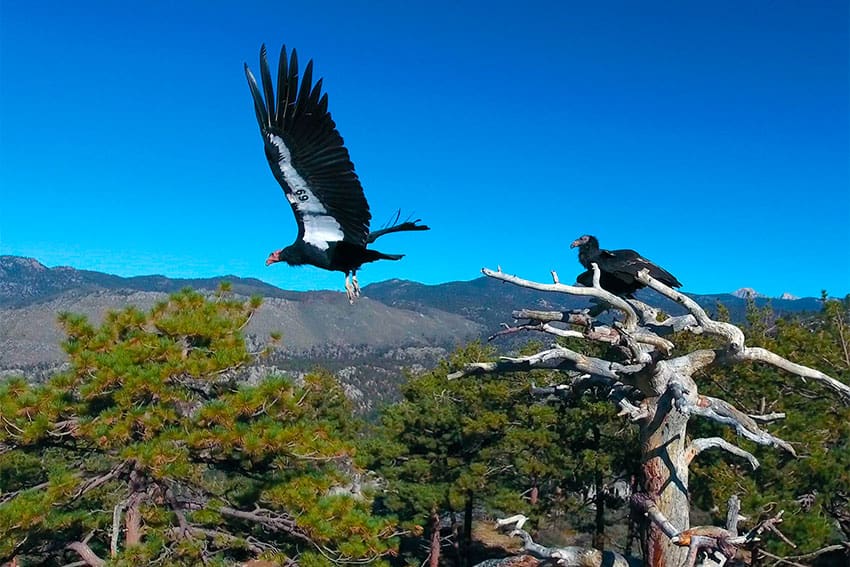
After nearly becoming extinct, the California condor has been successfully reintroduced into Baja California’s San Pedro Mártir National Park, and now a new, state-funded scientific station is intended to help ensure the species’ continued survival. 

On a working trip to the park, located in the mountains of Ensenada near San Felipe, Governor Jaime Bonilla Valdez announced the creation of the 8-million-peso (US $360,000) station to house the existing condor program.

The California condor had not been seen in Baja California since 1937 prior to its reintroduction in 2002 through a joint program with the United States. The raptor, which has a wingspan of three meters and can live up to 70 years, was once found across most of North America.

By 1987, the bird became extinct in the wild and the species’ recovery in captivity, along with the successful release of captive birds, was an important achievement in conservation. 

Forty-three condors now live in San Pedro Mártir, including 13 chicks that were born in the wild. More than 300 California condors now exist in the wild across North America.
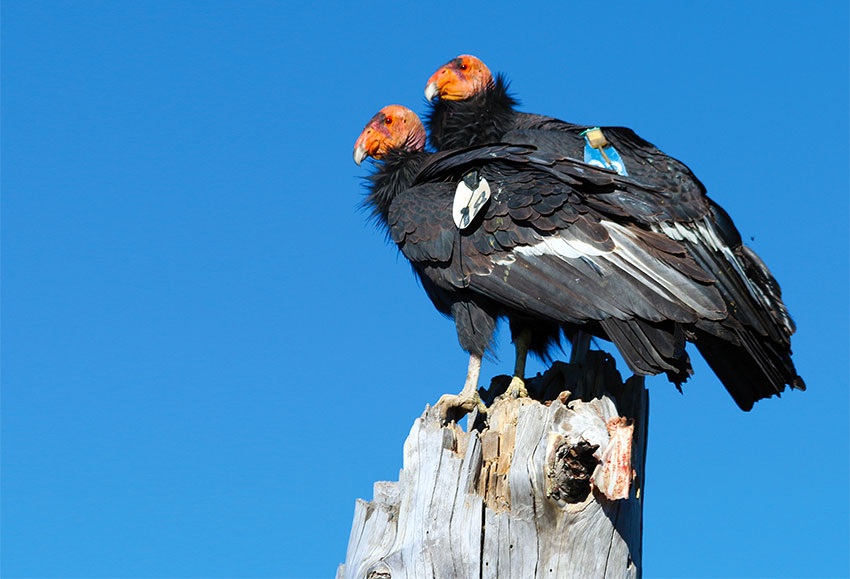
The two condors are among 43 that live in San Pedro Mártir National Park.
The two condors are among 43 that live in San Pedro Mártir National Park. endesu

Juan Vargas Velazco is the coordinator of the program which in the past has relied on federal funding and donations. He manages a team of four researchers who live in the area and monitor the birds, which are tracked by GPS.

The team also carries out fieldwork to protect the species from harm from eating garbage, accidents caused by power lines, and poaching.

The new station will be a collaboration between the state and biologists from Baja California’s Autonomous University. The state stepped in with funding after President López Obrador cut 75% of the budget of the Natural Protected Areas Commission earlier this year.

“It is essential for the life of a state to be participating in this type of project,” Governor Bonilla said. “It is impressive to see how nature reinvents itself with so little.”

Source: El Economista (sp), El Vigía (sp)

Have something to say? Paid Subscribers get all access to make & read comments.
Manzanillo, Colima, México, 13 de marzo de 2026. La doctora Claudia Sheinbaum Pardo, presidenta Constitucional de los Estados Unidos Mexicanos en conferencia de prensa matutina, “Conferencia del Pueblo” desde Colima. La acompañan Indira Vizcaíno Silva, gobernadora Constitucional del Estado de Colima; Omar García Harfuch, secretario de Seguridad y Protección Ciudadana (SSPC); Raymundo Pedro Morales Ángeles, secretario de Marina (Semar); Bulmaro Juárez Pérez, divulgador de lenguas originarias, presentador de la sección “Suave Patria”; Ricardo Trevilla Trejo, secretario de la Defensa Nacional (Sedena); Jesús Antonio Esteva Medina, secretario de Infraestructura, Comunicaciones y Transportes; Bryant Alejandro García Ramírez, fiscal general del Estado de Colima; Fabián Ricardo Gómez Calcáneo; Rocío Bárcena Molina, subsecretaria de Desarrollo Democrático, Participación Social y Asuntos Religiosos de la Secretaría de Gobernación; Efraín Morales López, director general de la Comisión Nacional del Agua (Conagua); Marcela Figueroa Franco, secretaria ejecutiva del Sistema Nacional de Seguridad Pública (SESNSP) y Guillermo Briseño Lobera, comandante de la Guardia Nacional (GN). Foto: Saúl López / Presidencia

Mexico’s week in review: Congress deals Sheinbaum her first legislative defeat

0
The week of March 9 in Mexico was marked by standoffs between allies in Congress and adversaries at the airport. Here's what you missed.
A soldier displays seized handguns

The US and Mexico, growing together and growing apart: A perspective from our CEO

0
From a historic drop in homicides to opposite bets on electric vehicles, Mexico News Daily's CEO breaks down where the U.S. and Mexico are converging — and where they're not.
Veracruz Gov.

Veracruz governor blames private vessel for 200-kilometer Gulf Coast oil spill

1
The spill, which has spread to over 200 kilometers of Mexico's Gulf Coast beaches, has been traced to a private oil tanker off the coast of Tabasco.
BETA Version - Powered by Perplexity