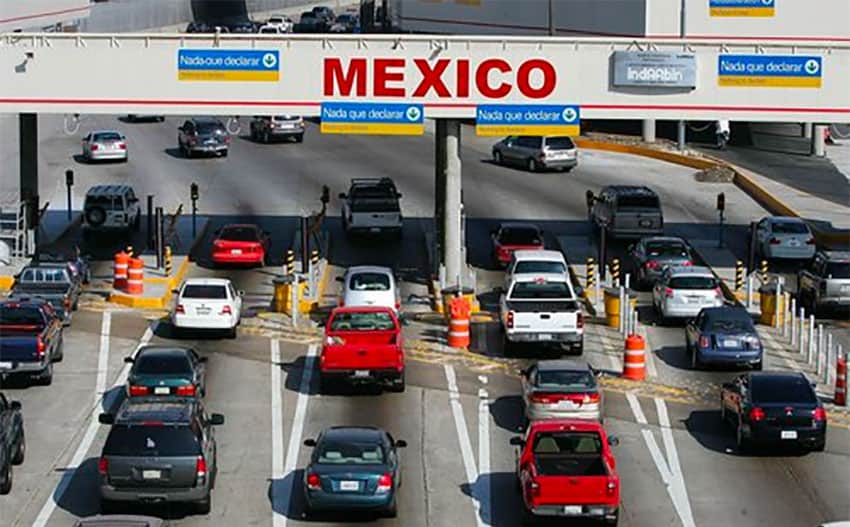
The U.S. government on Wednesday extended the closure of land borders with Mexico and Canada to nonessential travel such as tourism through August 21 even as officials debate whether to require visitors to have received a Covid-19 vaccine.
The latest 30-day extension by the Department of Homeland Security (DHS) came after Canada announced on Monday it will start allowing in fully vaccinated U.S. visitors on August 9 for nonessential travel after the Covid-19 pandemic forced a 16-month ban that many businesses have called crippling.
DHS said on Wednesday it “is in constant contact with Canadian and Mexican counterparts to identify the conditions under which restrictions may be eased safely and sustainably.”
One difficult question for President Joe Biden’s administration is whether to follow Canada’s lead and require all visitors to be vaccinated for Covid-19 before entering the United States, sources briefed on the matter told Reuters.
Mexico’s Ministry of Foreign Affairs, which has been hopeful that the U.S. would agree to discontinue the border closure, said bilateral talks would continue to that end. It also noted that the accelerated pace of vaccinations in the border area will help speed the process.
The White House plans a new round of high-level meetings this week to discuss the travel restrictions and the potential of mandating Covid-19 vaccines for visitors, but no decisions have been made, the sources said.
The review comes amid increasing concern among U.S. officials about the Delta variant. U.S. health officials have reported sizable increases in Covid-19 cases and deaths, with outbreaks occurring in parts of the country with low vaccination rates.

The White House last month launched interagency working groups with the European Union, Britain, Canada and Mexico to look at how to eventually lift travel and border restrictions.
Businesses in Canada and the United States, particularly the travel and airline industries, have pushed for an end to restrictions on nonessential travel between the two countries, which were imposed in March 2020 early in the pandemic.
Since then, the land border has remained closed to all nonessential travel.
Unlike international air passengers, travelers crossing U.S. land borders do not need negative Covid-19 tests.
The Canadian Chamber of Commerce, a business group, criticized the latest U.S. extension. It said the U.S. move “flies in the face of both science and the most recent public health data.”
“It’s hard to see how allowing fully vaccinated Canadians to enter the U.S. poses a public health threat when travel within the U.S. is unrestricted,” the organization said.
The United States has continued to extend the restrictions on Mexico and Canada on a monthly basis since March 2020.
The U.S. land border restrictions do not bar U.S. citizens and lawful permanent residents returning to the United States. As in prior extensions, DHS said it could still seek to amend or rescind the restrictions before August 21.
With reports from Reuters