Mexico is aiming to convert its waste management strategy to an energy-from-waste model and it’s looking to China, a world leader in the relevant technology, for the know-how needed to take a major step toward a circular economy.
Waste utilization would not only provide a new source of clean energy but also solve waste disposal problems and reclaim public spaces that would otherwise be used for landfills.
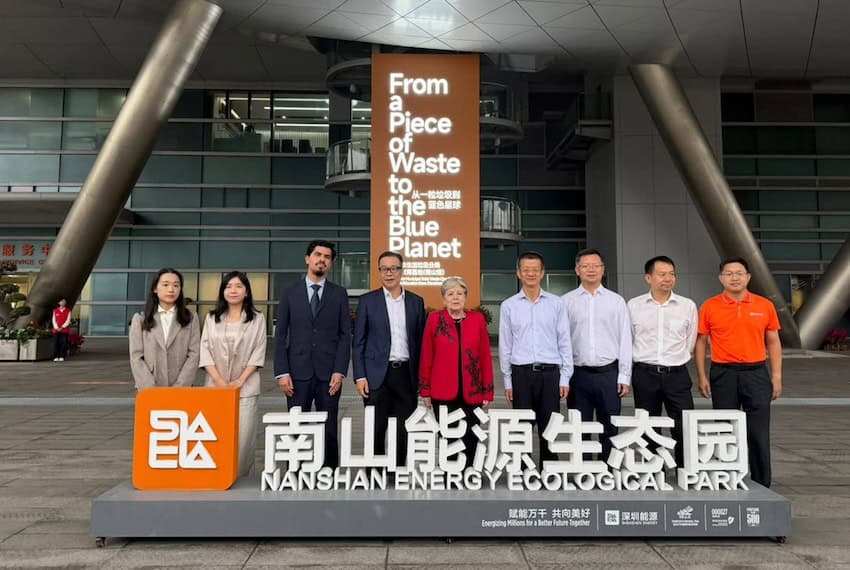
Toward that end, Environment Minister Alicia Bárcena visited several Chinese facilities over the weekend specializing in waste utilization and water restoration to understand how they work to restore ecosystems and clean waterways, and to assess their potential use in Mexico.
Her tour came in advance of the 33rd Asia-Pacific Economic Cooperation (APEC) summit in China, where President Sheinbaum will stress deepening technological cooperation with China, including the development of solutions for the use of organic waste (including sargassum, the brown seaweed that plagues Mexico’s Caribbean shore) to produce energy and cut greenhouse gas emissions.
Bárcena traveled to the city of Zhuhai in China’s southern Guangdong province to visit the SUS Environment plant, which processes up to 3,000 tonnes of waste per day and produces up to 90 megawatts of electricity.
She also noted that China has tackled its waste problem by increasing the share of solid waste used for energy from 9.8% in 2005 to 84.6% in 2024. Meanwhile, China’s landfill disposal has decreased from 64% to 5%.

“Learning about this experience allows us to identify alternatives for waste management in Mexico,” Semarnat wrote on X on Saturday.
Many of China’s waste-to-energy plants use advanced technologies, such as artificial intelligence, to enhance operations, something that could be incorporated into any new Mexican operation.
In Shenzhen, where the APEC summit will take place, Bárcena visited the Honghu underground plant, which can process up to 100,000 tonnes of wastewater a day. Above ground, Honghu houses a public park, demonstrating the potential for providing more clean public spaces.
“Shenzhen is… an example of how to reclaim rivers, restore ecosystems and transform formerly polluted spaces into meeting places and gathering spots for communities,” Bárcena said. “The Chinese experience demonstrates that it is possible to move beyond landfills and advance toward a circular economy model.”
With reports from La Jornada and XEU Noticias Veracruz