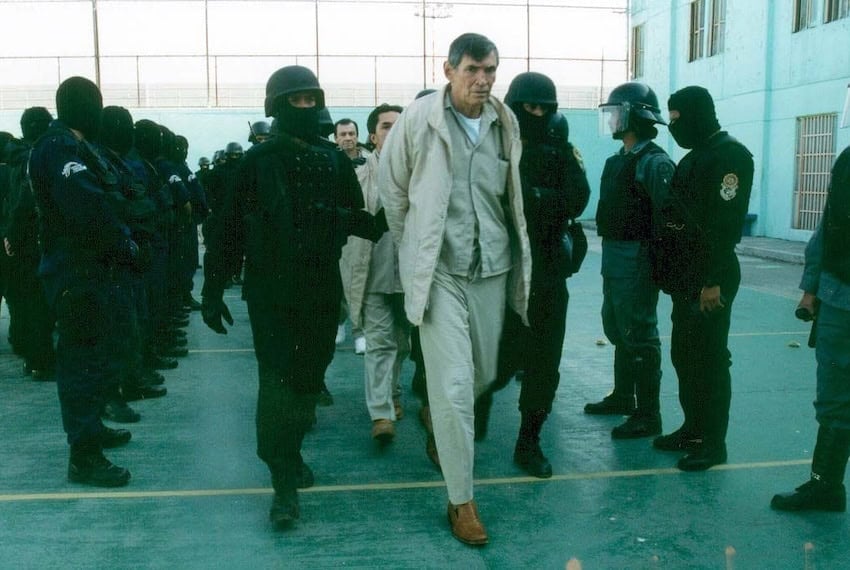
Miguel Ángel Félix Gallardo, a drug lord known as the “Boss of Bosses” who was convicted of the 1985 murder of U.S. Drug Enforcement Administration (DEA) agent Enrique “Kiki” Camarena, died in a hospital in Guadalajara, Jalisco, on Sunday. He was 80.
The Jalisco Security Ministry announced Félix Gallardo’s death, which came two days after he was transferred from the Puente Grande prison near Guadalajara to a private hospital in the state capital. The ministry said that “multiple organ failure” was the cause of his death. He was also suffering from pneumonia.
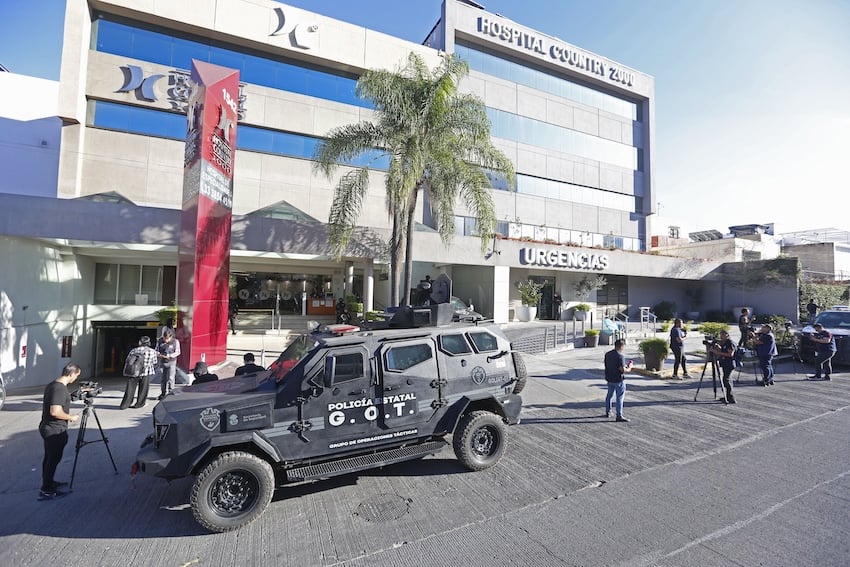
Félix Gallardo, the co-founder and erstwhile leader of the now-defunct Guadalajara Cartel, had been in poor health for years. He spent the last 37 years of his life in prison after he was arrested in Guadalajara in 1989.
DEA Administrator Terry Cole acknowledged Félix Gallardo’s death in a social media post on Sunday night.
“The cartel kingpin who built an empire of violence and orchestrated the brutal murder of DEA Special Agent Enrique ‘Kiki’ Camarena has died in custody after more than 37 years behind bars,” Cole wrote.
“Kiki’s sacrifice will never be forgotten — nor will the criminals and corruption behind his death. His courage lives on in every agent carrying out our mission, and our pursuit of truth and justice will never end.”
In 2017, Félix Gallardo was sentenced to 37 years in prison for the murders of Camarena and Mexican pilot Alfredo Zavala Avelar, who worked with Camarena. Before the murder conviction, he had received a 40-year sentence for drug trafficking, weapons offenses and bribery.

In 2022, a federal judge took Félix Gallardo’s advanced age and poor health into account when ruling that he could complete his 40-year sentence at a residence in Zapopan, Jalisco. However, the federal Attorney General’s Office challenged the ruling, preventing the release of the then 76-year-old Guadalajara Cartel co-founder.
Rafael Caro Quintero, another Guadalajara Cartel co-founder who was transferred from a Mexican prison to a U.S. prison in early 2025, was also convicted of the murder of Camarena, a Mexicali native who joined the DEA in 1973.
The early years
Félix Gallardo was born on Jan. 8, 1946, in Culiacán, Sinaloa, a city that has been plagued by Sinaloa Cartel infighting for the past two years.
His parents were farmers and exported legumes to the United States, according to the now-deceased drug lord.
Félix Gallardo, who left school after completing the second grade of primary school, told Noticias Telemundo in a 2021 interview from prison that he had “dedicated” himself to “agriculture and ranching” since he was a boy.
Before founding the Guadalajara Cartel with Caro Quintero and Ernesto Fonseca Carrillo in the 1970s, Félix Gallardo worked as a police officer and spent a period as a bodyguard for former Sinaloa Governor Leopoldo Sánchez Celis, who was in office from 1963 to 1968.
The New York Times reported that his employment as a police officer and bodyguard for Sánchez allowed him to forge “connections that helped him and his partners transform the Mexican drug trade in the 1970s and 1980s.”
A life of crime
Félix Gallardo, Caro Quintero and Fonseca Carrillo co-founded the Guadalajara Cartel in the late 1970s. Under their leadership, the Guadalajara Cartel became a major trafficker of narcotics, including cocaine and marijuana, to the United States.
Félix Gallardo, who was also known as “The Godfather” and “The Drug Czar,” forged alliances with criminal groups in Colombia — the world’s largest producer of cocaine — that helped the Guadalajara Cartel establish itself as Mexico’s dominant drug trafficking organization in the 1980s.
The BBC reported that he “led the organization which revolutionized drug smuggling in the region by entering into partnership with the Colombian cartels, particularly [Pablo] Escobar’s Medellín Cartel, to combine production in the Andes with Mexican transportation across the border into the United States.”
“At one point an estimated 80% of all cocaine that entered the U.S. came from the Medellín Cartel. Félix Gallardo and his organization played a major role in smuggling it in,” the BBC wrote.
“At its height, the Guadalajara Cartel under Félix Gallardo exerted huge influence over Mexican politics and law enforcement, controlling entire police networks and state governorships,” reported the British broadcaster and media organization.
His nickname, “The Boss of Bosses” (El Jefe de Jefes), is a testament to the immense power he once wielded in Mexico’s criminal underworld.
CNN reported that “the former cartel kingpin was an architect of Mexico’s modern drug-trafficking trade, igniting a series of turf wars that have led to hundreds of thousands of deaths and disappearances in ensuing decades.”
“… His narcotics empire expanded in the 1970s and 1980s thanks to bribes that won protection from corrupt officials and innovations like using light aircraft to move drugs across the continent.”
The Wall Street Journal reported that Pablo Escobar turned to Mexico — and Félix Gallardo — after “U.S. interdiction efforts began seizing his submarines, speedboats and freighters.”
“Through his government contacts, Félix Gallardo arranged protection for overland routes carrying cocaine from South America through Mexico to the U.S. border,” the Journal reported.
“For a fee, traffickers could move their product under the protection of the Mexican state. Rather than cash, Félix Gallardo demanded a percentage of each shipment — an innovation that made him one of the richest men in the hemisphere and altered the global narcotics business.”
In the 1980s, Félix Gallardo also worked with Joaquín “El Chapo” Guzmán, the erstwhile Sinaloa Cartel leader who is now imprisoned in the United States.
The New York Times reported that Guzmán got his start in the drug trafficking business “working as an air logistics expert for Mr. Félix Gallardo.”
The murder of Camarena and Félix Gallardo’s capture
In 2017, Félix Gallardo was found guilty of involvement in the murders of both Camarena and Zavala. He was frequently described as the autor intelectual, or mastermind, of Camarena’s murder. Félix Gallardo always denied involvement in his killing.
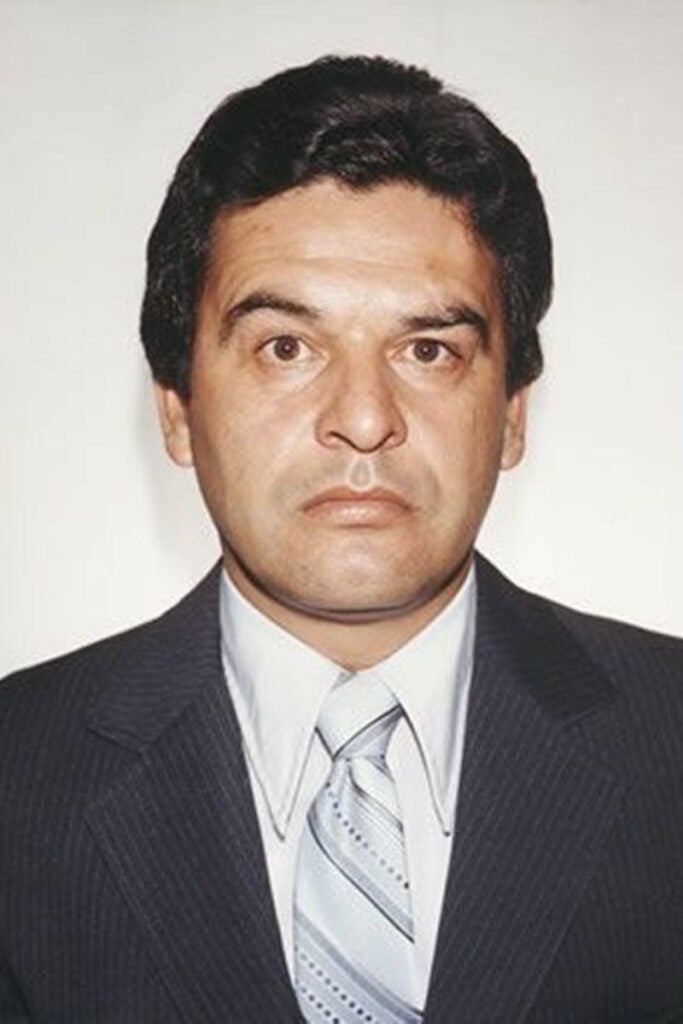
The slain DEA agent angered the Guadalajara Cartel leadership due to his involvement in a 1984 raid on a large marijuana plantation in Chihuahua that belonged to the criminal group.
The BBC reported that the murder of Camarena in February 1985 “sparked one of the biggest manhunts the U.S. government has ever launched in North America,” and “the net started to tighten” around the leaders of the Guadalajara Cartel. The murder strained U.S.-Mexico relations for years and led to an intensification of the U.S. government’s war on drugs.
Caro Quintero and Fonseca were both arrested in April 1985, while Félix Gallardo was detained on April 8, 1989, ending his life of crime.
At the time of his arrest, Enrique Álvarez del Castillo, then Mexico’s attorney general, described Félix Gallardo as the “No. 1 narcotics trafficker in Mexico.”
The news outlet N+ reported that the Guadalajara Cartel “fragmented” after his capture, giving rise to the Sinaloa and Tijuana cartels.
Félix Gallardo gained international notoriety after the DEA accused him of the kidnapping, torture and murder of Camarena. His infamy grew when he was portrayed as a central figure in the Netflix series Narcos: Mexico. Mexican actor Diego Luna played the role of Félix Gallardo in the hit series, whose first season began in late 2018.
Among Félix Gallardo’s surviving relatives are his children Miguel Ángel Félix and Abril Félix.
Jorge Eduardo Montiel, a spokesperson for the Jalisco Security Ministry, said on Sunday that relatives of Félix Gallardo would attend a small religious ceremony at the hospital where he died.
With reports from Animal Político, El Universal, Reforma, N+, BBC, The New York Times, The Wall Street Journal and CNN