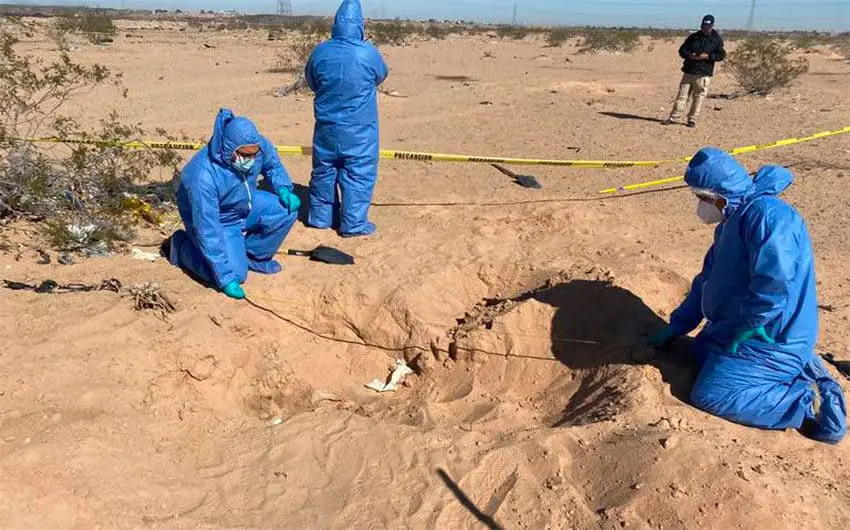
Eleven bodies were discovered in clandestine graves in Sonora just a few kilometers from the United States border on Sunday and Monday.
Search collectives formed by the relatives of missing people led authorities to the graves on a stretch of desert near a garbage dump in San Luis Río Colorado, across the border from Yuma, Arizona.
Investigators used backhoes to uncover the remains of nine men and two women.
The search collectives were accompanied by security forces and investigators to recover the bodies, clothing and some personal items belonging to the victims.
The state Attorney General’s Office said the bodies were “badly decomposed” but would be identified through genetic and forensic tests. Relatives of missing people can have their DNA samples taken to compare them to the DNA of the victims.
There are more than 98,000 missing people in Mexico. Most are thought to have been killed by drug cartels and their bodies dumped into clandestine graves.
The government has struggled to identify even the bodies that have been found: some 52,000 await identification and Deputy Interior Minister Alejandro Encinas conceded in December that the government doesn’t have the capacity to guarantee the identification of bodies and ensure they are returned to their families.

The president of the United Nations Committee on Enforced Disappearances (CED), Carmen Rosa Villa Quintana, said in November that Mexico faced a “forensic crisis,” while the committee she leads concluded that an inadequate security strategy, poor investigations into missing person cases and impunity were key factors in the persistence of abductions in Mexico.
With reports from Tribuna de San Luis and AP