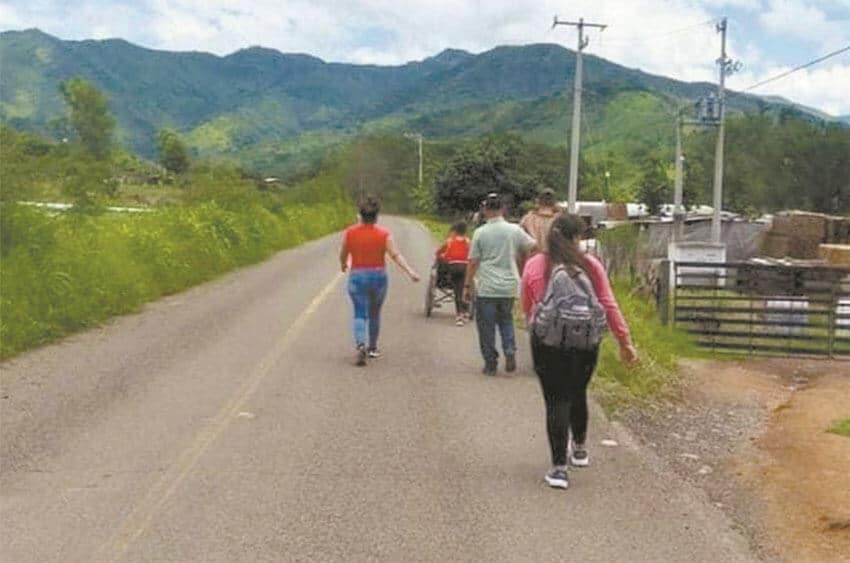
In addition to cartel warfare, gender violence is a major cause of forced migration from Michoacán, according to the state governor.
Alfredo Ramírez Bedolla said Tuesday that 70% of people who have recently fled Michoacán for Tijuana, Baja California, did so due to gender violence-related reasons.
“Not all forced migration is due to organized crime. The raw data we have confirmed … is that 70% of forced migration from Michoacán to that border point is due to gender violence,” he told a migration forum in the state capital Morelia.
Ramírez said the data was obtained via visits to displaced michoacanos in Tijuana. Teams of specialists from the DIF family services agency and government ministries have visited the northern border city to speak to displaced people, he said.
Many michoacanos fleeing their home state head to Tijuana because they hope to seek asylum in the United States or enter that country illegally.
Gregorio López, an Apatzingán-based priest and founder of a civil society organization that operates shelters for displaced people, said late last year that more than 22,000 people had fled violence in Michoacán since President López Obrador took office in late 2018 and approximately half had entered the United States.
One Michoacán woman currently living on the northern border after fleeing the Tierra Caliente municipality of Coalcomán is Brianda Valencia. She rejected Ramírez’s claim that 70% of displaced people in Tijuana left Michoacán for gender-violence related reasons, asserting that organized crime groups are mainly responsible for driving people out of the state.

Valencia told the newspaper El Universal that she fled Coalcomán along with her husband, children, siblings and parents after armed members of a criminal group came to their home and threatened to kill them.
She said that dozens of other families from various municipalities left Michoacán for similar reasons because rival cartels are at war in their towns.
Brenda Fraga, Michoacán’s minister for migrants, acknowledged that there are a range of factors that cause forced displacement, including climate, conflict and, more recently, reasons related to the coronavirus pandemic.
Over the past seven years, migration from Michoacán to other parts of the country has increased significantly due to an absence of public policies in areas such as security, education, housing and employment as well as corruption, impunity and difficulties obtaining access to justice, she added.
With reports from El Universal