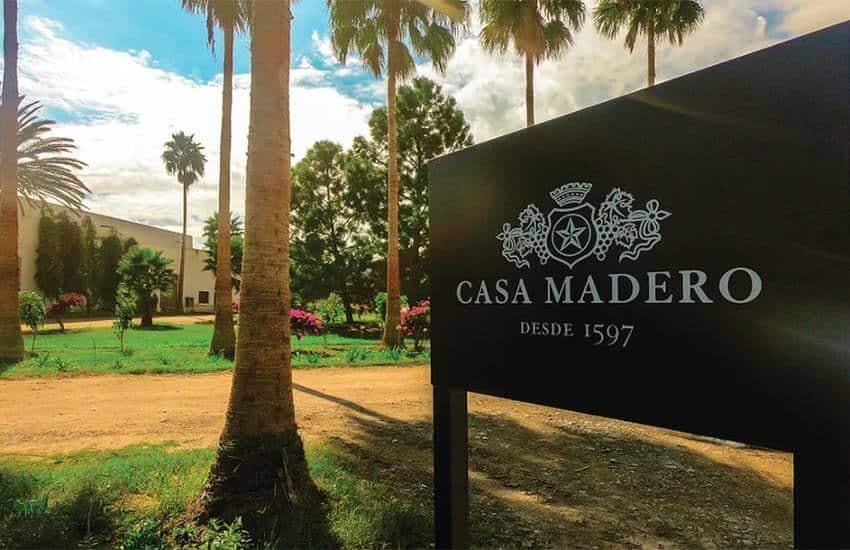
Protesters in Coahuila have occupied the winery of Mexico’s oldest winemaker since Friday night, accusing its owners of using too much water from a shared source, leaving them with too little to irrigate their crops.
Communal landowners took over the Casa Madero winery in the town of San Lorenzo, 140 kilometers west of Saltillo, to demand that the owners reduce their water use. They first arrived at the winery on Wednesday but left when state police arrived, only to return to enter the property two days later.
The company accused the protesters of violently installing themselves on the property and blamed municipal police for failing to take action, despite being present. The newspaper El País reported that the protesters were armed with machetes, picks and shovels.
A legal representative for the protesters, Josúe Hernández, said the landowners had a legal right to access the place where the water is distributed. Hernández added that the landowners had noticed less water was available to them, insisted that they weren’t armed and accused state police of trying to intimidate them.

The mayor of the municipality of Parras, Fernando Orozco, denied that the landowners had acted violently and said the conflict was due to a lack of rainfall. “What is happening is a product of the fact that it has not rained … that’s why they went into Casa Madero,” he said.
Casa Madero was founded in 1597 in Parras, located in a valley area referred to locally as an oasis in the desert.
Orozco added that the conflict in the semidesert area was decades old and that in the past, the landowners had been able to enter the property to check on the water distribution.

The director of Casa Madero, Brandon Milmo, pointed to climate change as the cause of the problem.
“The main cause is that there is less water today, due to climate change and the exploitation of aquifers … 60 years ago, when the last agreement was signed, 1,000 liters flowed per second, and today there’s between 300 and 400. The decline has caused conflict,” he said.
The last agreement between the winery and local landowners was signed in 1964, which dictated the proportions of water available to different parties.
Water is a contentious issue in Coahuila, where drought is a serious problem. The latest drought monitoring report released on May 15 shows the whole state to be affected by drought with almost 35% of its territory experiencing extreme or exceptional drought.
With reports from Milenio, El País and Imagen Radio