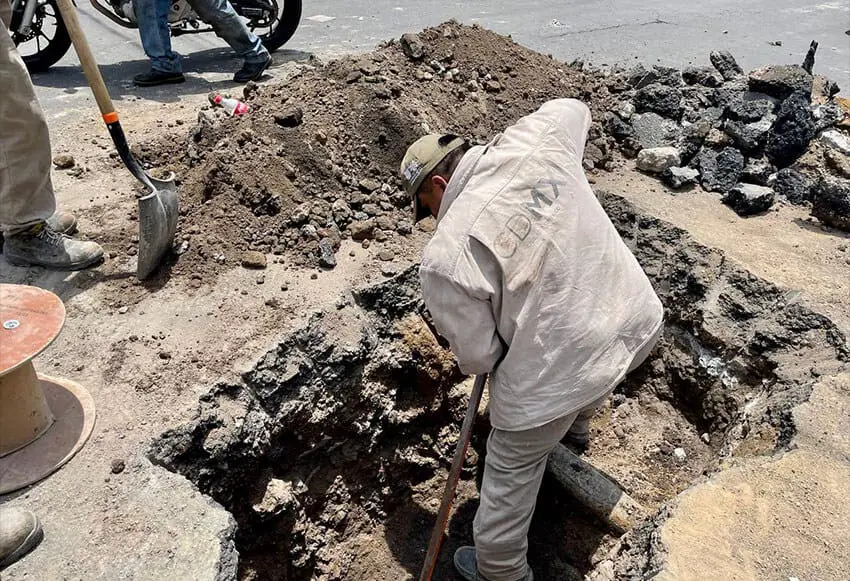
Crews continued working Thursday in a dogged attempt to discover the source of a massive water leak that has flooded one home in Mexico City and severely impacted two neighboring houses.
The search to find the leak has continued in vain for seven days, and approximately 30 families on the block have been affected. All the while, an estimated 200,000 to 400,000 liters of tap water are leaking per day.
“It’s enough that Aztec Stadium could be filled,” one resident said of the flooding.
The affected area, which happens to be right near the sprawling, 87,500-seat stadium, is in the Pedregal de Santa Úrsula neighborhood of Mexico City’s Coyoacán borough, an area known for its tree-lined, cobblestone streets, colonial architecture, sidewalk cafes and the bright blue Frida Kahlo Museum.
In trying to find the leak, Mexico City’s water department Sacmex and other authorities have sent video inspection cameras into pipes, used geophones that can detect leaks by sound waves and tried other various instruments.
“This problem is not that easy to solve,” said Giovani Gutiérrez, the borough mayor. “This is a problem that needs instrumentation and so on. It’s not a common leak.”
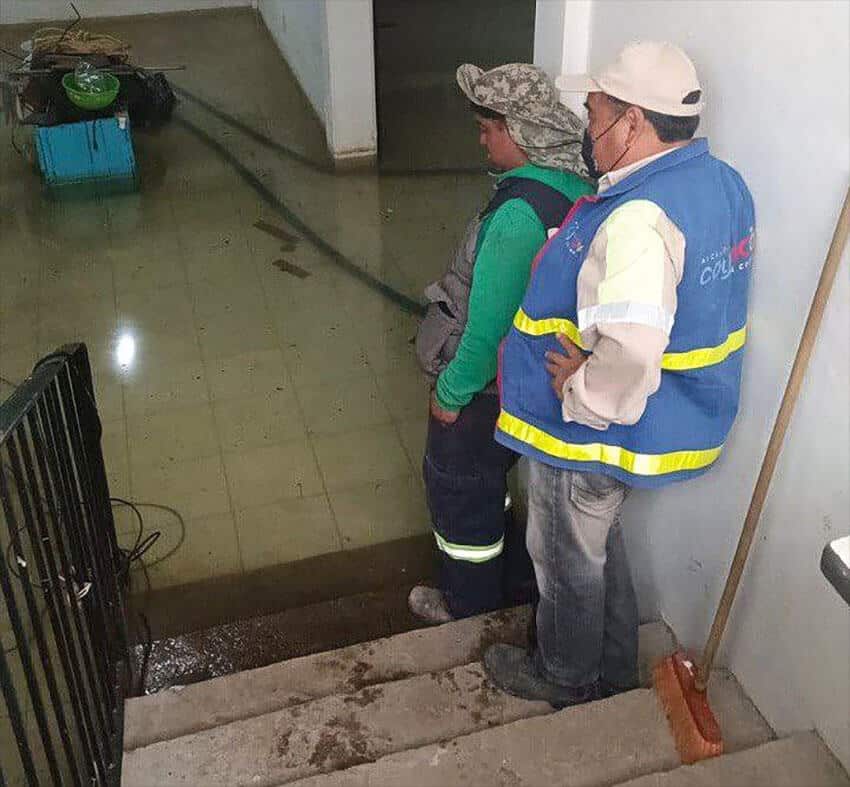
The house that is being most impacted is a three-story structure in which water has covered more than 250 cubic meters in the lower part of the house. That family is using two pumps — one submersible electric pump and one that runs on gasoline — in an attempt to drain the stagnating water.

“This has been every day for three months,” said resident Francisco Ortiz, who woke up Wednesday morning to 40 centimeters of flooding. In an attempt to mitigate the damage, crews of no fewer than 20 workers have dug 10 holes in a 700-meter radius around his home.
Este día con un monitor y una camara de empujé continúan los trabajos de @SacmexCDMX @AlcaldiaCoy para encontrar la fuga de agua en el Pedregal de Santa Ursula @giogutierrezag @heraldodemexico pic.twitter.com/pyZg4dTnkL
— @mmiranda (@magomiranda) June 22, 2022
Sandra Martínez, a resident of the area, explained that the neighborhood was built on rocky outcrops, where there were many springs. “Some of those springs may be emerging now,” she said. However, the water was tested by colorimetry and was determined to be tap water rather than from an aquifer.
The problem was first pointed out to Sacmex in March, but after a few visits that included a hydraulic operation, the situation apparently was forgotten.
“They made an appearance,” Ortiz said. “And when they saw the size of the problem, they began to mobilize. But from then on, absolutely nothing happened” until the past week.
The leak has resulted in a problem of a scarcity of tap water in the neighborhood, which has worsened since the leak was first reported.
“It is a paradox that the water from the leak going down the drain, when we have to go buy bottles,” said one person who lives on the affected block defined by San León and San Celso streets.