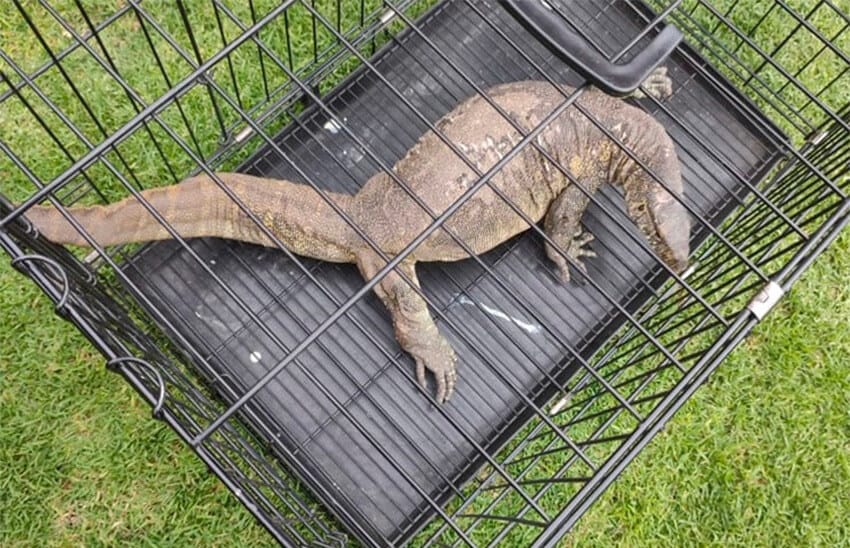
Visitors to Mexico City’s southern canals on Tuesday were met by an uncommon sight in the waters of Xochimilco, a breed of water lizard endemic to sub-Saharan Africa and in the Nile River region called a Nile monitor.
What onlookers believed was a crocodile swimming in the water was actually a non-native specie of reptile with sharp claws, muscular bodies, and strong jaws, and one of the world’s longest lizards in existence. It is thought likely that the lizard was released into the water by someone who could no longer afford its extensive upkeep or control its often aggressive behavior. Reptiles and crocodiles have been encountered in Mexico City before, and all have been the result of animal trafficking as the species are not native to the area.
The Nile monitor is a threat to the local ecosystem as a predator of other native animals and has even been known to attack domestic dogs and cats. The monitor found in Xochimilco was over a meter long and probably young because as adults they can reach over 2 meters long.
It was captured by the city’s Animal Protection Brigade (BVA) and police for medical revision and observation, and later reported to have been injured and sick, other possible reasons why its previous owner had released it into the Xochimilco canals instead of selling it on the black market. Authorities mentioned that this species can carry Amblyomma ticks which can be vectors for ehrlichiosis, but the probability of that being an issue with this particular animal was low.
Members of the BVA reminded the public that animals are living beings that require care and time, “and we entreat you to care for them and not mistreat them.”
With reports from Vanguardia