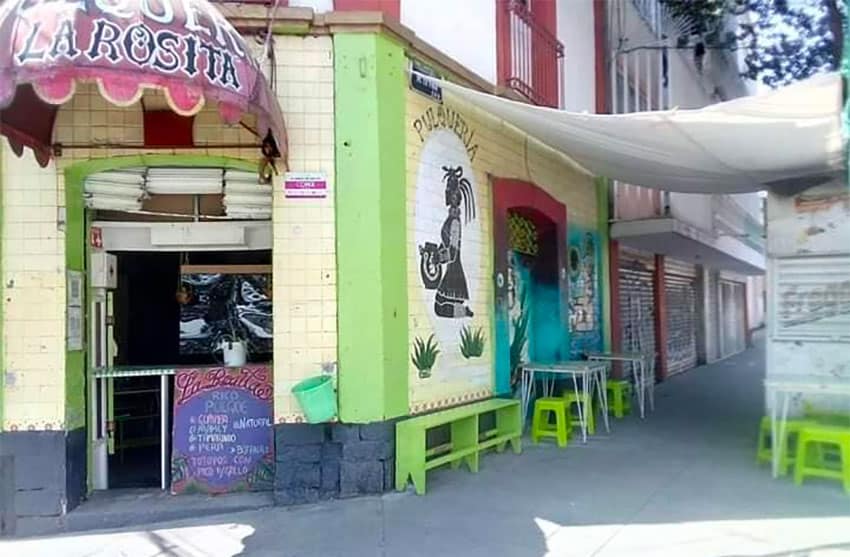
La Rosita, one of Mexico City’s oldest pulquerías (bars that sell pulque), celebrated its 101st birthday Tuesday with tacos de carnitas, free-flowing pulque, karaoke, and DJs spinning cumbia and rock.
A fermented and slightly alcoholic drink, pulque was popular in Mexico long before the Spanish brought distillation to the country’s shores, aiding the invention of its most famous spirits tequila and mezcal.
Pulque is the fermented sap of agave plants, collected from the center of the agave plant as agua miel, or honey water, and left to ferment until it takes on a slightly tangy, yeasty taste and viscous texture. In Mexico City pulque is often blended with fruit juices to make “curados” — a popular way to drink this ancient beverage.
La Rosita was opened in 1921 by the grandfather of the current owner, Luisito Ortíz, though it began life as La Gran Turca. Chilango magazine suggested it might have been named for one of its owner’s lovers, but it was given its current name in honor of Santa Rosa de Lima.
The walls and ceiling of La Rosita Pulquería are covered in murals representing pre-Hispanic pulque myths while outside, a tile-covered facade is the backdrop to yellow benches set on the sidewalk for patrons.
La Rosita’s walls tell the story of pulque starting with the moon representing a jug of pulque, guarded by a rabbit (in Mexico observers of the moon say they see a rabbit’s face on its surface), that is stolen by a possum. As it drinks from a small hole of the “jug” the moon shrinks to half and then a quarter of its size. What he cannot drink himself he brings back to humankind so that they also might know the glories of pulque.
In post-revolutionary times in Mexico, pulquerías were important gathering points for artists, writers, and thinkers and were often covered with extravagant artwork that represented the current trends in Mexican muralism and what today would be considered street art.

La Rosita’s facade reflects a certain passage of time, but the bar itself continues to delight its guests — regulars and tourists alike.
The bar can be found in Colonia Esperanza in Cuauhtémoc.
With reports from Chilango and Itinerario