Small businesses in Mexico City are anticipating a more lucrative holiday season, with projected revenue of over US $855 million, Arturo Vega Martínez, president of the Chamber of Commerce for Services and Tourism (Canacope), told the newspaper El Economista.
In 2019, microbusiness and small businesses made US $650 million during the month of December, and while the sector suffered setbacks in 2020 and 2021, he said, this year is showing signs of recovery.
There’s a lot to recover from: between May 2019 and July 2021, the country saw an overall 8.17% net loss in the number of all types of businesses in the country, according to INEGI’s business demographics report (DN), which records the number of new businesses in Mexico that opened in a certain period and the number that permanently closed.
Small and medium-sized businesses took the biggest hit during this period, with a net 14.5% fewer of these types of businesses still standing across the country in 2021. Microbusinesses nationwide fared better, but still had a net loss of 7.94%.
Mexico City’s small and medium-sized businesses landscape did even worse during the same period, with an overall 17.21% net loss. Microbusinesses again did better, but still suffered a net loss of 6.04%.
The pilgrimage to the Basilica of Our Lady of Guadalupe on Dec. 12, which Mexico City officials announced Monday brought 11 million pilgrims to the Catholic shrine, many from outside the city, will kick-start the season. The event was expected to generate US $31 million, mostly in revenue for small local vendors in the area surrounding the church. Pilgrims spend between 1,400 and 16,000 pesos on expenses and purchases while in the city, El Economista reported.
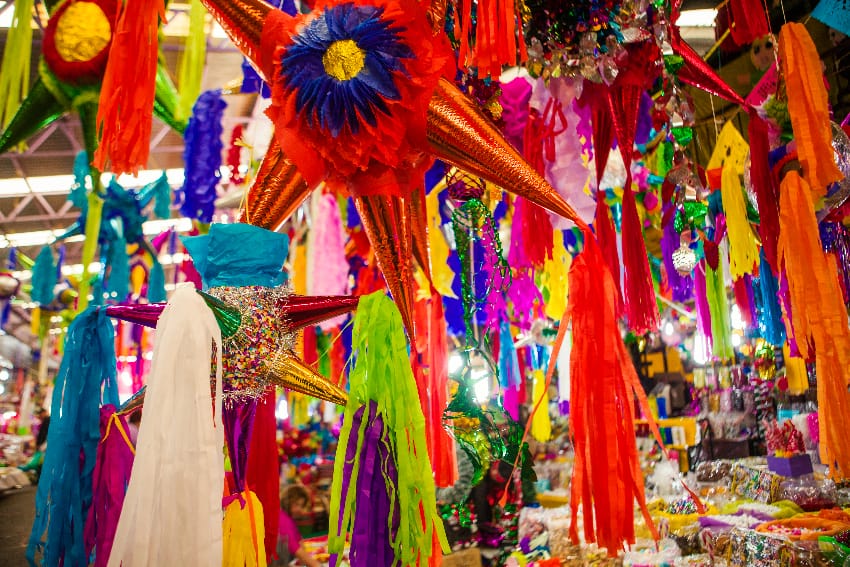
Canacope also anticipates around 1.3 million piñatas will be sold in Mexico City alone during December, with the price of a piñata ranging from 60 to 600 pesos (US $3 to $30).

Piñata makers suffered in 2020 and 2021 with the COVID-19 pandemic shutting down the birthday parties and other social celebrations that were their bread and butter — particularly posadas, a Christmas social tradition where families and friends gather to recreate Mary and Joseph’s journey to Bethlehem, and where the piñata is considered a staple element.
But with COVID restrictions falling away, Canacope predicts that piñata sales will make a comeback this holiday season. Tangerines, oranges, peanuts, jícama and tejocote (Mexican hawthorn), as well as lime and sugar cane are all traditional piñata fillings, which could also mean improved sales for agricultural producers of these items. The harvest of these crops generated a production value of US $855.9 million by the end of 2021, the Ministry of Agriculture and Rural Development (Sader) reported.
While celebrations make a comeback, inflation will strain many households’ finances: the National Small Business Association (ANPEC) estimates families will spend up to 30% more this season than they did in 2021. And El Economista reported that the traditional elements of a Mexican Christmas dinner — turkey, pork leg or pork loin — have all experienced price increases of as much as 20% in recent months.
With reports from El Economista