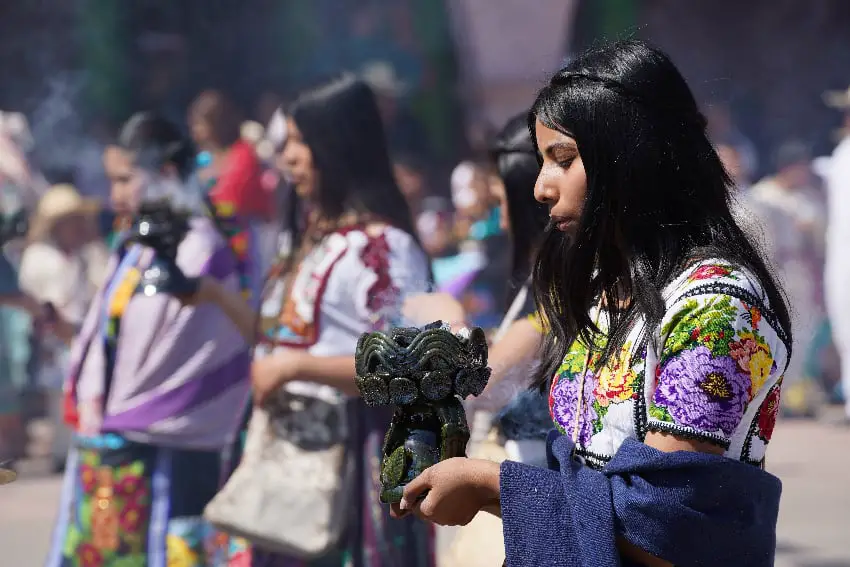
From Jan. 31 to Feb. 2, the Purépecha (the Spanish word for p’urhépecha), a group of Indigenous people who live mostly in the northwestern region of the Mexican state of Michoacán, celebrate their new year to thank Mother Earth for her care and kindness throughout the year.
The celebration includes a ritual called the fire walk. Once the new fire is lit, the Purépecha leaders recall their history and offer a message based on their ancestors’ thoughts to give way to the “new time.”
Each year, the fire walk starts in a different community and rotates among twelve Purépecha villages to strengthen their friendship. This year, the ceremony will be held in the town of Erongarícuaro.
During the ceremony, the participants and Purépecha leaders ask Kurhiahueri (the main god of the pre-Hispanic Purépecha people who represented the Sun) for abundance in harvests, as well as divine permission to use fire to cook the food that the earth will provide them.
Although the new fire ceremony has cultural significance and is an essential part of the traditions of Michoacán, it was only revived forty years ago, after centuries of not being celebrated. During the Spanish conquest, the ritual was prohibited after conquistador Nuño de Guzmán killed the last Purépecha ruler Tangaxoan II, on February 14, 1530.
Today this festivity is seen to symbolize the unity and strengthening of the contemporary Purépecha people.
With reports from El Sol de Morelia