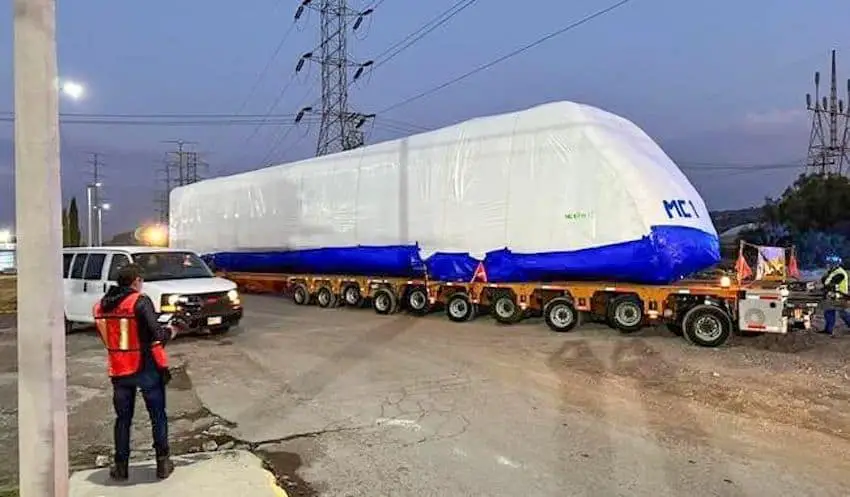
The first four cars of the Maya Train have left the factory where they were produced and are currently on route to Cancún, but the delivery is already facing delays.
Javier May, general director of the National Fund for Tourism Promotion (Fonatur), announced at President López Obrador’s Monday press conference that the convoy had departed the factory in Ciudad Sahagún, Hidalgo, at 5 a.m. that morning.

“The first four-car train left the Alstom [the manufacturing company contracted to build the carriages] plant a moment ago and is on its way to the workshop and garage in Cancún,” May said. “It will arrive on July 8 for assembly and the start of static tests.”
May’s statement was in keeping with the schedule announced last month. According to that schedule, the cars will start dynamic tests on the railroad between Cancún and Mérida in mid-August.
Alstom has committed to delivering another two cars in August and 13 in December. The Maya Train will have 42 carriages in total, the rest of which will be delivered over the course of next year.
According to Maité Ramos, general director of Alstom Mexico, the cars are being manufactured entirely in Mexico, with 72% Mexican materials. Each four will have the capacity to carry 230 passengers.
During the press conference on Monday, May stressed that the train is “comfortable, modern, safe and the result of great coordination.” He thanked the companies and agencies involved and insisted that the Maya Train is still on track to begin operations on Dec 1.

Diego Prieto Hernández, general director of the National Institute of Anthropology and History (INAH), also spoke optimistically about the archaeological rescue work that has accompanied the project, which is now almost complete.
“[While] there is already a Maya Train,” there is also “memory, identity and recovery of our ancestry,” Prieto said.
By Tuesday, however, President López Obrador admitted that the complexity of transporting the cars was likely to delay the delivery.
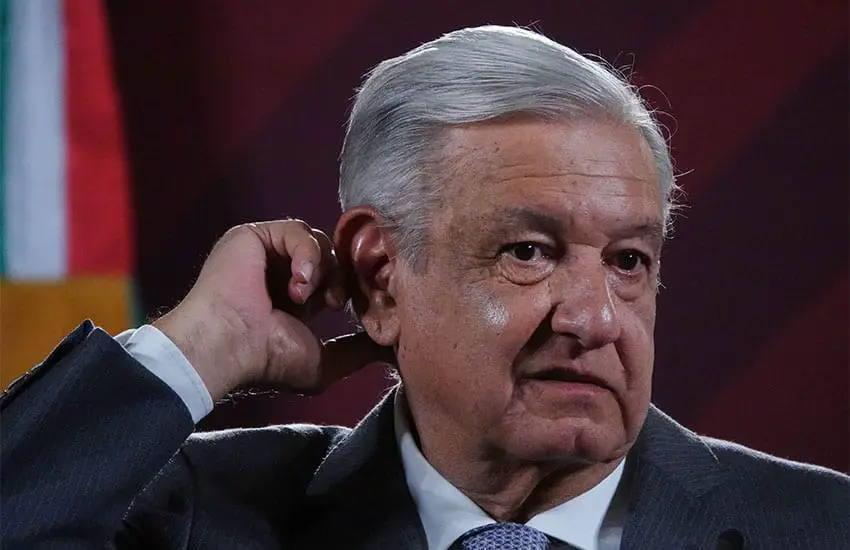
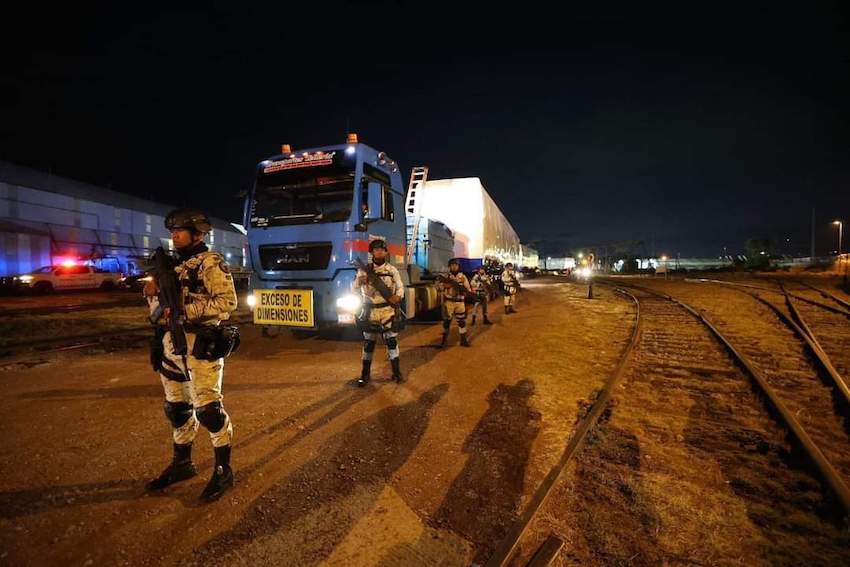
“It is not yet on the tracks; it was calculated that it was going to advance 300 km a day and it barely advanced 90,” he said. “I don’t think it’s going to come on Saturday.”
At a rate of 90 kilometers per day, the cars would complete the 1,582 kilometers from Ciudad Sahagún to Cancún on July 17.
The Maya Train has already faced multiple delays, due both to technical difficulties and legal injunctions. On Monday, the Defense Ministry, which administers the project, reported that construction on the track’s Section 5 North and Sections 6 and 7 is only 20% complete.
The project is also hugely over budget. Costs ran to 186.28 billion pesos (US $10.93 billion) in 2022 — nearly three times the 64.86 billion pesos (US $3.8 billion) projected. In 2023, the project had nearly reached its annual budget of 143.73 billion pesos (US $8.43 billion) by the end of the first quarter.
Despite this, AMLO remained upbeat on Tuesday about progress on the Maya Train. The delay in the arrival of the cars to Cancún “doesn’t make it late,” he insisted.
With reports from 24 Horas, La Jornada Maya and Forbes